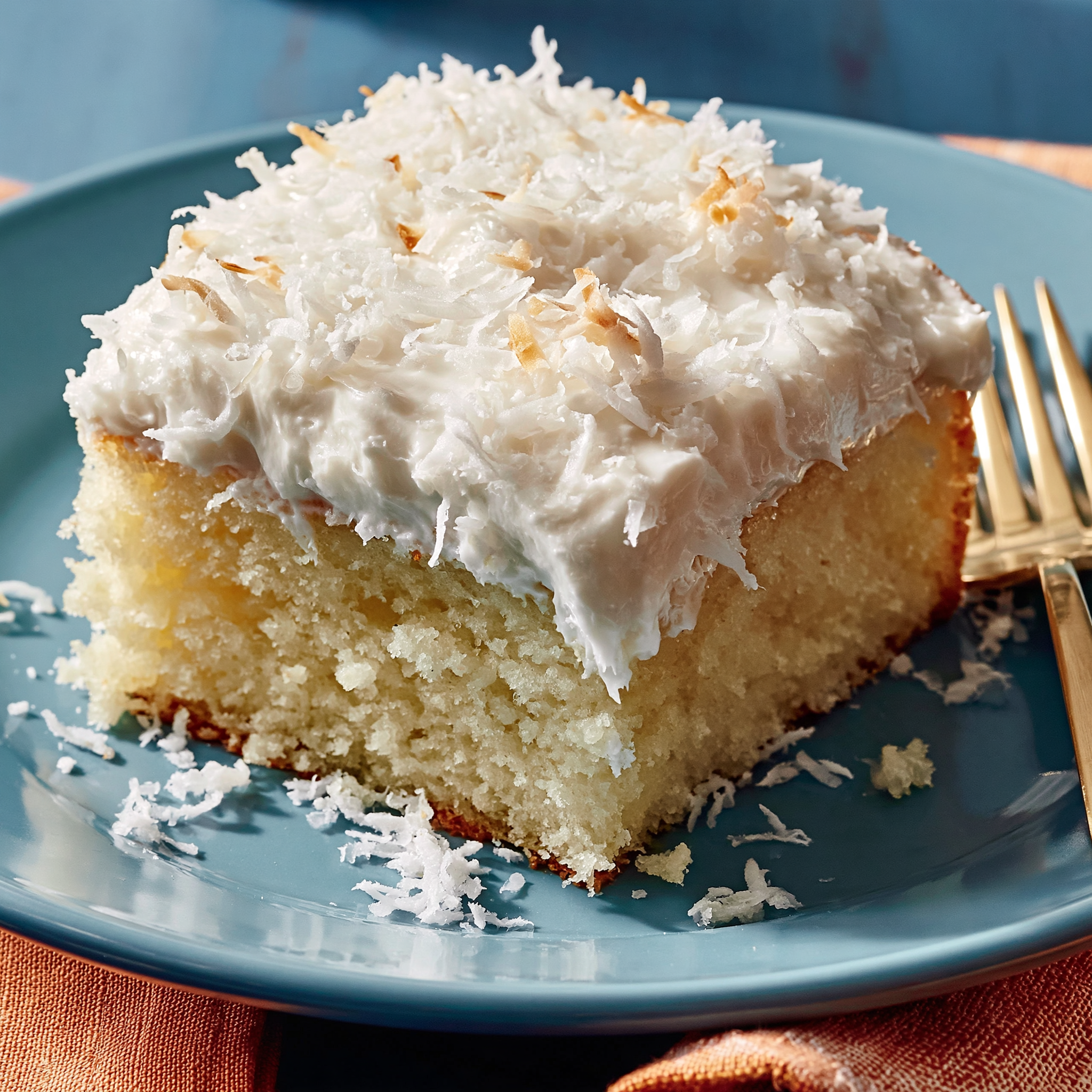
If you love soft, buttery cakes topped with rich, sweet frosting, this Coconut Texas Sheet Cake is a dessert you will want to make again and again. Inspired by the classic Texas sheet cake, this coconut version combines a tender, moist cake with delicious coconut flavor and a creamy frosting that spreads beautifully over the top. Every bite offers a wonderful balance of sweetness, buttery richness, and tropical coconut goodness.
Traditional Texas sheet cake is famous for its thin, chocolate-rich cake and warm poured frosting. This coconut variation brings a different flavor to the familiar dessert while keeping everything that makes sheet cakes so popular: simple ingredients, easy preparation, generous portions, and a frosting that covers the cake from edge to edge.
The cake is baked in a large rectangular pan, making it ideal for family gatherings, potlucks, birthdays, holidays, church suppers, and weekend desserts. Because the cake is relatively thin, it bakes quickly and develops a soft, delicate crumb. The coconut adds texture and flavor without making the cake heavy, while the frosting creates a sweet finish that complements the cake perfectly.
One of the best things about Coconut Texas Sheet Cake is how easy it is to serve a crowd. Instead of layering cakes or decorating individual cupcakes, you simply bake one large cake, spread the frosting over it, and cut it into squares. You can finish it with shredded coconut, toasted coconut flakes, or chopped pecans for extra texture and a beautiful homemade appearance.
Whether you are looking for an old-fashioned Southern-inspired dessert or a simple coconut cake recipe for your next gathering, this Coconut Texas Sheet Cake is a wonderful choice. It uses everyday baking ingredients, requires no complicated decorating skills, and delivers plenty of coconut flavor in every slice.
Ingredients
For the Coconut Cake
- 2 cups all-purpose flour
- 2 cups granulated sugar
- 1 cup unsalted butter
- 1 cup water
- 1/2 cup buttermilk, at room temperature
- 2 large eggs, at room temperature
- 1 cup sweetened shredded coconut
- 1 teaspoon vanilla extract
- 1 teaspoon coconut extract
- 1 teaspoon baking soda
- 1/2 teaspoon salt
For the Creamy Coconut Frosting
- 1/2 cup unsalted butter
- 1/4 cup milk
- 3 1/2 to 4 cups powdered sugar, sifted
- 1 teaspoon vanilla extract
- 1 teaspoon coconut extract
- 1 cup sweetened shredded coconut
- 1/2 cup chopped pecans, optional
Optional Toppings
- Additional shredded coconut
- Toasted coconut flakes
- Chopped pecans or walnuts
- A small pinch of salt to balance the sweetness
Preparation
Step 1: Prepare the Baking Pan and Oven
Preheat your oven to 350°F (175°C). Grease a 10-by-15-inch jelly-roll pan or a similar shallow rectangular baking pan with butter or nonstick cooking spray. You can also lightly flour the pan to help prevent sticking.
A shallow pan is important because Texas sheet cakes are traditionally thin and bake relatively quickly. If you use a smaller, deeper pan, the cake may need additional baking time, and the texture will be different.
Measure all your ingredients before starting. Allow the eggs and buttermilk to come to room temperature if possible. Room-temperature ingredients combine more evenly and help create a smooth cake batter.
Step 2: Combine the Dry Ingredients
In a large mixing bowl, whisk together the all-purpose flour, granulated sugar, baking soda, and salt. Whisking distributes the baking soda evenly throughout the flour and helps prevent pockets of salt or leavening in the finished cake.
Add the shredded coconut and stir until it is evenly distributed. This helps the coconut spread throughout the cake rather than gathering in one area.
Set the bowl aside while you prepare the butter mixture.
Step 3: Heat the Butter and Water
Place the butter and water in a medium saucepan over medium heat. Stir occasionally until the butter has melted and the mixture is hot.
Remove the saucepan from the heat once the butter has melted and the mixture is steaming. There is no need to boil it vigorously.
Pour the warm butter mixture into the dry ingredients and stir until the flour is moistened and the batter begins to come together. The warm liquid helps dissolve the sugar and contributes to the cake’s soft, tender texture.
Let the mixture cool slightly for a minute or two before adding the eggs. The batter should be warm, not extremely hot, so the eggs do not cook when mixed in.
Step 4: Add the Buttermilk, Eggs, and Flavorings
In a separate bowl, whisk together the buttermilk, eggs, vanilla extract, and coconut extract.
Gradually add this mixture to the warm flour and butter mixture, stirring gently until everything is combined. Scrape the sides and bottom of the bowl with a spatula to incorporate any dry ingredients.
Avoid overmixing. Once the batter looks smooth and no large pockets of dry flour remain, stop stirring. Overmixing can develop too much gluten and make the cake less tender.
The finished batter should be relatively thin and easy to pour. The shredded coconut will be visible throughout the mixture.
Step 5: Pour the Batter into the Pan
Pour the batter into the prepared baking pan. Use a spatula to spread it evenly into the corners and along the edges.
Gently tap the pan on the counter once or twice to release any large air bubbles. Make sure the batter is distributed evenly so that the cake bakes at a consistent thickness.
Place the pan on the center rack of the preheated oven.
Step 6: Bake the Coconut Cake
Bake for approximately 18–25 minutes, checking toward the earlier end of the range. The exact baking time depends on your pan, oven, and the thickness of the batter.
The cake is ready when the top is lightly golden, the center springs back gently when touched, and a toothpick inserted into the middle comes out clean or with a few moist crumbs.
Do not wait for the cake to become deeply browned. Overbaking can make a thin sheet cake dry around the edges.
Remove the pan from the oven and place it on a heat-safe surface. Allow the cake to rest for a few minutes while you prepare the frosting.
Step 7: Prepare the Coconut Frosting
Place the butter and milk in a medium saucepan. Heat over medium-low heat, stirring until the butter melts and the mixture is hot. Do not let it boil aggressively.
Remove the saucepan from the heat. Add the vanilla extract and coconut extract, then gradually whisk in the powdered sugar until the frosting is smooth and thick but still spreadable.
If the frosting is too thick, add a teaspoon of milk at a time until it reaches the desired consistency. If it is too thin, add a little more powdered sugar.
Stir in the shredded coconut. If you enjoy a little crunch, add the chopped pecans as well.
The frosting should be warm enough to spread easily. If it cools and becomes too thick, gently rewarm it over low heat while stirring.
Step 8: Frost the Warm Cake
For the traditional sheet-cake texture, spread the frosting over the cake while the cake is still warm but no longer piping hot.
Pour the frosting over the center of the cake and use a spatula to guide it toward the edges. Spread it evenly so that every square will have a generous layer of coconut frosting.
The warm cake helps the frosting settle onto the surface, creating a soft, flavorful topping that complements the tender crumb underneath.
Work gently and avoid pressing too hard with the spatula. A smooth, even layer looks attractive, but a slightly rustic finish is perfectly suitable for a homemade sheet cake.
Step 9: Add the Finishing Touches
While the frosting is still soft, sprinkle additional shredded coconut over the top. For a more decorative finish, use toasted coconut flakes, chopped pecans, or a combination of both.
To toast coconut, spread it in a thin layer in a dry skillet over low to medium-low heat. Stir frequently until lightly golden, then transfer it immediately to a plate to cool. Coconut can burn quickly, so do not leave it unattended.
For a classic appearance, keep the topping simple with shredded coconut. For a richer dessert, toasted coconut and pecans add a lovely contrast to the creamy frosting.
Step 10: Cool, Slice, and Serve
Allow the cake to cool until the frosting has set enough to cut cleanly. Depending on the temperature of your kitchen, this may take approximately 30–60 minutes.
Use a sharp knife to cut the cake into squares or rectangles. Wipe the knife between cuts for neater portions.
Serve the cake at room temperature for the softest texture and fullest flavor. If you prefer a firmer frosting, chill the cake briefly before slicing, then allow individual pieces to sit at room temperature for a few minutes before serving.
Variations
1. Coconut Pecan Texas Sheet Cake
Add 1/2 to 1 cup of chopped pecans to the frosting. Pecans provide a buttery crunch that works especially well with the sweet coconut topping. You can also sprinkle additional pecans over the finished cake.
2. Extra-Coconut Sheet Cake
For a stronger coconut flavor, increase the shredded coconut in the cake slightly and finish the frosting with a generous layer of toasted coconut. Use coconut extract carefully, because too much can create an artificial flavor.
3. Coconut Buttermilk Sheet Cake
Keep the buttermilk in the recipe for a tender crumb with a subtle tang. This variation is especially good if you enjoy cakes that are sweet without tasting overly sugary.
4. Coconut Cream Cheese Frosting
For a tangier topping, replace part of the traditional frosting with a cream cheese frosting made from softened cream cheese, butter, powdered sugar, vanilla, and coconut extract. This version is richer and may need refrigeration.
Because cream cheese frosting behaves differently from warm poured frosting, let the cake cool completely before spreading it.
5. Almond Coconut Sheet Cake
Add 1/4 teaspoon almond extract to the cake batter or frosting. Almond and coconut complement each other beautifully, giving the dessert a flavor reminiscent of classic coconut-almond candies.
6. Chocolate Coconut Sheet Cake
For a chocolate-inspired variation, add a thin chocolate drizzle over the cooled coconut frosting. You can also sprinkle mini chocolate chips on top while the frosting is still slightly soft.
7. Pineapple Coconut Sheet Cake
Fold in a small amount of well-drained crushed pineapple for a tropical variation. Drain it thoroughly and avoid adding too much extra moisture, as excess liquid can affect the cake’s texture and baking time.
8. Gluten-Free Coconut Sheet Cake
Use a reliable gluten-free all-purpose flour blend designed for baking, preferably one that contains xanthan gum. Results vary by brand, so follow the flour manufacturer’s recommendations and check the cake carefully for doneness.
Cooking Note
The secret to a successful Coconut Texas Sheet Cake is balancing moisture, texture, and frosting consistency.
Use the right pan. A shallow rectangular pan helps the cake bake evenly and creates the classic sheet-cake shape. If using a different pan size, monitor the cake carefully and adjust the baking time as needed.
Do not overbake. Coconut cake can become dry if left in the oven too long. Begin checking for doneness around 18 minutes. The center should spring back gently, and a toothpick should come out clean or with a few moist crumbs.
Frost while slightly warm. Traditional poured frosting spreads especially well over a warm cake. However, the cake should not be so hot that the frosting becomes excessively runny.
Choose your coconut carefully. Sweetened shredded coconut adds moisture and sweetness. Unsweetened coconut can be substituted, but the finished cake will be less sweet and may have a slightly different texture.
Adjust the frosting gradually. Powdered sugar brands and kitchen temperatures vary. Add the sugar slowly and use small amounts of milk to reach a consistency that spreads easily without running off the cake.
Serving Suggestions
Coconut Texas Sheet Cake is delicious on its own, but a few simple additions can make it feel even more special.
- With coffee: Serve a square with freshly brewed coffee. The slight bitterness of coffee balances the sweetness of the coconut frosting.
- With tea: Black tea or lightly sweetened tea makes a pleasant afternoon pairing.
- With vanilla ice cream: Add a small scoop of vanilla ice cream beside a slice for a comforting dessert.
- With fresh fruit: Fresh strawberries, raspberries, or pineapple provide a refreshing contrast to the rich cake.
- For holiday gatherings: Arrange the squares on a large platter and finish with toasted coconut for a festive presentation.
- For potlucks: Cut the cake into smaller squares so guests can enjoy a portion alongside other desserts.
- For birthdays: Add a decorative border of toasted coconut and pecans or drizzle the top with melted chocolate.
This cake is especially convenient for large gatherings because it can be prepared in one pan and portioned according to the number of guests.
Tips for the Best Coconut Texas Sheet Cake
- Measure flour accurately. Spoon flour into the measuring cup and level it off rather than packing it down. Too much flour can make the cake dense.
- Use room-temperature eggs. They blend more easily into the batter and help create a consistent texture.
- Check your baking soda. Fresh baking soda helps the cake rise properly and develop a light crumb.
- Avoid overmixing. Stir only until the ingredients are combined.
- Do not skip the salt. A small amount enhances the buttery flavor and balances the sweetness.
- Use extracts sparingly. Coconut extract is concentrated, so measure carefully to avoid overpowering the natural coconut flavor.
- Spread the frosting promptly. Warm frosting is easier to distribute before it thickens.
- Toast the topping carefully. Stir coconut frequently and remove it from the heat as soon as it becomes lightly golden.
- Let the frosting set. Give the cake time to cool before cutting for cleaner portions.
- Make it ahead. The cake can be baked a day before serving, giving the flavors time to develop. Store it covered according to the storage guidance below.
- Cut with a clean knife. Wiping the knife between cuts helps prevent frosting from dragging across each slice.
- Taste before adjusting sweetness. Sweetened coconut and powdered sugar contribute plenty of sweetness, so additional sugar is usually unnecessary.
Storage and Make-Ahead Instructions
At Room Temperature
If the cake is made with the traditional butter-and-powdered-sugar frosting described here, it can generally be stored in an airtight container at cool room temperature for up to 2 days. Keep it away from direct sunlight, heat, and humidity. If your kitchen is very warm, refrigerate it instead.
In the Refrigerator
Store the cake in a covered container in the refrigerator for up to 4–5 days for best quality. Allow slices to sit at room temperature for about 15–20 minutes before serving to soften the butter in the cake and frosting.
If you use cream cheese frosting or another perishable topping, refrigerate the cake promptly and follow appropriate food-safety guidance.
In the Freezer
For longer storage, freeze individual slices or portions. Wrap them securely in plastic wrap and place them in a freezer-safe container. For the best texture, use within about 2–3 months.
Thaw the slices in the refrigerator overnight or at room temperature for a shorter period. The coconut topping may soften slightly after freezing, but the cake should remain enjoyable.
Make-Ahead Advice
Bake the cake one day before serving and keep it covered after it has cooled. You can prepare the frosting on the day of serving for the freshest appearance, or frost the cake once baked and slightly cooled, then store it covered. Add toasted coconut shortly before serving if you want it to remain crisp.
Prep Time
- Preparation: 20 minutes
- Frosting preparation: 10 minutes
- Cooling and setting: 30–60 minutes
Cooking Time
- Baking time: 18–25 minutes
Total Time
- Active preparation and baking: Approximately 48–55 minutes
- Total time including cooling and frosting setting: Approximately 1 hour 20 minutes to 1 hour 55 minutes
Times are estimates and may vary depending on your oven, pan, and kitchen temperature.
Nutritional Information
The following values are approximate estimates per serving, assuming the cake is cut into 24 pieces and prepared with the ingredients listed above. Actual nutrition will vary with ingredient brands, portion size, and optional toppings.
- Calories: Approximately 300–360 per serving
- Protein: Approximately 3–4 grams per serving
- Sodium: Approximately 120–190 milligrams per serving
The cake also contains carbohydrates and fats from the flour, sugar, butter, coconut, and frosting. For more precise nutritional information, calculate the recipe using the exact products and quantities you use.
FAQs
1. What is Coconut Texas Sheet Cake?
Coconut Texas Sheet Cake is a thin, tender cake baked in a rectangular pan and topped with coconut-flavored frosting. This version uses a buttery cake base, shredded coconut, and a warm poured frosting for an easy dessert that serves a crowd.
2. Can I make Coconut Texas Sheet Cake without buttermilk?
Yes. If you do not have buttermilk, measure 1/2 cup of milk and stir in 1 1/2 teaspoons of lemon juice or white vinegar. Let the mixture stand for about 5–10 minutes before using it. The texture may differ slightly from a cake made with commercial buttermilk.
3. Can I use unsweetened shredded coconut?
Yes. Unsweetened coconut works well if you prefer a less sweet cake or want more control over the sweetness. Because it contains less added sugar, the flavor and texture may be slightly different from the original version.
4. Why is my coconut sheet cake dry?
The most common reason is overbaking. Thin cakes bake quickly, so begin checking for doneness around 18 minutes. Measuring flour accurately and avoiding overmixing also help keep the cake tender.
5. Why is my frosting too thick?
The frosting may have cooled too much or contain too much powdered sugar. Add milk a teaspoon at a time, stirring until the frosting becomes spreadable. If needed, warm it gently over low heat.
6. Why is my frosting too thin?
The frosting may contain too much liquid or not enough powdered sugar. Add powdered sugar gradually until it reaches a consistency that spreads easily. Allow it to cool slightly before deciding whether it needs further adjustment.
7. Should I frost the cake while it is hot or cold?
For the warm poured frosting used in this recipe, frost the cake while it is warm but not piping hot. This helps the frosting spread evenly and settle onto the surface. For cream cheese frosting, allow the cake to cool completely first.
8. Can I make this cake in a 9-by-13-inch pan?
Yes, but the cake will be thicker than one baked in a shallow sheet pan. It may require a longer baking time. Begin checking the center with a toothpick and continue baking as needed until the cake is fully cooked.
9. Can I add pecans to Coconut Texas Sheet Cake?
Absolutely. Chopped pecans are an excellent addition to the frosting or topping. They add a buttery crunch that complements the sweet coconut. Toasting the pecans lightly can deepen their flavor.
10. Does Coconut Texas Sheet Cake need to be refrigerated?
The traditional butter-and-powdered-sugar frosting does not necessarily require immediate refrigeration if the cake is kept in a cool room and eaten within a short period. For longer storage, warm kitchens, or cream cheese frosting, refrigeration is recommended.
11. Can I freeze Coconut Texas Sheet Cake?
Yes. Cut the cooled cake into portions, wrap them securely, and freeze in an airtight container for up to 2–3 months for best quality. Thaw before serving. The topping may soften a little after thawing.
12. Can I make the cake more coconut-flavored?
Yes. Use the recommended coconut extract, include shredded coconut in the batter, and add coconut to the frosting. Toasted coconut on top adds even more flavor. Increase the extract cautiously because it can quickly become overpowering.
13. What is the best way to cut the cake neatly?
Allow the frosting to set before slicing. Use a sharp knife, make straight cuts, and wipe the blade clean between slices. For especially neat squares, chill the cake briefly before cutting and let the portions soften slightly before serving.
14. Can I make Coconut Texas Sheet Cake ahead for a party?
Yes. It is a great make-ahead dessert because it is baked in one pan and easy to portion. Prepare it a day in advance, cover it after cooling, and store it appropriately. If using toasted coconut for a crunchy topping, add it shortly before serving.
Conclusion
Coconut Texas Sheet Cake is a simple, comforting dessert that combines a soft, buttery cake with rich coconut frosting and plenty of sweet coconut flavor. Its easy preparation, familiar ingredients, and generous portions make it a dependable choice for potlucks, family dinners, holidays, birthdays, and everyday baking.
The warm frosting creates a delicious finish, while shredded coconut adds texture to every bite. You can keep the recipe traditional, add pecans for crunch, or experiment with toasted coconut, chocolate drizzle, or almond extract to make it your own.
Best of all, you do not need special decorating equipment or advanced baking skills to create a dessert that looks inviting and tastes wonderful. Bake the cake, spread the frosting, allow it to set, and cut it into squares for sharing.
If you are searching for an easy Coconut Texas Sheet Cake recipe that is moist, flavorful, and perfect for feeding a crowd, this homemade version deserves a place in your recipe collection. Serve it with coffee, tea, or a scoop of vanilla ice cream, and enjoy a classic sheet-cake dessert with a delicious coconut twist.
Print
Coconut Texas Sheet Cake – Moist Coconut Cake with Creamy Frosting
- Total Time: 48–55 minutes
Description
If you love soft, buttery cakes topped with rich, sweet frosting, this Coconut Texas Sheet Cake is a dessert you will want to make again and again. Inspired by the classic Texas sheet cake, this coconut version combines a tender, moist cake with delicious coconut flavor and a creamy frosting that spreads beautifully over the top.
Ingredients
For the Coconut Cake
- 2 cups all-purpose flour
- 2 cups granulated sugar
- 1 cup unsalted butter
- 1 cup water
- 1/2 cup buttermilk, at room temperature
- 2 large eggs, at room temperature
- 1 cup sweetened shredded coconut
- 1 teaspoon vanilla extract
- 1 teaspoon coconut extract
- 1 teaspoon baking soda
- 1/2 teaspoon salt
For the Creamy Coconut Frosting
- 1/2 cup unsalted butter
- 1/4 cup milk
- 3 1/2 to 4 cups powdered sugar, sifted
- 1 teaspoon vanilla extract
- 1 teaspoon coconut extract
- 1 cup sweetened shredded coconut
- 1/2 cup chopped pecans, optional
Optional Toppings
- Additional shredded coconut
- Toasted coconut flakes
- Chopped pecans or walnuts
- A small pinch of salt to balance the sweetness
Instructions
Preheat your oven to 350°F (175°C). Grease a 10-by-15-inch jelly-roll pan or a similar shallow rectangular baking pan with butter or nonstick cooking spray. You can also lightly flour the pan to help prevent sticking.
A shallow pan is important because Texas sheet cakes are traditionally thin and bake relatively quickly. If you use a smaller, deeper pan, the cake may need additional baking time, and the texture will be different.
Measure all your ingredients before starting. Allow the eggs and buttermilk to come to room temperature if possible. Room-temperature ingredients combine more evenly and help create a smooth cake batter.
Step 2: Combine the Dry Ingredients
In a large mixing bowl, whisk together the all-purpose flour, granulated sugar, baking soda, and salt. Whisking distributes the baking soda evenly throughout the flour and helps prevent pockets of salt or leavening in the finished cake.
Add the shredded coconut and stir until it is evenly distributed. This helps the coconut spread throughout the cake rather than gathering in one area.
Set the bowl aside while you prepare the butter mixture.
Step 3: Heat the Butter and Water
Place the butter and water in a medium saucepan over medium heat. Stir occasionally until the butter has melted and the mixture is hot.
Remove the saucepan from the heat once the butter has melted and the mixture is steaming. There is no need to boil it vigorously.
Pour the warm butter mixture into the dry ingredients and stir until the flour is moistened and the batter begins to come together. The warm liquid helps dissolve the sugar and contributes to the cake’s soft, tender texture.
Let the mixture cool slightly for a minute or two before adding the eggs. The batter should be warm, not extremely hot, so the eggs do not cook when mixed in.
Step 4: Add the Buttermilk, Eggs, and Flavorings
In a separate bowl, whisk together the buttermilk, eggs, vanilla extract, and coconut extract.
Gradually add this mixture to the warm flour and butter mixture, stirring gently until everything is combined. Scrape the sides and bottom of the bowl with a spatula to incorporate any dry ingredients.
Avoid overmixing. Once the batter looks smooth and no large pockets of dry flour remain, stop stirring. Overmixing can develop too much gluten and make the cake less tender.
The finished batter should be relatively thin and easy to pour. The shredded coconut will be visible throughout the mixture.
Step 5: Pour the Batter into the Pan
Pour the batter into the prepared baking pan. Use a spatula to spread it evenly into the corners and along the edges.
Gently tap the pan on the counter once or twice to release any large air bubbles. Make sure the batter is distributed evenly so that the cake bakes at a consistent thickness.
Place the pan on the center rack of the preheated oven.
Step 6: Bake the Coconut Cake
Bake for approximately 18–25 minutes, checking toward the earlier end of the range. The exact baking time depends on your pan, oven, and the thickness of the batter.
The cake is ready when the top is lightly golden, the center springs back gently when touched, and a toothpick inserted into the middle comes out clean or with a few moist crumbs.
Do not wait for the cake to become deeply browned. Overbaking can make a thin sheet cake dry around the edges.
Remove the pan from the oven and place it on a heat-safe surface. Allow the cake to rest for a few minutes while you prepare the frosting.
Step 7: Prepare the Coconut Frosting
Place the butter and milk in a medium saucepan. Heat over medium-low heat, stirring until the butter melts and the mixture is hot. Do not let it boil aggressively.
Remove the saucepan from the heat. Add the vanilla extract and coconut extract, then gradually whisk in the powdered sugar until the frosting is smooth and thick but still spreadable.
If the frosting is too thick, add a teaspoon of milk at a time until it reaches the desired consistency. If it is too thin, add a little more powdered sugar.
Stir in the shredded coconut. If you enjoy a little crunch, add the chopped pecans as well.
The frosting should be warm enough to spread easily. If it cools and becomes too thick, gently rewarm it over low heat while stirring.
Step 8: Frost the Warm Cake
For the traditional sheet-cake texture, spread the frosting over the cake while the cake is still warm but no longer piping hot.
Pour the frosting over the center of the cake and use a spatula to guide it toward the edges. Spread it evenly so that every square will have a generous layer of coconut frosting.
The warm cake helps the frosting settle onto the surface, creating a soft, flavorful topping that complements the tender crumb underneath.
Work gently and avoid pressing too hard with the spatula. A smooth, even layer looks attractive, but a slightly rustic finish is perfectly suitable for a homemade sheet cake.
Step 9: Add the Finishing Touches
While the frosting is still soft, sprinkle additional shredded coconut over the top. For a more decorative finish, use toasted coconut flakes, chopped pecans, or a combination of both.
To toast coconut, spread it in a thin layer in a dry skillet over low to medium-low heat. Stir frequently until lightly golden, then transfer it immediately to a plate to cool. Coconut can burn quickly, so do not leave it unattended.
For a classic appearance, keep the topping simple with shredded coconut. For a richer dessert, toasted coconut and pecans add a lovely contrast to the creamy frosting.
Step 10: Cool, Slice, and Serve
Allow the cake to cool until the frosting has set enough to cut cleanly. Depending on the temperature of your kitchen, this may take approximately 30–60 minutes.
Use a sharp knife to cut the cake into squares or rectangles. Wipe the knife between cuts for neater portions.
Serve the cake at room temperature for the softest texture and fullest flavor. If you prefer a firmer frosting, chill the cake briefly before slicing, then allow individual pieces to sit at room temperature for a few minutes before serving.
Notes
The secret to a successful Coconut Texas Sheet Cake is balancing moisture, texture, and frosting consistency.
Use the right pan. A shallow rectangular pan helps the cake bake evenly and creates the classic sheet-cake shape. If using a different pan size, monitor the cake carefully and adjust the baking time as needed.
Do not overbake. Coconut cake can become dry if left in the oven too long. Begin checking for doneness around 18 minutes. The center should spring back gently, and a toothpick should come out clean or with a few moist crumbs.
Frost while slightly warm. Traditional poured frosting spreads especially well over a warm cake. However, the cake should not be so hot that the frosting becomes excessively runny.
Choose your coconut carefully. Sweetened shredded coconut adds moisture and sweetness. Unsweetened coconut can be substituted, but the finished cake will be less sweet and may have a slightly different texture.
Adjust the frosting gradually. Powdered sugar brands and kitchen temperatures vary. Add the sugar slowly and use small amounts of milk to reach a consistency that spreads easily without running off the cake.
- Prep Time: 20 minutes
- Cook Time: 18–25 minutes
Nutrition
- Calories: 300–360 per serving
- Sodium: 120–190 milligrams per serving
- Protein: 3–4 grams per serving
