Description
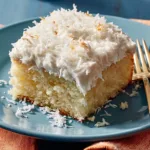
If you love soft, buttery cakes topped with rich, sweet frosting, this Coconut Texas Sheet Cake is a dessert you will want to make again and again. Inspired by the classic Texas sheet cake, this coconut version combines a tender, moist cake with delicious coconut flavor and a creamy frosting that spreads beautifully over the top.
Ingredients
For the Coconut Cake
- 2 cups all-purpose flour
- 2 cups granulated sugar
- 1 cup unsalted butter
- 1 cup water
- 1/2 cup buttermilk, at room temperature
- 2 large eggs, at room temperature
- 1 cup sweetened shredded coconut
- 1 teaspoon vanilla extract
- 1 teaspoon coconut extract
- 1 teaspoon baking soda
- 1/2 teaspoon salt
For the Creamy Coconut Frosting
- 1/2 cup unsalted butter
- 1/4 cup milk
- 3 1/2 to 4 cups powdered sugar, sifted
- 1 teaspoon vanilla extract
- 1 teaspoon coconut extract
- 1 cup sweetened shredded coconut
- 1/2 cup chopped pecans, optional
Optional Toppings
- Additional shredded coconut
- Toasted coconut flakes
- Chopped pecans or walnuts
- A small pinch of salt to balance the sweetness
Instructions
Preheat your oven to 350°F (175°C). Grease a 10-by-15-inch jelly-roll pan or a similar shallow rectangular baking pan with butter or nonstick cooking spray. You can also lightly flour the pan to help prevent sticking.
A shallow pan is important because Texas sheet cakes are traditionally thin and bake relatively quickly. If you use a smaller, deeper pan, the cake may need additional baking time, and the texture will be different.
Measure all your ingredients before starting. Allow the eggs and buttermilk to come to room temperature if possible. Room-temperature ingredients combine more evenly and help create a smooth cake batter.
Step 2: Combine the Dry Ingredients
In a large mixing bowl, whisk together the all-purpose flour, granulated sugar, baking soda, and salt. Whisking distributes the baking soda evenly throughout the flour and helps prevent pockets of salt or leavening in the finished cake.
Add the shredded coconut and stir until it is evenly distributed. This helps the coconut spread throughout the cake rather than gathering in one area.
Set the bowl aside while you prepare the butter mixture.
Step 3: Heat the Butter and Water
Place the butter and water in a medium saucepan over medium heat. Stir occasionally until the butter has melted and the mixture is hot.
Remove the saucepan from the heat once the butter has melted and the mixture is steaming. There is no need to boil it vigorously.
Pour the warm butter mixture into the dry ingredients and stir until the flour is moistened and the batter begins to come together. The warm liquid helps dissolve the sugar and contributes to the cake’s soft, tender texture.
Let the mixture cool slightly for a minute or two before adding the eggs. The batter should be warm, not extremely hot, so the eggs do not cook when mixed in.
Step 4: Add the Buttermilk, Eggs, and Flavorings
In a separate bowl, whisk together the buttermilk, eggs, vanilla extract, and coconut extract.
Gradually add this mixture to the warm flour and butter mixture, stirring gently until everything is combined. Scrape the sides and bottom of the bowl with a spatula to incorporate any dry ingredients.
Avoid overmixing. Once the batter looks smooth and no large pockets of dry flour remain, stop stirring. Overmixing can develop too much gluten and make the cake less tender.
The finished batter should be relatively thin and easy to pour. The shredded coconut will be visible throughout the mixture.
Step 5: Pour the Batter into the Pan
Pour the batter into the prepared baking pan. Use a spatula to spread it evenly into the corners and along the edges.
Gently tap the pan on the counter once or twice to release any large air bubbles. Make sure the batter is distributed evenly so that the cake bakes at a consistent thickness.
Place the pan on the center rack of the preheated oven.
Step 6: Bake the Coconut Cake
Bake for approximately 18–25 minutes, checking toward the earlier end of the range. The exact baking time depends on your pan, oven, and the thickness of the batter.
The cake is ready when the top is lightly golden, the center springs back gently when touched, and a toothpick inserted into the middle comes out clean or with a few moist crumbs.
Do not wait for the cake to become deeply browned. Overbaking can make a thin sheet cake dry around the edges.
Remove the pan from the oven and place it on a heat-safe surface. Allow the cake to rest for a few minutes while you prepare the frosting.
Step 7: Prepare the Coconut Frosting
Place the butter and milk in a medium saucepan. Heat over medium-low heat, stirring until the butter melts and the mixture is hot. Do not let it boil aggressively.
Remove the saucepan from the heat. Add the vanilla extract and coconut extract, then gradually whisk in the powdered sugar until the frosting is smooth and thick but still spreadable.
If the frosting is too thick, add a teaspoon of milk at a time until it reaches the desired consistency. If it is too thin, add a little more powdered sugar.
Stir in the shredded coconut. If you enjoy a little crunch, add the chopped pecans as well.
The frosting should be warm enough to spread easily. If it cools and becomes too thick, gently rewarm it over low heat while stirring.
Step 8: Frost the Warm Cake
For the traditional sheet-cake texture, spread the frosting over the cake while the cake is still warm but no longer piping hot.
Pour the frosting over the center of the cake and use a spatula to guide it toward the edges. Spread it evenly so that every square will have a generous layer of coconut frosting.
The warm cake helps the frosting settle onto the surface, creating a soft, flavorful topping that complements the tender crumb underneath.
Work gently and avoid pressing too hard with the spatula. A smooth, even layer looks attractive, but a slightly rustic finish is perfectly suitable for a homemade sheet cake.
Step 9: Add the Finishing Touches
While the frosting is still soft, sprinkle additional shredded coconut over the top. For a more decorative finish, use toasted coconut flakes, chopped pecans, or a combination of both.
To toast coconut, spread it in a thin layer in a dry skillet over low to medium-low heat. Stir frequently until lightly golden, then transfer it immediately to a plate to cool. Coconut can burn quickly, so do not leave it unattended.
For a classic appearance, keep the topping simple with shredded coconut. For a richer dessert, toasted coconut and pecans add a lovely contrast to the creamy frosting.
Step 10: Cool, Slice, and Serve
Allow the cake to cool until the frosting has set enough to cut cleanly. Depending on the temperature of your kitchen, this may take approximately 30–60 minutes.
Use a sharp knife to cut the cake into squares or rectangles. Wipe the knife between cuts for neater portions.
Serve the cake at room temperature for the softest texture and fullest flavor. If you prefer a firmer frosting, chill the cake briefly before slicing, then allow individual pieces to sit at room temperature for a few minutes before serving.
Notes
The secret to a successful Coconut Texas Sheet Cake is balancing moisture, texture, and frosting consistency.
Use the right pan. A shallow rectangular pan helps the cake bake evenly and creates the classic sheet-cake shape. If using a different pan size, monitor the cake carefully and adjust the baking time as needed.
Do not overbake. Coconut cake can become dry if left in the oven too long. Begin checking for doneness around 18 minutes. The center should spring back gently, and a toothpick should come out clean or with a few moist crumbs.
Frost while slightly warm. Traditional poured frosting spreads especially well over a warm cake. However, the cake should not be so hot that the frosting becomes excessively runny.
Choose your coconut carefully. Sweetened shredded coconut adds moisture and sweetness. Unsweetened coconut can be substituted, but the finished cake will be less sweet and may have a slightly different texture.
Adjust the frosting gradually. Powdered sugar brands and kitchen temperatures vary. Add the sugar slowly and use small amounts of milk to reach a consistency that spreads easily without running off the cake.
- Prep Time: 20 minutes
- Cook Time: 18–25 minutes
Nutrition
- Calories: 300–360 per serving
- Sodium: 120–190 milligrams per serving
- Protein: 3–4 grams per serving