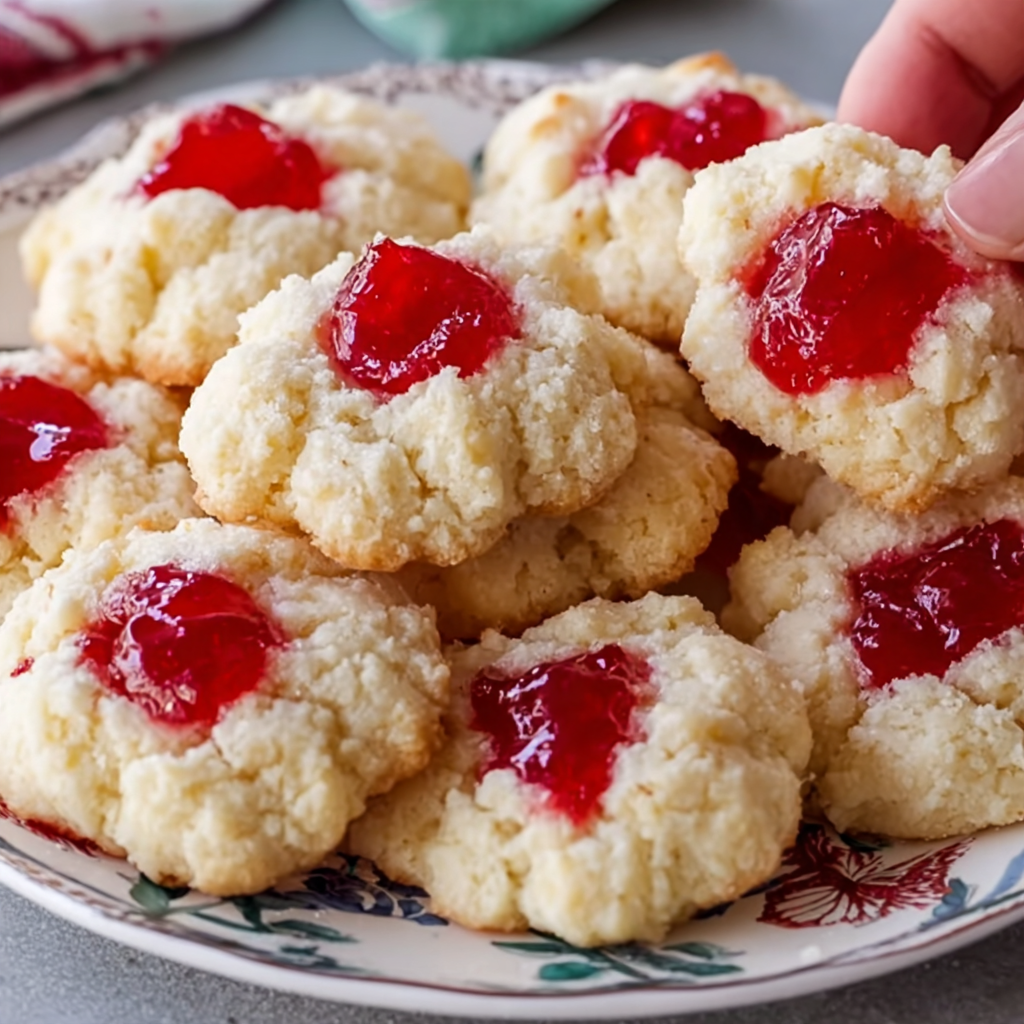
Whipped Shortbread cookies are one of those classic holiday treats that make a Christmas cookie platter feel extra special. They are incredibly buttery, wonderfully light, and have a delicate texture that practically melts in your mouth. Made with simple pantry ingredients like butter, powdered sugar, flour, and cornstarch, these cookies have a soft, tender crumb that makes them hard to resist.
What makes this Whipped Shortbread recipe different from traditional shortbread is the way the butter and sugar are beaten together until light and fluffy. This extra whipping helps create a delicate cookie with a lighter texture rather than a dense, firm shortbread. A little vanilla adds warmth, while cornstarch contributes to the signature tender finish.
Each cookie is decorated with half of a candied cherry, giving it a beautiful traditional holiday appearance. The bright red cherry against the pale golden cookie makes these treats especially pretty for Christmas gatherings, cookie exchanges, and festive dessert trays.
With just six simple ingredients, this recipe is a lovely choice when you want homemade Christmas cookies without complicated techniques or an elaborate ingredient list. They are elegant enough for holiday entertaining but simple enough to prepare for an ordinary afternoon of baking.
If you love buttery cookies that are delicate, soft, and full of classic homemade flavor, these Whipped Shortbread cookies deserve a place in your holiday baking collection.
Why You’ll Love This Whipped Shortbread Recipe
A melt-in-your-mouth texture: The combination of softened butter, powdered sugar, and cornstarch creates a delicate texture that makes these cookies especially enjoyable.
Only six simple ingredients: You do not need an extensive shopping list or specialty baking products. Most of the ingredients are common pantry staples.
Perfect for Christmas: The little red candied cherry halves give the cookies a festive appearance that looks beautiful on holiday dessert platters.
Easy to customize: You can experiment with different decorations, extracts, or shapes while keeping the basic shortbread dough.
Wonderful for sharing: These cookies are a lovely addition to Christmas cookie exchanges, homemade gift boxes, family gatherings, and holiday parties.
Classic buttery flavor: There is no complicated filling or frosting to overpower the flavor of the butter and vanilla.
Ingredients You’ll Need
This recipe uses six ingredients, each serving an important purpose in creating the characteristic texture and flavor of whipped shortbread.
Unsalted Butter – 1 Cup (227g)
Butter is the foundation of shortbread. It provides the rich flavor and tender texture that make these cookies so delicious.
Use unsalted butter softened to room temperature. Softened butter is easier to whip and combines more evenly with the powdered sugar.
Avoid melting the butter. Melted butter will not incorporate air in the same way as softened butter and can change the consistency of the dough.
Cornstarch – 1/4 Cup (40g)
Cornstarch helps create the delicate, tender texture associated with whipped shortbread. It reduces the overall proportion of gluten-forming flour in the dough, contributing to a softer bite.
Measure carefully because too much cornstarch can make the cookies excessively fragile.
All-Purpose Flour – 1 1/2 Cups (213g)
All-purpose flour provides the structure needed to hold the cookies together.
Sift the flour before measuring or use the supplied weight measurement for consistency. Adding the flour gradually helps distribute it evenly throughout the dough.
Powdered Sugar – 1/2 Cup (57g)
Powdered sugar dissolves smoothly into the whipped butter and contributes to the fine, delicate texture.
Unlike granulated sugar, its fine consistency makes it especially suitable for this type of shortbread.
Sift the powdered sugar to remove lumps before adding it to the butter.
Vanilla – 1/2 Teaspoon (2.5mL)
Vanilla adds a gentle sweetness and enhances the buttery flavor of the cookies.
Pure vanilla extract works nicely, although a good-quality vanilla flavoring can also be used.
Candied Cherries – 15, Sliced in Half
Candied cherries provide the classic festive decoration.
Cut each cherry in half to create 30 pieces. Place one half on each cookie before baking to give the cookies their traditional Christmas appearance.
How to Make Whipped Shortbread
These cookies are straightforward to prepare, but the mixing technique is important. Whipping the butter properly helps create the light texture that makes this recipe special.
Step 1: Prepare the Baking Equipment
Preheat the oven to 300°F (150°C). Line baking sheets with parchment paper.
Allow the butter to soften at room temperature before beginning. It should be soft enough to press gently with a finger but should not look melted or oily.
Sift the powdered sugar and all-purpose flour to remove lumps. Measure the cornstarch and prepare the candied cherry halves.
Having everything ready before mixing makes the preparation process easier and helps prevent mistakes when combining the ingredients.
Step 2: Whip the Butter and Powdered Sugar
Place the softened butter in a large mixing bowl.
Using an electric hand mixer or stand mixer fitted with a paddle attachment, beat the butter until creamy. Add the sifted powdered sugar and continue beating until the mixture becomes noticeably lighter and fluffy.
This whipping stage is particularly important for whipped shortbread. Beating incorporates air into the butter mixture, helping create the characteristic delicate texture.
Scrape down the sides of the bowl occasionally so the ingredients combine evenly.
Step 3: Add the Vanilla and Dry Ingredients
Add the vanilla to the whipped butter mixture and mix briefly until incorporated.
In a separate bowl, combine the sifted all-purpose flour and cornstarch.
Gradually add the dry ingredients to the butter mixture, mixing on low speed just until a soft dough forms.
Avoid overmixing once the flour has been added. Excessive mixing can develop gluten and make the cookies less tender.
The dough should be soft and workable enough to portion onto the prepared baking sheets.
Step 4: Shape the Cookies and Add the Cherries
Drop small, evenly sized portions of dough onto the prepared baking sheets, leaving enough space between them for easy handling.
For a more traditional presentation, you can use a small cookie scoop or spoon to portion the dough.
Gently press half of a candied cherry into the center of each cookie.
Try to keep the cookies similar in size so they bake evenly. Press the cherries gently rather than pushing them all the way through the dough.
Step 5: Bake and Cool
Place the baking sheets in the preheated oven and bake until the cookies are set and the bottoms are lightly colored. Avoid waiting for the tops to become deeply golden, as whipped shortbread is traditionally pale.
Because cookie size and oven performance can affect baking time, begin checking around 15 minutes and adjust as needed. A typical small cookie may take approximately 15–20 minutes, but use the appearance and texture of the cookies rather than time alone.
Allow the cookies to cool on the baking sheet briefly before carefully transferring them to a wire rack.
They will be delicate while warm, so handle them gently. Once completely cooled, they are ready to serve or store.
Tips for the Best Whipped Shortbread
A few simple baking techniques can help you get a consistent texture and attractive appearance.
Use properly softened butter. Butter that is too cold will be difficult to whip, while melted butter will not create the same airy mixture. Aim for soft, room-temperature butter.
Do not rush the whipping process. The butter and powdered sugar should become light and fluffy before you add the dry ingredients. This is one of the defining steps of whipped shortbread.
Measure the flour accurately. Too much flour can make shortbread dry and crumbly. Using the supplied gram measurement is a reliable way to keep the proportions consistent.
Sift the dry ingredients. Sifting the flour and powdered sugar helps prevent lumps and encourages an even texture.
Mix gently after adding flour. Once the flour and cornstarch are incorporated, stop mixing. Overworking the dough can affect the tenderness of the finished cookies.
Keep the cookies similar in size. Uniform portions help the cookies bake more evenly and create a more attractive presentation.
Avoid overbaking. Whipped shortbread should remain relatively pale. Watch the bottoms and edges rather than waiting for the entire cookie to turn golden brown.
Cool before storing. Allow the cookies to cool completely before placing them in an airtight container. Trapping steam can soften their delicate texture.
Variations and Substitutions
One of the nicest things about homemade shortbread is how easy it is to adjust the appearance and flavor.
Almond Whipped Shortbread
For a slightly different flavor, replace the vanilla with almond extract. Almond pairs beautifully with buttery shortbread and candied cherries.
Use a small amount because almond extract can be quite concentrated.
Chocolate-Dipped Shortbread
Once the cookies have cooled completely, dip one edge into melted chocolate. Allow the chocolate to set before serving.
Semi-sweet or white chocolate can both work well with the buttery cookie base.
Sprinkled Christmas Shortbread
For extra holiday color, add a few festive sprinkles before baking. Red, green, and white decorations complement the candied cherries.
Lemon Whipped Shortbread
A small amount of lemon zest can add a fresh citrus note to the dough. This creates a brighter flavor that contrasts nicely with the rich butter.
Different Holiday Decorations
Instead of candied cherries, try a small piece of candied orange peel or another suitable decorative topping. Keep the pieces small so they do not weigh down the delicate cookies.
Cooking Notes
Whipped shortbread is different from many other drop cookies because its texture depends heavily on properly whipped butter.
The butter should be softened, not melted. The powdered sugar should be incorporated until the mixture is light and fluffy, and the flour should be mixed in gently.
The amount of flour is particularly important. Measuring by weight is recommended because scooping flour directly from a bag can introduce more flour than intended.
These cookies are naturally delicate. They may feel soft immediately after baking, but they become easier to handle as they cool.
The suggested oven temperature is 300°F (150°C). Actual baking time depends on cookie size, thickness, baking sheet material, and oven calibration. The baking window in this article is a general starting point rather than a verified result for every oven.
Serving Suggestions
Whipped Shortbread cookies are especially lovely during the holiday season, but their simple buttery flavor makes them suitable for many occasions.
Christmas Cookie Platters: Arrange them with sugar cookies, gingerbread, chocolate crinkle cookies, and other holiday favorites.
Afternoon Coffee: Serve a few cookies with a cup of coffee or tea. Their delicate texture makes them a lovely accompaniment to a warm drink.
Holiday Dessert Tables: Place the cookies on a decorative serving tray alongside fudge, truffles, and other small sweets.
Homemade Christmas Gifts: Package completely cooled cookies in food-safe gift boxes or decorative tins. Add parchment paper between layers to help protect their delicate texture.
Cookie Exchanges: Their classic appearance and festive cherry decoration make them a beautiful option for sharing at Christmas cookie exchanges.
Storage and Freezing Instructions
How to Store Whipped Shortbread
Allow the cookies to cool completely before storing them.
Place them in an airtight container and keep them in a cool, dry place. Separate layers with parchment paper to reduce the risk of breakage.
For best quality, enjoy them within approximately one week.
Can You Freeze Whipped Shortbread?
Yes, plain baked shortbread cookies generally freeze well when properly packaged.
Place the completely cooled cookies in a freezer-safe airtight container. Separate the layers with parchment paper to protect them from breaking.
For the best quality, use within approximately two months.
Allow frozen cookies to thaw at room temperature while still protected from excess moisture.
Can You Make the Dough Ahead?
The dough can generally be prepared ahead and refrigerated in a covered container. Allow it to soften enough to portion before baking.
If the dough becomes too firm in the refrigerator, let it sit briefly at room temperature rather than trying to force it through a scoop.
Recipe Information
- Prep Time: Approximately 15 minutes
- Cook Time: Approximately 15–20 minutes per batch
- Total Time: Approximately 30–35 minutes, depending on baking batches
- Servings: Approximately 30 cookies
- Category: Dessert, Cookies
- Cuisine: Canadian-inspired / North American baking
- Method: Baking
- Difficulty: Easy
- Season: Christmas, Holiday Baking
Nutritional Information
The following nutritional values are estimates based on the listed ingredients and an assumed yield of 30 cookies. Actual values may vary depending on ingredient brands, cherry size, and final cookie portions.
Estimated Nutrition Per Cookie:
- Calories: 105 kcal
- Protein: 1 g
- Carbohydrates: 10 g
- Fat: 7 g
- Saturated Fat: 4 g
- Sugar: 3 g
- Sodium: 25 mg
For more accurate nutritional information, calculate the recipe using the exact ingredient labels and the final number of cookies produced.
Frequently Asked Questions
Why are my Whipped Shortbread cookies crumbly?
Shortbread is naturally delicate, but excessive flour or insufficient mixing of the butter and sugar can affect the final texture. Measure flour carefully, use softened butter, and whip the butter and sugar until light and fluffy.
Why do Whipped Shortbread cookies melt in your mouth?
Their delicate texture comes from the high proportion of butter, fine powdered sugar, and cornstarch. These ingredients create a tender cookie with a fine crumb.
Can I use salted butter instead of unsalted butter?
Yes, salted butter can be substituted if that is what you have available. However, it will change the salt balance of the recipe. Unsalted butter is recommended because it gives you more control over the flavor.
Can I use granulated sugar instead of powdered sugar?
Powdered sugar is recommended for this recipe because its fine texture blends smoothly into the whipped butter. Granulated sugar may produce a different texture, so it is not a direct one-to-one replacement for the intended result.
What does cornstarch do in shortbread cookies?
Cornstarch helps create a delicate, tender texture by reducing the proportion of flour in the dough and limiting gluten development.
Why are my shortbread cookies spreading?
Possible reasons include butter that is too warm or melted, an overly soft dough, or inaccurate ingredient measurements. Make sure the butter is softened rather than melted and measure the flour and cornstarch carefully.
Do I have to use candied cherries?
No. Candied cherries provide the traditional festive decoration, but you can use another small topping or leave the cookies plain.
Can I make these cookies without an electric mixer?
An electric mixer makes whipping the butter and powdered sugar easier. You can use a sturdy wooden spoon and plenty of effort, but achieving the same light, fluffy consistency may take longer.
How do I know when Whipped Shortbread is done?
The cookies should look set and remain relatively pale. Their bottoms may become lightly colored, but the tops should not become deeply browned.
Can I freeze baked Whipped Shortbread?
Yes. Once completely cooled, place the cookies in a freezer-safe airtight container with parchment paper between layers. Thaw them at room temperature before serving.
Are Whipped Shortbread cookies good for Christmas gifts?
Absolutely. Their classic appearance, buttery flavor, and cherry decoration make them a lovely addition to homemade Christmas cookie boxes and holiday gift tins.
Conclusion
Whipped Shortbread is a timeless cookie recipe that celebrates the simple pleasure of buttery homemade baking. With just six ingredients, a light and delicate texture, and a festive candied cherry on top, these cookies are a beautiful addition to Christmas celebrations.
The secret is taking the time to whip the butter and powdered sugar until light and fluffy, measuring the dry ingredients carefully, and avoiding overbaking. The result is a delicate shortbread cookie that pairs wonderfully with coffee, tea, and all your favorite holiday desserts.
Whether you are preparing a Christmas cookie platter, sharing treats with friends, or adding a new favorite to your holiday baking collection, these Whipped Shortbread cookies are a classic worth making.
Print
Whipped Shortbread
Ingredients
- 1 cup (0.5 lb, 227g) unsalted butter, softened
- 1/4 cup (1.4oz, 40g) corn starch
- 1 1/2 cups (7.5oz, 213g) all-purpose flour, sifted
- 1/2 cup (2oz, 57g) powdered sugar, sifted
- 1/2 teaspoon (2.5mL) vanilla
- 15 candied cherries (sliced in half)
Instructions
Preheat the oven to 300°F (150°C). Line baking sheets with parchment paper.
Allow the butter to soften at room temperature before beginning. It should be soft enough to press gently with a finger but should not look melted or oily.
Sift the powdered sugar and all-purpose flour to remove lumps. Measure the cornstarch and prepare the candied cherry halves.
Having everything ready before mixing makes the preparation process easier and helps prevent mistakes when combining the ingredients.
Step 2: Whip the Butter and Powdered Sugar
Place the softened butter in a large mixing bowl.
Using an electric hand mixer or stand mixer fitted with a paddle attachment, beat the butter until creamy. Add the sifted powdered sugar and continue beating until the mixture becomes noticeably lighter and fluffy.
This whipping stage is particularly important for whipped shortbread. Beating incorporates air into the butter mixture, helping create the characteristic delicate texture.
Scrape down the sides of the bowl occasionally so the ingredients combine evenly.
Step 3: Add the Vanilla and Dry Ingredients
Add the vanilla to the whipped butter mixture and mix briefly until incorporated.
In a separate bowl, combine the sifted all-purpose flour and cornstarch.
Gradually add the dry ingredients to the butter mixture, mixing on low speed just until a soft dough forms.
Avoid overmixing once the flour has been added. Excessive mixing can develop gluten and make the cookies less tender.
The dough should be soft and workable enough to portion onto the prepared baking sheets.
Step 4: Shape the Cookies and Add the Cherries
Drop small, evenly sized portions of dough onto the prepared baking sheets, leaving enough space between them for easy handling.
For a more traditional presentation, you can use a small cookie scoop or spoon to portion the dough.
Gently press half of a candied cherry into the center of each cookie.
Try to keep the cookies similar in size so they bake evenly. Press the cherries gently rather than pushing them all the way through the dough.
Step 5: Bake and Cool
Place the baking sheets in the preheated oven and bake until the cookies are set and the bottoms are lightly colored. Avoid waiting for the tops to become deeply golden, as whipped shortbread is traditionally pale.
Because cookie size and oven performance can affect baking time, begin checking around 15 minutes and adjust as needed. A typical small cookie may take approximately 15–20 minutes, but use the appearance and texture of the cookies rather than time alone.
Allow the cookies to cool on the baking sheet briefly before carefully transferring them to a wire rack.
They will be delicate while warm, so handle them gently. Once completely cooled, they are ready to serve or store.
Notes
Whipped shortbread is different from many other drop cookies because its texture depends heavily on properly whipped butter.
The butter should be softened, not melted. The powdered sugar should be incorporated until the mixture is light and fluffy, and the flour should be mixed in gently.
The amount of flour is particularly important. Measuring by weight is recommended because scooping flour directly from a bag can introduce more flour than intended.
These cookies are naturally delicate. They may feel soft immediately after baking, but they become easier to handle as they cool.
The suggested oven temperature is 300°F (150°C). Actual baking time depends on cookie size, thickness, baking sheet material, and oven calibration. The baking window in this article is a general starting point rather than a verified result for every oven.
