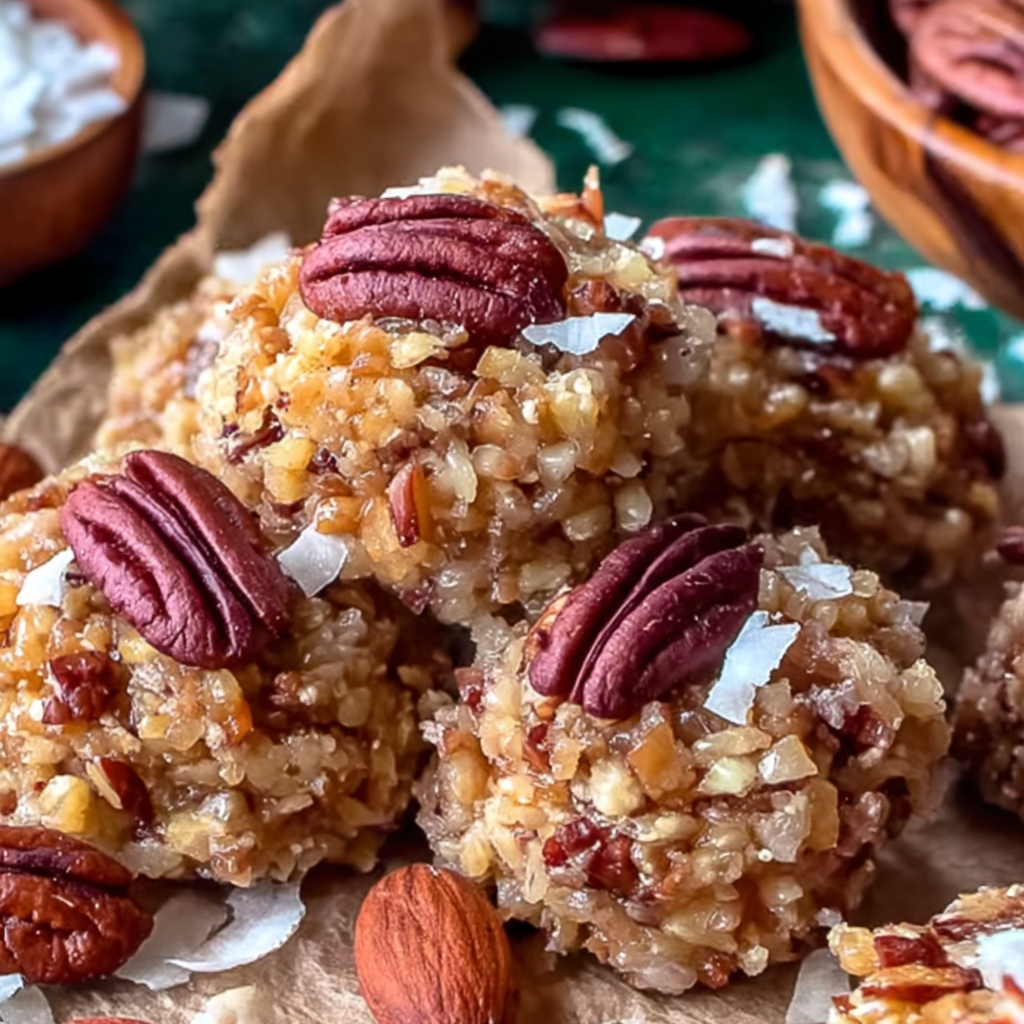
If you love old-fashioned Southern desserts, rich caramel flavors, crunchy pecans, and sweet coconut, these No-Bake Coconut Pecan Praline Cookies are going to become one of your favorite homemade treats. They combine everything wonderful about traditional pecan pralines with the convenience of an easy no-bake cookie recipe. There is no need to turn on the oven, prepare complicated dough, or spend hours baking. Instead, a simple stovetop mixture creates delicious cookies packed with coconut, pecans, and irresistible brown-sugar caramel flavor.
These easy coconut pecan praline cookies are inspired by classic Southern praline candy, a beloved treat traditionally made with sugar, butter, milk, and pecans. This version adds shredded coconut, giving the cookies a wonderful chewy texture that balances the buttery crunch of the pecans. The result is a sweet, rich, slightly chewy treat with a delicious homemade flavor.
One of the best things about this no-bake pecan praline cookie recipe is how simple it is to prepare. The ingredients are easy to find at most grocery stores, and the entire mixture comes together in one saucepan. Once the sugar mixture reaches the proper consistency, you stir in the coconut and pecans, drop spoonfuls onto parchment paper, and allow the cookies to cool and set.
These Southern coconut pecan cookies are perfect for busy weekdays, holiday baking, Christmas cookie trays, family gatherings, potlucks, bake sales, and homemade gifts. They are especially convenient during warmer months when you want something sweet without heating up the kitchen with an oven.
The combination of coconut and pecans creates a wonderful texture. The coconut adds sweetness and a soft, chewy bite, while the pecans provide a buttery crunch in every mouthful. The caramel-like mixture holds everything together and gives these cookies their signature praline flavor.
Another reason to love these homemade no-bake praline cookies is their versatility. You can use toasted pecans for extra nuttiness, add a little vanilla for warmth, sprinkle sea salt over the tops, or drizzle melted chocolate over the finished cookies for an extra-special dessert.
Whether you are familiar with traditional Southern pralines or trying them for the first time, these No-Bake Coconut Pecan Praline Cookies are a wonderful way to enjoy those classic flavors in an easy, bite-sized dessert.
Ingredients
You only need a handful of simple ingredients to prepare these delicious no-bake coconut pecan cookies. For the best results, measure everything before starting because the cooking process moves quickly once the sugar mixture is ready.
Main Ingredients
- 2 cups granulated sugar: Provides the sweetness and structure needed for the praline mixture.
- 1/2 cup unsalted butter: Adds a rich, buttery flavor and helps create the smooth caramel-like base.
- 1/2 cup evaporated milk: Adds creaminess and helps the sugar mixture cook into a delicious praline consistency.
- 1 teaspoon vanilla extract: Enhances the flavor and complements the coconut and pecans.
- 2 cups sweetened shredded coconut: Creates the signature chewy texture and adds natural coconut sweetness.
- 2 cups chopped pecans: Provide a delicious nutty crunch and traditional Southern praline flavor.
- 1/4 teaspoon salt: Balances the sweetness and brings out the flavor of the other ingredients.
Optional Ingredients
- 1/2 teaspoon ground cinnamon: Adds a gentle warmth to the praline mixture.
- 1/2 cup white chocolate chips: Can be melted and drizzled over the finished cookies.
- 1/4 cup extra chopped pecans: Perfect for decorating the tops.
- Flaky sea salt: Adds a sweet-and-salty contrast.
- 1 tablespoon heavy cream: Useful if the mixture becomes too thick before you finish shaping the cookies.
Ingredient Tips
Use fresh pecans for the best flavor. Pecans that have been stored for a long time can develop a bitter or stale taste.
Sweetened shredded coconut is recommended for a classic dessert flavor. Unsweetened coconut can also work, but the cookies will be less sweet and may have a slightly different texture.
Evaporated milk gives the mixture richness and helps produce a smooth praline base. Do not confuse evaporated milk with sweetened condensed milk, which contains substantially more sugar and has a different consistency.
Preparation: How to Make No-Bake Coconut Pecan Praline Cookies
Follow these simple steps to create delicious homemade Southern praline cookies without using an oven.
Step 1: Prepare your baking sheets
Before cooking the praline mixture, prepare two large baking sheets or flat trays.
Line them with parchment paper or silicone baking mats. This is important because the warm praline mixture can become sticky as it cools.
Make sure you have enough space to place all the cookies without allowing them to touch.
Measure the shredded coconut and chopped pecans and keep them nearby. Once the sugar mixture reaches the correct temperature, you will need to work quickly.
If your pecans are not toasted, you can toast them in a dry skillet over medium-low heat for approximately 3–5 minutes, stirring frequently. Remove them from the skillet and allow them to cool completely.
Toasting is optional, but it gives the pecans a deeper, nuttier flavor that works beautifully with the caramel sweetness.
Step 2: Combine the sugar, butter, and evaporated milk
Place the granulated sugar, unsalted butter, and evaporated milk into a medium-sized heavy-bottomed saucepan.
Set the saucepan over medium heat and stir gently until the butter melts and the sugar begins to dissolve.
Continue stirring until the ingredients are evenly combined.
A heavy-bottomed saucepan is helpful because it distributes heat more evenly and reduces the risk of burning the sugar mixture.
Once the butter has melted, bring the mixture to a gentle boil.
Avoid turning the heat too high. Cooking the sugar mixture too quickly can cause it to scorch around the edges or develop an unpleasant burnt flavor.
Step 3: Cook the praline mixture
Allow the mixture to boil for approximately 3–5 minutes, stirring frequently.
For more consistent results, use a candy thermometer and cook the mixture to approximately 235–240°F (113–116°C), the soft-ball stage.
The exact cooking time depends on your saucepan, stove, and ingredient temperatures, so temperature is more reliable than time alone.
At the soft-ball stage, a small amount of the sugar mixture dropped into cold water should form a soft, flexible ball.
Do not allow the mixture to become too hot. If it reaches a much higher temperature, the cookies may turn out hard or crumbly instead of soft and chewy.
Remove the saucepan from the heat once the desired temperature is reached.
Step 4: Add the vanilla extract and salt
Immediately stir in the vanilla extract and salt.
Mix gently until the vanilla is evenly distributed throughout the warm praline mixture.
You may notice the mixture bubbling slightly when the vanilla is added. This is normal.
The vanilla adds a wonderful aroma, while the salt balances the sweetness and helps bring out the buttery flavor.
If you are adding cinnamon, stir it in at this stage as well.
Step 5: Fold in the coconut and pecans
Add the shredded coconut and chopped pecans to the saucepan.
Using a sturdy wooden spoon or heat-resistant spatula, stir until every piece of coconut and pecan is coated in the warm praline mixture.
Work relatively quickly because the mixture will begin to thicken as it cools.
Make sure the ingredients are distributed evenly. You want every cookie to contain plenty of coconut and pecans.
The mixture should be thick, sticky, and easy to scoop while still warm.
If it appears unusually loose, allow it to rest briefly and thicken. Avoid adding extra coconut or pecans immediately without checking the consistency, as this can make the cookies too dry.
Step 6: Scoop the cookies onto parchment paper
Using a tablespoon or small cookie scoop, drop portions of the warm mixture onto the prepared baking sheets.
Leave a little space between each cookie because the mixture may spread slightly before setting.
For larger Southern-style praline cookies, use approximately 2 tablespoons of mixture per cookie.
For smaller bite-sized treats, use 1 tablespoon.
If the mixture becomes too firm to scoop, gently warm it over very low heat for a short time while stirring. Avoid prolonged reheating because this can change the final texture.
You can use the back of a spoon to shape the cookies into neat rounds if desired.
Step 7: Add optional toppings
While the cookies are still warm, sprinkle a few extra chopped pecans over the tops.
For a sweet-and-salty variation, add a very small pinch of flaky sea salt.
If you want a more decorative appearance, melt white chocolate or semisweet chocolate and drizzle it lightly over the cookies once they have cooled.
You can also press a whole pecan half into the center of each cookie for a beautiful homemade praline appearance.
These simple finishing touches make the cookies look especially attractive on Christmas cookie trays and dessert platters.
Step 8: Allow the cookies to cool and set
Leave the cookies at room temperature for approximately 30–60 minutes, or until they become firm enough to lift from the parchment paper.
The setting time depends on the thickness of the cookies, the humidity in your kitchen, and how accurately the sugar mixture was cooked.
Do not try to move the cookies while they are still very warm because they may fall apart or lose their shape.
Once completely set, gently peel the cookies away from the parchment paper.
They should hold together while maintaining a slightly chewy texture with plenty of coconut and pecans.
Step 9: Serve and enjoy
Arrange your finished No-Bake Coconut Pecan Praline Cookies on a serving platter or store them in an airtight container.
Serve them with coffee, tea, hot chocolate, or a cold glass of milk.
These homemade Southern praline cookies are delicious at room temperature and make a wonderful treat for sharing with family and friends.
Variations
One of the best things about this easy no-bake coconut pecan cookie recipe is how easy it is to customize. Here are several delicious variations to try.
1. Chocolate Drizzled Coconut Pecan Praline Cookies
For chocolate lovers, drizzle melted semisweet or dark chocolate over the cooled cookies.
The slightly bitter chocolate balances the sweetness of the praline mixture and creates a beautiful presentation.
You can also dip half of each cookie into melted chocolate for a more decadent dessert.
2. White Chocolate Pecan Praline Cookies
Melt white chocolate chips and drizzle them over the finished cookies.
White chocolate adds a creamy sweetness that pairs beautifully with the coconut and pecans.
For an attractive finish, sprinkle a few extra toasted pecans over the white chocolate before it sets.
3. Salted Caramel Coconut Pecan Cookies
Add a small pinch of flaky sea salt to the finished cookies.
The salt creates a wonderful contrast with the sweet caramel-like mixture and enhances the buttery pecan flavor.
This variation is especially delicious for people who enjoy sweet-and-salty desserts.
4. Toasted Coconut Praline Cookies
Lightly toast the shredded coconut in a dry skillet or oven before adding it to the recipe.
Toasted coconut develops a deeper flavor and gives the cookies a slightly more complex texture.
Allow the coconut to cool before stirring it into the praline mixture.
5. Extra Pecan Praline Cookies
If you love pecans, increase their quantity slightly and reduce the coconut by the same amount.
This creates a nuttier cookie with more crunch and a flavor closer to traditional pecan praline candy.
6. Cinnamon Coconut Pecan Cookies
Add 1/2 teaspoon of cinnamon to the sugar mixture.
Cinnamon provides a gentle warmth that works beautifully with brown-sugar-style caramel flavors and coconut.
This variation is especially nice during autumn and winter.
7. Brown Sugar Coconut Pecan Pralines
Replace a small portion of the granulated sugar with light brown sugar, adjusting the recipe carefully because brown sugar contains additional moisture.
The result is a deeper caramel flavor with a slightly richer sweetness.
8. Holiday Coconut Pecan Praline Cookies
For Christmas, add festive decorations such as red and green sprinkles or drizzle the cookies with white chocolate.
Arrange them in decorative tins or gift boxes for homemade holiday presents.
Cooking Note
The most important part of making successful no-bake praline cookies is controlling the temperature of the sugar mixture.
Use a heavy-bottomed saucepan. This helps distribute heat evenly and reduces the chance of scorching.
Measure the ingredients before cooking. The mixture begins thickening quickly once removed from the heat, so having everything ready makes the process much easier.
Use a candy thermometer if possible. Reaching approximately 235–240°F is an important step in creating cookies that set properly without becoming too hard.
Do not confuse evaporated milk with condensed milk. They are different products and cannot be substituted in equal amounts without adjusting the recipe.
Work quickly after adding the coconut and pecans. The praline mixture thickens as it cools, making it harder to scoop.
Avoid overcooking. Excessive heat can cause the cookies to become hard, dry, or crumbly.
Allow enough cooling time. The cookies need time to set before being moved or stored.
Consider humidity. Very humid weather can affect how quickly sugar-based candies set. A cool, dry environment is helpful.
Serving Suggestions
These No-Bake Coconut Pecan Praline Cookies are delicious on their own, but there are plenty of ways to serve them.
With a Glass of Cold Milk
Serve a few cookies with a tall glass of cold milk. The creamy milk balances the sweet praline flavor and makes this a wonderful afternoon snack.
With Freshly Brewed Coffee
The buttery pecans and caramel sweetness pair beautifully with coffee. Serve them after dinner or during a relaxing afternoon break.
With Hot Chocolate
For a cozy winter dessert, enjoy these coconut pecan cookies with a mug of hot chocolate.
On a Christmas Cookie Tray
Arrange the cookies with chocolate fudge, sugar cookies, peanut butter cookies, and other homemade holiday treats.
Their rustic appearance and rich pecan flavor make them a beautiful addition to festive dessert platters.
As Homemade Food Gifts
Place the completely cooled cookies in decorative tins or gift boxes lined with parchment paper.
Add a ribbon and a handwritten recipe card for a thoughtful homemade gift.
With Vanilla Ice Cream
Crumble one or two cookies over vanilla ice cream for a delicious dessert with creamy, crunchy, and chewy textures.
Tips for Perfect No-Bake Coconut Pecan Praline Cookies
- Use fresh pecans for the best nutty flavor.
- Toast the pecans before adding them for extra depth.
- Measure the coconut accurately to maintain the right consistency.
- Use evaporated milk for the intended creamy praline texture.
- Stir the sugar mixture frequently while heating.
- Use a candy thermometer whenever possible.
- Cook to the soft-ball stage for cookies that set properly.
- Do not overcook the sugar mixture.
- Add the coconut and pecans immediately after removing the saucepan from the heat.
- Scoop the cookies while the mixture is still warm.
- Use parchment paper to prevent sticking.
- Keep the cookies similar in size so they set evenly.
- Let the cookies cool completely before storing.
- Avoid storing them while they are still warm because trapped moisture can affect their texture.
- If the mixture becomes too firm, gently rewarm it over very low heat.
- Add chocolate drizzle only after the cookies have cooled.
- Store the cookies in a cool, dry place to help maintain their texture.
Prep Time
Preparation Time: 15 minutes
Cooking Time: 10 minutes
Cooling and Setting Time: 30–60 minutes
Cooking Time
Approximately 10 minutes for preparing and cooking the praline mixture.
Total Time
Approximately 55–85 minutes, including cooling and setting time.
The active preparation and cooking time is approximately 25 minutes.
Nutritional Information
The following nutritional information is an approximate estimate per cookie, assuming the recipe makes approximately 24 cookies. Actual values depend on ingredient brands, cookie size, and exact quantities.
- Calories: Approximately 180–210
- Protein: Approximately 1–2 g
- Sodium: Approximately 50–90 mg
Nutritional Details
Calories: Most of the calories come from sugar, butter, coconut, and pecans. The pecans also contribute healthy unsaturated fats.
Protein: Pecans and coconut provide small amounts of protein.
Sodium: The amount of sodium depends on the butter, evaporated milk, and added salt.
These cookies are an indulgent dessert, so enjoy them in portions that suit your preferences.
FAQs About No-Bake Coconut Pecan Praline Cookies
1. Why are my no-bake coconut pecan praline cookies not setting?
The most common reason is that the sugar mixture was not cooked to a high enough temperature. If it does not reach the soft-ball stage, the cookies may remain sticky or too soft.
Use a candy thermometer and aim for approximately 235–240°F.
2. Why did my praline cookies turn out too hard?
The mixture may have been cooked too long or reached too high a temperature. Excessive cooking causes more moisture to evaporate, resulting in a harder candy texture.
Try cooking the mixture for less time while monitoring the temperature carefully.
3. Can I make these cookies without an oven?
Yes! This is a completely no-bake cookie recipe. Everything is prepared on the stovetop, and the cookies set at room temperature.
4. Can I use sweetened condensed milk instead of evaporated milk?
Not as a direct substitute. Sweetened condensed milk contains added sugar and has a much thicker consistency.
Using it would significantly change the sweetness and texture of the cookies.
5. How long do no-bake coconut pecan praline cookies last?
When stored in an airtight container in a cool, dry environment, they generally keep for approximately 5–7 days for best quality.
Humidity and room temperature can affect their texture.
6. Do I need to refrigerate these cookies?
Refrigeration is not always necessary for the basic recipe once the cookies have set, provided they are stored in a cool environment and safe food-handling conditions are maintained.
If your kitchen is particularly warm, refrigeration can help them stay firm.
7. Can I freeze coconut pecan praline cookies?
Yes. Allow them to set completely, then place them in a freezer-safe container with parchment paper between layers.
Freeze for approximately 2 months for best quality. Thaw at room temperature before serving.
8. Can I use unsweetened coconut?
Yes. Unsweetened shredded coconut works, but the cookies will have a less sweet coconut flavor.
The texture may also vary slightly depending on how finely the coconut is shredded.
9. Can I use walnuts instead of pecans?
Absolutely. Walnuts provide a similar crunchy texture and work well with the caramel and coconut flavors.
However, pecans are the traditional choice for Southern praline desserts.
10. What if my praline mixture becomes too thick before I finish scooping?
You can gently warm the saucepan over very low heat while stirring until the mixture becomes easier to scoop.
Avoid overheating it, because excessive heat can make the finished cookies too hard.
11. Can I make these cookies ahead of time?
Yes. They are excellent make-ahead treats because they need time to cool and set.
Prepare them a day before your gathering and store them in an airtight container.
12. Can I add chocolate chips to the mixture?
Yes, but allow the praline mixture to cool slightly before adding chocolate chips so they do not melt completely.
You can also drizzle melted chocolate over the finished cookies for a more decorative result.
13. How do I know when the sugar mixture reaches the soft-ball stage?
A candy thermometer should read approximately 235–240°F.
Alternatively, drop a small amount of the mixture into cold water. It should form a soft, flexible ball that can be shaped but does not hold a firm shape.
Be extremely careful when handling hot sugar because it can cause serious burns.
14. Why are my cookies crumbly?
The sugar mixture may have been overcooked, or the recipe may contain too much coconut or pecans relative to the liquid mixture.
Accurate measurements and careful temperature control help prevent this problem.
15. Are these cookies good for Christmas?
Yes! Their coconut, pecan, and caramel flavors make them wonderful holiday treats.
They are easy to prepare in batches and look beautiful on Christmas dessert platters.
16. Can I make smaller bite-sized cookies?
Yes. Use a teaspoon-sized scoop to make smaller portions.
They will set more quickly and are perfect for dessert trays and party snacks.
17. Can I add vanilla extract?
Definitely. Vanilla extract enhances the caramel flavor and complements the coconut and pecans.
Add it after removing the sugar mixture from the heat.
18. What is the difference between pecan pralines and praline cookies?
Traditional pecan pralines are candies made primarily from cooked sugar, butter, milk, and pecans. Praline cookies are often inspired by these candies but may include additional ingredients such as coconut to create a more cookie-like texture.
This recipe combines both ideas in an easy no-bake treat.
19. Can I make these cookies dairy-free?
You can experiment with dairy-free butter and a suitable evaporated milk alternative, but the cooking behavior and final texture may differ. Use products specifically suitable for cooking and test the consistency carefully.
20. What is the best way to package these cookies?
Once completely set, place them in a decorative tin or airtight food container with parchment paper between layers.
Keep them in a cool, dry place, and avoid stacking them too tightly if the praline surfaces are still slightly sticky.
Conclusion
These No-Bake Coconut Pecan Praline Cookies are everything a homemade Southern dessert should be: sweet, buttery, rich, chewy, and filled with delicious pecans and coconut. Their caramel-like praline flavor makes them irresistible, while their simple stovetop preparation makes them perfect for anyone who wants a delicious homemade treat without turning on the oven.
Whether you are preparing a batch for Christmas, a family gathering, a potluck, or simply satisfying a sweet craving, these easy coconut pecan praline cookies are a wonderful choice.
The combination of toasted pecans, sweet coconut, vanilla, and buttery sugar creates a delicious texture in every bite. Best of all, you can prepare them ahead of time, customize them with chocolate or sea salt, and package them beautifully for homemade gifts.
Remember to cook the sugar mixture carefully, work quickly when adding the coconut and pecans, and give the cookies enough time to cool and set.
Make a batch of these delicious Southern no-bake praline cookies, share them with family and friends, and enjoy a little taste of old-fashioned homemade sweetness. Once you try them, they may become one of your favorite easy no-bake desserts!
Print
No-Bake Coconut Pecan Praline Cookies – Easy Southern Homemade Candy Cookies
- Total Time: 55–85 minutes
Description
these No-Bake Coconut Pecan Praline Cookies are going to become one of your favorite homemade treats. They combine everything wonderful about traditional pecan pralines with the convenience of an easy no-bake cookie recipe. There is no need to turn on the oven, prepare complicated dough, or spend hours baking.
Ingredients
Main Ingredients
- 2 cups granulated sugar: Provides the sweetness and structure needed for the praline mixture.
- 1/2 cup unsalted butter: Adds a rich, buttery flavor and helps create the smooth caramel-like base.
- 1/2 cup evaporated milk: Adds creaminess and helps the sugar mixture cook into a delicious praline consistency.
- 1 teaspoon vanilla extract: Enhances the flavor and complements the coconut and pecans.
- 2 cups sweetened shredded coconut: Creates the signature chewy texture and adds natural coconut sweetness.
- 2 cups chopped pecans: Provide a delicious nutty crunch and traditional Southern praline flavor.
- 1/4 teaspoon salt: Balances the sweetness and brings out the flavor of the other ingredients.
Optional Ingredients
- 1/2 teaspoon ground cinnamon: Adds a gentle warmth to the praline mixture.
- 1/2 cup white chocolate chips: Can be melted and drizzled over the finished cookies.
- 1/4 cup extra chopped pecans: Perfect for decorating the tops.
- Flaky sea salt: Adds a sweet-and-salty contrast.
- 1 tablespoon heavy cream: Useful if the mixture becomes too thick before you finish shaping the cookies.
Instructions
Before cooking the praline mixture, prepare two large baking sheets or flat trays.
Line them with parchment paper or silicone baking mats. This is important because the warm praline mixture can become sticky as it cools.
Make sure you have enough space to place all the cookies without allowing them to touch.
Measure the shredded coconut and chopped pecans and keep them nearby. Once the sugar mixture reaches the correct temperature, you will need to work quickly.
If your pecans are not toasted, you can toast them in a dry skillet over medium-low heat for approximately 3–5 minutes, stirring frequently. Remove them from the skillet and allow them to cool completely.
Toasting is optional, but it gives the pecans a deeper, nuttier flavor that works beautifully with the caramel sweetness.
Step 2: Combine the sugar, butter, and evaporated milk
Place the granulated sugar, unsalted butter, and evaporated milk into a medium-sized heavy-bottomed saucepan.
Set the saucepan over medium heat and stir gently until the butter melts and the sugar begins to dissolve.
Continue stirring until the ingredients are evenly combined.
A heavy-bottomed saucepan is helpful because it distributes heat more evenly and reduces the risk of burning the sugar mixture.
Once the butter has melted, bring the mixture to a gentle boil.
Avoid turning the heat too high. Cooking the sugar mixture too quickly can cause it to scorch around the edges or develop an unpleasant burnt flavor.
Step 3: Cook the praline mixture
Allow the mixture to boil for approximately 3–5 minutes, stirring frequently.
For more consistent results, use a candy thermometer and cook the mixture to approximately 235–240°F (113–116°C), the soft-ball stage.
The exact cooking time depends on your saucepan, stove, and ingredient temperatures, so temperature is more reliable than time alone.
At the soft-ball stage, a small amount of the sugar mixture dropped into cold water should form a soft, flexible ball.
Do not allow the mixture to become too hot. If it reaches a much higher temperature, the cookies may turn out hard or crumbly instead of soft and chewy.
Remove the saucepan from the heat once the desired temperature is reached.
Step 4: Add the vanilla extract and salt
Immediately stir in the vanilla extract and salt.
Mix gently until the vanilla is evenly distributed throughout the warm praline mixture.
You may notice the mixture bubbling slightly when the vanilla is added. This is normal.
The vanilla adds a wonderful aroma, while the salt balances the sweetness and helps bring out the buttery flavor.
If you are adding cinnamon, stir it in at this stage as well.
Step 5: Fold in the coconut and pecans
Add the shredded coconut and chopped pecans to the saucepan.
Using a sturdy wooden spoon or heat-resistant spatula, stir until every piece of coconut and pecan is coated in the warm praline mixture.
Work relatively quickly because the mixture will begin to thicken as it cools.
Make sure the ingredients are distributed evenly. You want every cookie to contain plenty of coconut and pecans.
The mixture should be thick, sticky, and easy to scoop while still warm.
If it appears unusually loose, allow it to rest briefly and thicken. Avoid adding extra coconut or pecans immediately without checking the consistency, as this can make the cookies too dry.
Step 6: Scoop the cookies onto parchment paper
Using a tablespoon or small cookie scoop, drop portions of the warm mixture onto the prepared baking sheets.
Leave a little space between each cookie because the mixture may spread slightly before setting.
For larger Southern-style praline cookies, use approximately 2 tablespoons of mixture per cookie.
For smaller bite-sized treats, use 1 tablespoon.
If the mixture becomes too firm to scoop, gently warm it over very low heat for a short time while stirring. Avoid prolonged reheating because this can change the final texture.
You can use the back of a spoon to shape the cookies into neat rounds if desired.
Step 7: Add optional toppings
While the cookies are still warm, sprinkle a few extra chopped pecans over the tops.
For a sweet-and-salty variation, add a very small pinch of flaky sea salt.
If you want a more decorative appearance, melt white chocolate or semisweet chocolate and drizzle it lightly over the cookies once they have cooled.
You can also press a whole pecan half into the center of each cookie for a beautiful homemade praline appearance.
These simple finishing touches make the cookies look especially attractive on Christmas cookie trays and dessert platters.
Step 8: Allow the cookies to cool and set
Leave the cookies at room temperature for approximately 30–60 minutes, or until they become firm enough to lift from the parchment paper.
The setting time depends on the thickness of the cookies, the humidity in your kitchen, and how accurately the sugar mixture was cooked.
Do not try to move the cookies while they are still very warm because they may fall apart or lose their shape.
Once completely set, gently peel the cookies away from the parchment paper.
They should hold together while maintaining a slightly chewy texture with plenty of coconut and pecans.
Step 9: Serve and enjoy
Arrange your finished No-Bake Coconut Pecan Praline Cookies on a serving platter or store them in an airtight container.
Serve them with coffee, tea, hot chocolate, or a cold glass of milk.
These homemade Southern praline cookies are delicious at room temperature and make a wonderful treat for sharing with family and friends.
Notes
The most important part of making successful no-bake praline cookies is controlling the temperature of the sugar mixture.
Use a heavy-bottomed saucepan. This helps distribute heat evenly and reduces the chance of scorching.
Measure the ingredients before cooking. The mixture begins thickening quickly once removed from the heat, so having everything ready makes the process much easier.
Use a candy thermometer if possible. Reaching approximately 235–240°F is an important step in creating cookies that set properly without becoming too hard.
Do not confuse evaporated milk with condensed milk. They are different products and cannot be substituted in equal amounts without adjusting the recipe.
Work quickly after adding the coconut and pecans. The praline mixture thickens as it cools, making it harder to scoop.
Avoid overcooking. Excessive heat can cause the cookies to become hard, dry, or crumbly.
Allow enough cooling time. The cookies need time to set before being moved or stored.
Consider humidity. Very humid weather can affect how quickly sugar-based candies set. A cool, dry environment is helpful.
- Prep Time: 15 minutes
- Cooling and Setting Time: 30–60 minutes
- Cook Time: 10 minutes
Nutrition
- Calories: 180–210
- Sodium: 50–90 mg
- Protein: 1–2 g
