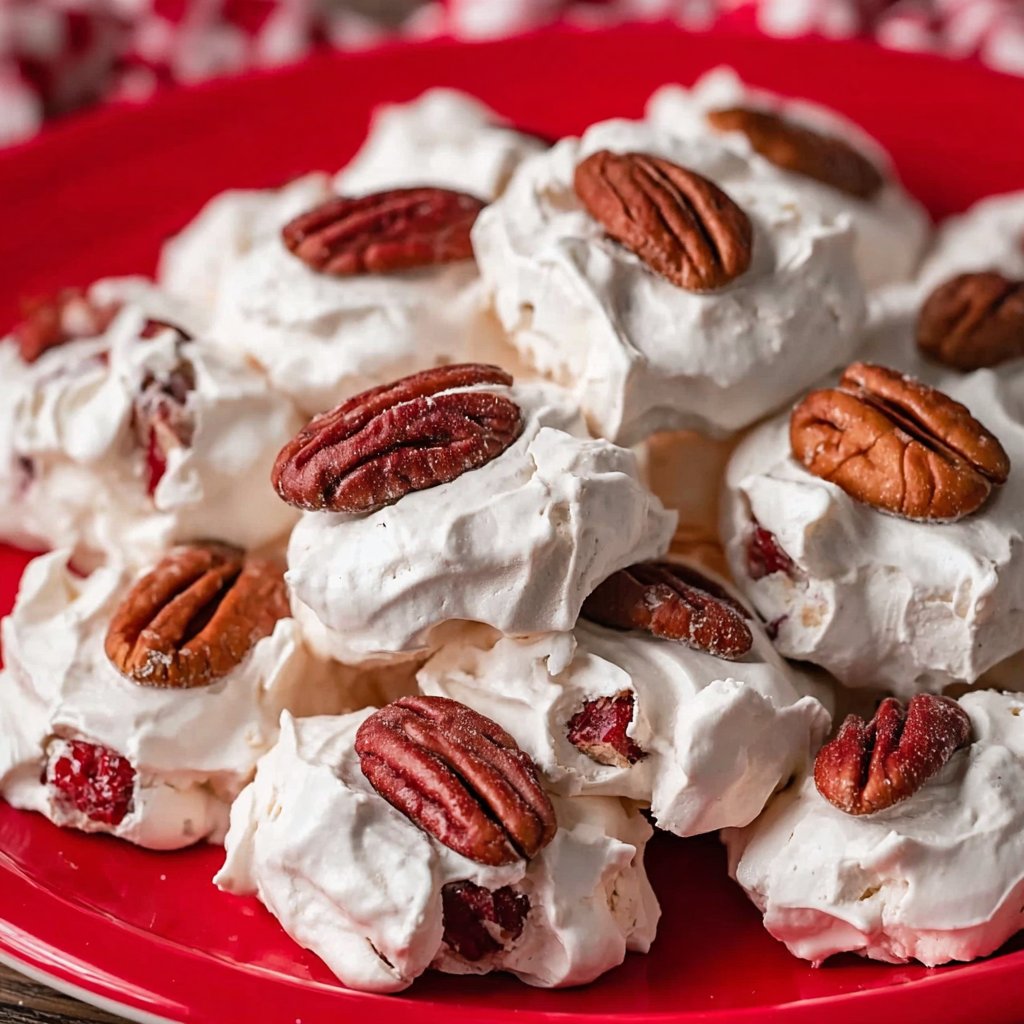
No-Fail Divinity is a classic homemade candy known for its beautiful snowy-white color, delicate vanilla flavor, and soft, cloud-like texture. Made with sugar, corn syrup, egg whites, and vanilla, this old-fashioned Southern treat is light and airy while still delivering the satisfying sweetness of traditional holiday candy. Add crunchy pecans, and every bite becomes a wonderful combination of fluffy candy and nutty flavor.
Divinity has been a favorite in many American kitchens for generations, especially during Christmas and other special occasions. Its elegant appearance makes it perfect for holiday dessert trays, homemade gift boxes, and family candy-making traditions. Although traditional divinity can be sensitive to humidity and temperature, following a few important techniques makes the process much more manageable.
This No-Fail Divinity recipe focuses on carefully cooking the sugar syrup, beating the egg whites to the right consistency, and combining everything at the correct stage. A candy thermometer is particularly helpful because the syrup needs to reach the hard-ball stage before it is poured into the whipped egg whites. Once the mixture becomes thick and holds its shape, you can spoon it into small portions and allow the pieces to set.
The result is a beautiful batch of homemade candy that looks impressive but uses just a handful of familiar ingredients. Whether you remember divinity from a grandparent’s kitchen or are making it for the first time, this recipe is a lovely addition to your collection of old-fashioned candy recipes.
Why You’ll Love This No-Fail Divinity Recipe
- Light and fluffy texture: Properly prepared divinity has a delicate, airy consistency that melts in your mouth.
- Classic Southern flavor: Vanilla, sugar, and optional pecans create a timeless combination.
- Perfect for Christmas: The white candy looks beautiful alongside fudge, peanut butter balls, and chocolate-covered treats.
- Simple ingredients: You need only a few pantry staples and basic kitchen tools.
- Great for gifting: Arrange the finished pieces in paper candy cups and place them in a food-safe gift box.
- Easy to customize: Add pecans, chopped walnuts, or a small amount of almond extract to create your preferred version.
One important note: divinity is not completely foolproof. Humidity, syrup temperature, and beating time can affect the result. Following the steps carefully gives you the best chance of achieving the classic fluffy texture.
Ingredients for No-Fail Divinity
This recipe makes approximately 25–35 pieces, depending on how large you spoon the candy.
Ingredients
- 2 1/2 cups granulated sugar
- 1/2 cup light corn syrup
- 1/2 cup water
- 2 large egg whites, at room temperature
- 1 teaspoon vanilla extract
- 1 cup chopped pecans, optional
- A small pinch of salt, optional
Ingredient Notes
Granulated sugar: Sugar forms the structure of divinity. Measure carefully because changing the sugar-to-liquid ratio can affect how the candy sets.
Light corn syrup: Corn syrup helps control sugar crystallization and promotes a smoother texture. It is an important ingredient for consistent results.
Water: Water dissolves the sugar before the syrup is cooked. Most of it evaporates during cooking.
Egg whites: Beaten egg whites create the light, airy structure that distinguishes divinity from other homemade candies. Use clean, grease-free equipment and keep all egg yolks out of the whites.
Vanilla extract: Vanilla provides the familiar sweet aroma and flavor. Add it near the end of mixing.
Pecans: Pecans are a traditional addition in many Southern versions. Chop them fairly small so they distribute evenly through the candy.
Salt: A tiny pinch can balance the sweetness, although it is optional.
Essential Equipment
You do not need an elaborate kitchen setup, but a few tools make this recipe easier.
- A heavy-bottomed saucepan
- A reliable candy thermometer
- A stand mixer or sturdy electric hand mixer
- A heat-resistant mixing bowl
- A silicone spatula
- Parchment paper or wax paper
- Two spoons or a small cookie scoop
A candy thermometer is especially useful because divinity depends on reaching the correct syrup temperature. A stand mixer is convenient because the candy may require several minutes of continuous beating. Make sure the bowl and beaters are clean and free of grease before starting.
Preparation: How to Make No-Fail Divinity
Step 1: Prepare Your Workspace and Ingredients
Before heating the syrup, line two baking sheets or a large tray with parchment paper or wax paper. Make sure you have enough room to spoon out all the candy once the mixture is ready.
Separate the egg whites carefully, keeping every trace of yolk out of the whites. Allow them to come to room temperature, which can help them whip more easily.
Measure the sugar, corn syrup, and water in advance. Chop the pecans if you are using them, and have the vanilla extract ready beside your mixer.
Divinity can begin to set quickly after mixing, so preparation matters. Once the syrup reaches the required temperature, you will need to work efficiently.
Step 2: Cook the Sugar Syrup
Combine the granulated sugar, light corn syrup, and water in a heavy-bottomed saucepan. Stir gently over medium heat until the sugar dissolves.
Once the mixture begins boiling, stop stirring. Attach the candy thermometer to the side of the pan, making sure its tip is immersed in the syrup without touching the bottom.
Continue cooking until the syrup reaches 260°F, the hard-ball stage. Depending on your stove and saucepan, this may take approximately 8–15 minutes, but the thermometer reading is more reliable than the clock.
Avoid scraping sugar crystals from the sides of the pan into the syrup. If crystals form on the sides, carefully brush them down with a clean pastry brush dipped in water before the mixture reaches a vigorous boil.
Use caution when handling hot syrup because it can cause severe burns. Keep children and pets away from the cooking area, and never taste the syrup while it is hot.
Step 3: Beat the Egg Whites
When the syrup approaches the correct temperature, begin beating the egg whites in a clean, grease-free mixer bowl.
Beat until the whites form stiff peaks. This means the mixture should hold its shape when the beaters are lifted, rather than collapsing immediately.
Timing is important. The egg whites should be ready when the syrup reaches 260°F, so watch the thermometer closely and adjust your mixer speed as needed.
If the whites reach stiff peaks too early, reduce the mixer speed while you finish cooking the syrup. Do not add the hot syrup until the whites are ready.
Step 4: Slowly Add the Hot Syrup
With the mixer running at medium speed, carefully pour the hot syrup into the beaten egg whites in a thin, steady stream. Aim for the inside edge of the bowl rather than directly onto the beaters to reduce splashing.
Continue beating as you pour. Take your time because the syrup is extremely hot. Do not rush or pour the entire pan in at once.
After all the syrup has been added, continue beating until the mixture becomes thick, glossy, and less shiny. This may take approximately 5–10 minutes or longer depending on your mixer and room conditions.
Near the end, add the vanilla extract and optional pinch of salt. Fold in the chopped pecans if desired.
The mixture should hold its shape when dropped from a spoon. If it is still very runny, it may need more beating, although overbeating can also cause problems.
Step 5: Shape and Let the Candy Set
Working quickly, use two spoons to drop small mounds of the mixture onto the prepared parchment paper. You can make them rounded or slightly peaked, depending on the traditional look you prefer.
If the candy starts setting in the bowl, stop trying to create perfect shapes and portion it out as efficiently as possible. Divinity often develops its characteristic soft peaks as the mixture is spooned onto the paper.
Allow the pieces to stand at room temperature until they are dry on the outside and firm enough to lift without losing their shape. Depending on the humidity and the consistency of the mixture, this may take several hours.
Once fully set, transfer the candies to an airtight container, separating layers with parchment paper. Store them in a cool, dry place.
Tips for Perfect No-Fail Divinity
Check the weather. Dry weather is usually best for divinity. Humidity can prevent the candy from drying properly and may leave it sticky.
Use a candy thermometer. The hard-ball stage is important. Syrup that is too cool may produce soft candy, while syrup that is too hot can create a dry or crumbly result.
Keep equipment grease-free. Even a small amount of fat can interfere with the egg whites reaching the correct volume.
Add syrup gradually. A thin, steady stream helps the hot syrup combine evenly with the whipped egg whites.
Beat until the mixture holds its shape. The mixture should be thick enough to form soft peaks when dropped onto parchment paper.
Work quickly when shaping. Once divinity begins to set, it becomes harder to portion neatly.
Do not rush the cooling process. Let the candy set at room temperature in a dry area rather than covering it while it is still warm.
Common Divinity Problems and How to Fix Them
Why Is My Divinity Sticky?
Humidity is a common cause. Syrup that did not reach the correct temperature or a mixture that was not beaten sufficiently can also contribute. Allow the candy to dry in a cool, dry room. Avoid storing it until the surface is fully set.
Why Did My Divinity Turn Out Runny?
The syrup may not have reached 260°F, or the mixture may need additional beating. Use a candy thermometer and continue beating until the mixture thickens and holds its shape.
Why Is My Divinity Dry and Crumbly?
The syrup may have been cooked too hot, or the mixture may have been beaten too long. For the next batch, monitor the temperature carefully and stop beating once the candy holds its shape.
Why Did My Egg Whites Fail to Whip?
Grease, egg yolk, or moisture in the bowl can prevent egg whites from reaching stiff peaks. Wash and dry the bowl and beaters thoroughly before beginning.
Why Did My Candy Set in the Bowl?
Divinity can firm up quickly, especially in a cool room. Prepare the parchment-lined trays before starting and shape the candy as soon as the mixture reaches the right consistency.
Delicious Variations
Pecan Divinity
Fold in 1 cup of chopped pecans for a classic Southern version. Pecans add crunch and a rich nutty flavor that balances the sweetness.
Walnut Divinity
Replace the pecans with chopped walnuts. Their slightly earthy flavor creates a delicious alternative while maintaining the traditional texture.
Almond-Vanilla Divinity
Use 1/2 teaspoon vanilla extract and 1/8 teaspoon almond extract. Almond extract is strong, so a small amount is usually enough.
Coconut Divinity
Fold in a small amount of finely shredded coconut for a different texture and a subtle coconut flavor. Keep the quantity modest so the candy can still hold its shape.
Festive Christmas Divinity
Add a few festive sprinkles to the tops immediately after shaping, while the candy is still soft. You can also arrange the finished pieces in red, green, and white paper liners for a holiday presentation.
Serving Suggestions
No-Fail Divinity is a lovely addition to holiday gatherings and homemade candy collections.
- Christmas candy trays: Pair it with fudge, chocolate truffles, peanut butter balls, and homemade caramels.
- Homemade gifts: Arrange the pieces in a food-safe gift box lined with parchment paper.
- Cookie exchanges: Include divinity alongside cookies and other small candies for a varied dessert selection.
- Coffee and tea: Serve a piece with hot coffee or tea for a sweet afternoon treat.
- Family celebrations: Place the candies on a dessert table during birthdays, holiday dinners, or other special occasions.
Because divinity is delicate, avoid placing heavy treats on top of it. Store and transport the candy in a sturdy container to protect its fluffy shape.
Prep Time, Cooking Time, and Total Time
- Prep Time: 20 minutes
- Cooking Time: 15 minutes
- Setting Time: 2–4 hours, depending on humidity
- Total Time: Approximately 2 hours 35 minutes to 4 hours 35 minutes
- Yield: Approximately 25–35 pieces
These are estimates. Syrup cooking time varies by stove, and the setting time depends on room conditions and the consistency of the candy.
Nutritional Information
Estimated values per piece, assuming a yield of approximately 30 candies and including pecans:
- Calories: 105
- Protein: 1 gram
- Sodium: 10 milligrams
Actual nutrition varies depending on candy size and whether nuts are included. These figures are estimates, not laboratory-verified values.
Frequently Asked Questions
What is divinity candy made of?
Traditional divinity is made from sugar, light corn syrup, water, egg whites, and vanilla extract. Chopped pecans are a common optional addition.
Why is it called divinity candy?
The name is commonly associated with the candy’s light, delicate, almost cloud-like appearance and texture. Its exact naming history is not firmly established.
Is No-Fail Divinity really foolproof?
No candy recipe is completely foolproof because humidity, syrup temperature, and mixing time all affect the result. However, using a candy thermometer, clean equipment, and the correct beating technique can make the process much more reliable.
Do I need a candy thermometer?
A candy thermometer is strongly recommended. Divinity depends on cooking the syrup to the hard-ball stage, approximately 260°F. Guessing the temperature can lead to inconsistent results.
Can I make divinity on a humid day?
It is possible, but humid weather can make divinity sticky and slow to set. For the best results, choose a dry day and allow the candy to set in a cool, dry room.
Can I make divinity without pecans?
Yes. Pecans are optional. Leave them out for a plain vanilla divinity or substitute another chopped nut if appropriate for your guests.
How should I store divinity candy?
Once the pieces are completely set, place them in an airtight container with parchment paper between the layers. Store in a cool, dry place away from heat and moisture. For best texture, enjoy within about 1–2 weeks.
Can I freeze divinity?
Freezing is generally not ideal because moisture and condensation during thawing can affect the candy’s delicate texture. If you choose to freeze it, use a well-sealed freezer-safe container and thaw it while still covered to limit condensation.
Why does divinity become grainy?
Sugar crystallization can cause graininess. Avoid stirring the syrup after it begins boiling, keep sugar crystals from the sides of the pan out of the mixture, and use the corn syrup as directed.
Can I make divinity with a hand mixer?
Yes, provided your mixer is powerful enough and the bowl is stable. A stand mixer is often more convenient because the candy may need several minutes of continuous beating while you monitor its consistency.
Conclusion
No-Fail Divinity is a beautiful old-fashioned candy that brings a touch of Southern tradition to Christmas celebrations and homemade dessert tables. Its fluffy texture, sweet vanilla flavor, and optional crunchy pecans make it a memorable treat that looks as lovely as it tastes.
The key to success is careful preparation: cook the syrup to 260°F, beat the egg whites to stiff peaks, add the syrup slowly, and shape the candy as soon as it becomes thick enough to hold its form. Choose a dry day whenever possible, and allow the pieces to set completely before storing them.
Once you master the technique, this classic candy can become a treasured part of your holiday baking and candy-making traditions. Serve it on a festive dessert tray, share it in homemade gift boxes, or enjoy a piece whenever you want a taste of old-fashioned homemade sweetness.
Print
NO-FAIL DIVINITY
Ingredients
- 2 1/2 cups granulated sugar
- 1/2 cup light corn syrup
- 1/2 cup water
- 2 large egg whites, at room temperature
- 1 teaspoon vanilla extract
- 1 cup chopped pecans, optional
- A small pinch of salt, optional
Instructions
Before heating the syrup, line two baking sheets or a large tray with parchment paper or wax paper. Make sure you have enough room to spoon out all the candy once the mixture is ready.
Separate the egg whites carefully, keeping every trace of yolk out of the whites. Allow them to come to room temperature, which can help them whip more easily.
Measure the sugar, corn syrup, and water in advance. Chop the pecans if you are using them, and have the vanilla extract ready beside your mixer.
Divinity can begin to set quickly after mixing, so preparation matters. Once the syrup reaches the required temperature, you will need to work efficiently.
Combine the granulated sugar, light corn syrup, and water in a heavy-bottomed saucepan. Stir gently over medium heat until the sugar dissolves.
Once the mixture begins boiling, stop stirring. Attach the candy thermometer to the side of the pan, making sure its tip is immersed in the syrup without touching the bottom.
Continue cooking until the syrup reaches 260°F, the hard-ball stage. Depending on your stove and saucepan, this may take approximately 8–15 minutes, but the thermometer reading is more reliable than the clock.
Avoid scraping sugar crystals from the sides of the pan into the syrup. If crystals form on the sides, carefully brush them down with a clean pastry brush dipped in water before the mixture reaches a vigorous boil.
Use caution when handling hot syrup because it can cause severe burns. Keep children and pets away from the cooking area, and never taste the syrup while it is hot.
When the syrup approaches the correct temperature, begin beating the egg whites in a clean, grease-free mixer bowl.
Beat until the whites form stiff peaks. This means the mixture should hold its shape when the beaters are lifted, rather than collapsing immediately.
Timing is important. The egg whites should be ready when the syrup reaches 260°F, so watch the thermometer closely and adjust your mixer speed as needed.
If the whites reach stiff peaks too early, reduce the mixer speed while you finish cooking the syrup. Do not add the hot syrup until the whites are ready.
With the mixer running at medium speed, carefully pour the hot syrup into the beaten egg whites in a thin, steady stream. Aim for the inside edge of the bowl rather than directly onto the beaters to reduce splashing.
Continue beating as you pour. Take your time because the syrup is extremely hot. Do not rush or pour the entire pan in at once.
After all the syrup has been added, continue beating until the mixture becomes thick, glossy, and less shiny. This may take approximately 5–10 minutes or longer depending on your mixer and room conditions.
Near the end, add the vanilla extract and optional pinch of salt. Fold in the chopped pecans if desired.
The mixture should hold its shape when dropped from a spoon. If it is still very runny, it may need more beating, although overbeating can also cause problems.
Working quickly, use two spoons to drop small mounds of the mixture onto the prepared parchment paper. You can make them rounded or slightly peaked, depending on the traditional look you prefer.
If the candy starts setting in the bowl, stop trying to create perfect shapes and portion it out as efficiently as possible. Divinity often develops its characteristic soft peaks as the mixture is spooned onto the paper.
Allow the pieces to stand at room temperature until they are dry on the outside and firm enough to lift without losing their shape. Depending on the humidity and the consistency of the mixture, this may take several hours.
Once fully set, transfer the candies to an airtight container, separating layers with parchment paper. Store them in a cool, dry place.
