Nothing captures the warmth and nostalgia of the holiday season quite like a homemade Christmas Dark Fruit Cake. Rich, moist, deeply flavored, and filled with colorful dried fruits, crunchy nuts, warm spices, and a beautiful dark crumb, this traditional Christmas dessert has earned its place on holiday tables for generations. Whether you are preparing a festive family dinner, planning a Christmas dessert table, or looking for an old-fashioned fruitcake recipe to share with loved ones, this classic dark fruit cake is a wonderful choice.
Unlike light fruit cakes, which often have a pale golden crumb, a traditional dark Christmas fruit cake develops its characteristic deep brown color from brown sugar, molasses, dark dried fruits, and warming spices. Some versions also use a small amount of browning sauce or caramelized sugar to create a richer color and more complex flavor. The result is a beautifully dense yet tender cake with sweet raisins, chewy dates, juicy cherries, citrus notes, and a delicious blend of cinnamon, nutmeg, and cloves.
One of the most appealing features of this homemade Christmas dark fruit cake is its combination of textures. The dried fruit becomes tender during baking, the nuts provide a pleasant crunch, and the cake itself remains moist and flavorful. Every slice offers a little sweetness, a hint of spice, and the unmistakable richness associated with traditional holiday baking.
Fruitcake is also a wonderful make-ahead dessert. Its flavors can become even more harmonious after resting for a day or two, making it ideal for busy holiday schedules. You can bake it in advance, wrap it carefully, and serve it when your Christmas celebration arrives. Some traditional recipes are made weeks ahead and periodically moistened with a small amount of alcohol, while alcohol-free versions can be prepared just as deliciously with fruit juice and proper storage.
This easy Christmas dark fruit cake recipe uses familiar baking ingredients and a generous mixture of dried fruits. It is suitable for experienced bakers as well as home cooks trying traditional fruitcake for the first time. The preparation involves soaking the fruit, mixing the batter, baking the cake slowly, and allowing it to cool properly before slicing.
Serve this old-fashioned dark fruit cake with coffee, tea, whipped cream, or a simple dusting of powdered sugar. It also makes a thoughtful homemade Christmas gift when wrapped attractively and presented with a festive ribbon.
If you love traditional holiday desserts, rich spices, tender dried fruit, and nostalgic homemade baking, this Christmas Dark Fruit Cake is a recipe worth adding to your collection.
Ingredients
This recipe makes one large Christmas dark fruit cake using a deep 9-inch round cake pan or a comparable loaf or tube pan. Baking time will vary depending on the shape and depth of the pan.
For the dried fruit mixture
- 2 cups (300 g) raisins: Provide natural sweetness and a classic fruitcake flavor.
- 1 cup (150 g) chopped dates: Add moisture, richness, and a naturally caramel-like taste.
- 1 cup (150 g) mixed candied peel and chopped candied cherries: Bring bright color and traditional holiday flavor.
- 1/2 cup (75 g) dried cranberries: Add a pleasant tartness that balances the sweetness.
- 1/2 cup (75 g) chopped dried apricots: Provide a soft texture and fruity flavor.
- 1/2 cup (120 ml) orange juice: Helps soften the fruit and adds citrus flavor.
- 1/4 cup (60 ml) water or apple juice: Provides additional liquid for soaking.
- 1 tablespoon finely grated orange zest: Adds a fresh, fragrant citrus note.
You can substitute other dried fruits, such as currants, chopped prunes, or additional raisins, depending on your preferences.
For the cake batter
- 2 cups (250 g) all-purpose flour: Forms the structure of the cake.
- 1 cup (200 g) packed dark brown sugar: Adds sweetness, moisture, and a deeper caramel flavor.
- 1/2 cup (113 g) unsalted butter, softened: Creates a rich, tender crumb.
- 3 large eggs, at room temperature: Bind the ingredients together and support the cake’s structure.
- 1/4 cup (60 ml) molasses or dark treacle: Gives the cake its signature dark color and robust flavor.
- 1/2 cup (60 g) chopped walnuts or pecans: Add a delicious nutty crunch.
- 1 teaspoon baking powder: Helps the cake rise slightly.
- 1 teaspoon ground cinnamon: Provides warm, familiar holiday flavor.
- 1/2 teaspoon ground nutmeg: Adds aromatic depth.
- 1/4 teaspoon ground cloves: Gives the cake a traditional spiced flavor.
- 1/2 teaspoon ground ginger, optional: Adds a subtle warming note.
- 1/2 teaspoon salt: Balances the sweetness.
- 1 teaspoon vanilla extract: Enhances the fruit and spice flavors.
- 2 tablespoons all-purpose flour, reserved for coating the fruit: Helps distribute the fruit evenly through the batter.
Optional finishing ingredients
- A little orange juice or apple juice for brushing the cooled cake
- Extra chopped nuts for decoration
- A light dusting of powdered sugar
- Candied cherries or strips of candied orange peel
- A small amount of brandy or rum for an alcoholic version, if desired
For an alcohol-free Christmas fruit cake, use orange juice or apple juice for soaking and brushing. If you choose an alcoholic variation, use only a modest amount and follow appropriate storage guidance.
Preparation: How to Make Christmas Dark Fruit Cake
Step 1: Prepare the dried fruit
Begin by preparing the dried fruit mixture. Place the raisins, chopped dates, candied peel, candied cherries, dried cranberries, and chopped dried apricots in a large bowl.
Pour in the orange juice and water or apple juice. Add the grated orange zest and stir until the fruit is evenly coated.
Cover the bowl and allow the fruit to soak for at least 30 minutes. For a softer, more flavorful mixture, refrigerate it for several hours or overnight.
Soaking helps the fruit absorb moisture, making it softer and more pleasant to eat in the finished cake. It also allows the citrus flavors to spread throughout the mixture.
If you soak the fruit overnight, keep it refrigerated and bring it closer to room temperature before preparing the batter. If there is excess liquid after soaking, do not automatically discard it; incorporate an appropriate amount into the batter so that the cake retains its moisture without becoming overly wet.
Step 2: Prepare the oven and cake pan
Preheat your oven to 300°F (150°C). A relatively low baking temperature is useful for a dense fruit cake because it allows the center to bake without the outside becoming too dark too quickly.
Grease a deep 9-inch round cake pan and line the bottom and sides with parchment paper. If your pan is particularly shallow, choose a larger pan or divide the batter between two pans to prevent overflowing.
For an especially long baking time, you can use two layers of parchment paper around the sides of the pan. This provides additional protection against excessive browning.
Place the oven rack in the center or slightly below the center of the oven. Make sure there is enough space above the pan for heat to circulate.
Step 3: Mix the dry ingredients
In a medium bowl, whisk together the flour, baking powder, cinnamon, nutmeg, cloves, optional ginger, and salt.
Mix thoroughly so that the spices and leavening agent are evenly distributed throughout the flour.
Measure the ingredients carefully. Because this cake contains a substantial quantity of dried fruit, the batter needs enough structure to support the fruit without becoming heavy or crumbly.
Set the dry mixture aside while you prepare the butter and sugar.
Step 4: Cream the butter and brown sugar
Place the softened butter and dark brown sugar in a large mixing bowl.
Beat with an electric mixer on medium speed for approximately 2–3 minutes, until the mixture looks creamy and well combined. Scrape down the sides of the bowl as needed.
The mixture does not need to become as pale and fluffy as a light sponge cake batter. The goal is to distribute the butter and sugar evenly and incorporate a little air.
Add the eggs one at a time, beating after each addition. If the mixture begins to look slightly separated, add a spoonful of the measured flour mixture and continue mixing gently.
Stir in the molasses or dark treacle and vanilla extract. The batter should now have a rich brown color and a deep, sweet aroma.
Step 5: Add the flour and spices
Add the dry ingredients to the butter mixture in two or three additions. Mix on low speed or fold with a spatula until the flour is almost completely incorporated.
Avoid overmixing, as excessive mixing can make the cake tough.
The batter will be thicker than a typical sponge cake batter because it needs to hold a generous amount of dried fruit and nuts.
Drain any excessive soaking liquid from the fruit if necessary, reserving a little to adjust the consistency. Toss the soaked fruit and chopped nuts with the reserved 2 tablespoons of flour.
This light coating can help distribute the fruit more evenly, although it does not guarantee that every piece will remain suspended in the cake.
Step 6: Fold in the dried fruit and nuts
Add the prepared fruit and nuts to the cake batter. Fold gently with a sturdy spatula until they are evenly distributed.
Scrape the bottom and sides of the bowl to make sure no dry flour or concentrated pockets of batter remain.
If the batter seems exceptionally stiff, add a small amount of the reserved soaking liquid, one tablespoon at a time. The mixture should be thick but still possible to spread into the cake pan.
Do not add all the soaking liquid automatically. The amount absorbed by dried fruit varies, and too much liquid can make the cake take longer to bake or affect its structure.
Once the fruit and nuts are incorporated, transfer the batter to the prepared cake pan.
Step 7: Fill and prepare the cake pan
Spoon the batter into the lined pan. Use a spatula to spread it evenly, pressing gently into the corners and edges.
Smooth the top and make a slight shallow depression in the center if you wish to reduce excessive doming.
Tap the pan lightly on the countertop to release large air pockets. Avoid striking it too hard, as the batter is dense and contains plenty of fruit.
For a decorative finish, arrange a few extra nuts or candied cherries on top. Keep the decoration relatively simple so that the cake bakes evenly.
Step 8: Bake the Christmas dark fruit cake
Place the pan in the preheated oven and bake at 300°F (150°C) for approximately 2–2 1/2 hours, depending on the pan size, oven accuracy, and moisture content of the fruit.
Begin checking the cake around the 1-hour-and-45-minute mark. If the top is browning too quickly, loosely cover it with aluminum foil.
The cake is ready when a skewer inserted into the center comes out without wet batter. A few moist crumbs are acceptable, but the center should not look liquid or underbaked.
Because fruitcake is dense, a toothpick can pass through a piece of fruit and give a misleading result. Test more than one spot if necessary.
Avoid increasing the oven temperature to speed up baking. The outside may become excessively dark before the center has cooked through.
Once the cake is baked, remove it from the oven and place the pan on a heatproof rack.
Step 9: Cool the cake properly
Allow the cake to cool in its pan for approximately 20–30 minutes.
Carefully loosen the edges if necessary, then lift or turn the cake out onto a wire rack. Remove the parchment paper and allow the cake to cool completely.
Do not wrap the cake while it is still warm. Trapped steam can create condensation and make the surface wet.
A fruit cake often becomes easier to slice after resting for several hours. The fruit, spices, and molasses also have time to settle into a more harmonious flavor.
Step 10: Add moisture and finish the cake
Once the cake has cooled completely, brush the surface lightly with orange juice or apple juice if you want extra moisture and citrus flavor.
Use only a small amount at a time. Too much liquid can make the cake soggy or shorten its storage life.
For a traditional alcoholic version, a small amount of brandy or rum may be used instead, but the cake must still be stored appropriately and should not be assumed shelf-stable simply because alcohol has been added.
Decorate the cake with extra nuts, candied cherries, candied orange peel, or a light dusting of powdered sugar.
For the neatest slices, use a long, sharp knife and wipe it between cuts. Serve the cake at room temperature so that its texture and flavor are at their best.
Variations
1. Traditional Christmas dark fruit cake with brandy
For a more traditional adult version, replace part of the soaking liquid with brandy or dark rum. The spirit adds aromatic complexity and pairs particularly well with raisins, dates, citrus peel, and warm spices.
You can also brush a small amount over the cooled cake. Store it wrapped in the refrigerator or freezer as appropriate for the recipe and your storage conditions. Do not assume that adding alcohol makes a homemade cake safe to keep at room temperature indefinitely.
2. Alcohol-free Christmas dark fruit cake
This version uses orange juice, apple juice, or a combination of the two to soak the dried fruit.
The juice provides sweetness and moisture without alcohol, making the recipe suitable for family gatherings where an alcohol-free dessert is preferred.
Because juice does not preserve the cake in the same way some traditional aging methods are intended to, refrigerate the finished cake and freeze any portions that will not be eaten within a few days.
3. Jamaican-inspired black fruit cake
For a Jamaican-inspired variation, use a blend of raisins, prunes, currants, and mixed peel. A carefully prepared dark fruit purée or suitable browning ingredient can deepen the color.
Traditional Jamaican black cake often uses fruit soaked in rum and wine for an extended period and may contain burnt-sugar browning. This recipe is a simplified variation rather than an exact traditional Jamaican black cake.
If you use a concentrated browning sauce, add it sparingly and follow the product instructions because excessive amounts can create bitterness.
4. Christmas fruit cake with pecans
Replace the walnuts with chopped pecans for a buttery, slightly sweet nut flavor.
Pecans pair particularly well with dates, raisins, orange zest, and brown sugar. Toast them lightly before adding them to the batter if you want a deeper nutty aroma.
5. Extra-spiced dark fruit cake
Increase the cinnamon slightly and add a little more nutmeg or ginger to emphasize the warm holiday flavors.
You can also add a small pinch of allspice. Keep the quantities balanced so that the spices complement rather than overpower the dried fruit.
6. Citrus Christmas fruit cake
Use extra orange zest, a little lemon zest, and additional candied citrus peel.
This variation creates a brighter flavor that balances the sweetness of the dates, raisins, and brown sugar.
7. Chocolate dark fruit cake
Add 2–3 tablespoons of unsweetened cocoa powder to the dry ingredients, replacing an equivalent amount of flour.
Chocolate complements the dark fruits and molasses, creating a richer variation. Because cocoa powder absorbs moisture, monitor the batter consistency and adjust only if necessary.
8. Mini Christmas fruit cakes
Divide the batter between smaller lined cake pans. Mini cakes are convenient for homemade gifts and holiday dessert platters.
Reduce the baking time and check each cake early, as small cakes bake faster than one large fruit cake.
9. Nut-free Christmas fruit cake
Omit the walnuts or pecans and replace them with additional dried apricots, raisins, or chopped dates.
If you are preparing the cake for someone with a nut allergy, check ingredient labels and prevent cross-contact during preparation.
10. Gluten-free Christmas dark fruit cake
Use a reliable gluten-free flour blend designed for cakes and baking. Choose a blend that contains an appropriate binder or follow the manufacturer’s recommendations.
The texture may differ from the original, especially because fruitcake is dense and contains a large amount of dried fruit. Verify that all other ingredients are gluten-free if required.
Cooking Note
The most important part of making a successful Christmas dark fruit cake is controlling moisture and baking temperature.
Dried fruit absorbs liquid differently depending on its size, variety, and age. If the fruit absorbs most of the soaking liquid, the batter may need a small adjustment. If it remains very wet, too much liquid can prevent the center from baking properly.
Use a low oven temperature and allow plenty of time for the center to cook. If the top becomes dark before the center is ready, cover it loosely with foil rather than raising or lowering the temperature dramatically.
Molasses and dark brown sugar give the cake a deep color, but they can also make the batter appear darker before it is fully baked. Always check the center carefully.
For the best flavor, allow the cake to rest after baking. Once cooled, wrap it well and refrigerate it if it will not be eaten within a few days. Freeze longer-term portions for better quality.
If you want to age a traditional fruit cake, use a recipe specifically formulated for that purpose and follow reliable food-storage guidance. A moist, homemade, alcohol-free cake containing juice-soaked fruit should not be stored at room temperature for weeks.
Serving Suggestions
Christmas Dark Fruit Cake is versatile enough to serve at a festive dinner, an afternoon tea, or a relaxed holiday gathering.
Serve with hot tea or coffee
A slice of dark fruit cake pairs beautifully with black tea, spiced tea, or freshly brewed coffee. The slightly bitter drinks balance the sweetness of the dried fruit and brown sugar.
Add whipped cream
A spoonful of lightly sweetened whipped cream creates a soft, creamy contrast to the dense cake. Add a little vanilla extract for extra flavor.
Serve with custard
Warm vanilla custard is a traditional-style accompaniment for many fruit desserts. Pour a small amount beside the cake rather than soaking the entire slice.
Pair with vanilla ice cream
A scoop of vanilla ice cream adds a cool, creamy element that works especially well with the warm spices and chewy dried fruit.
Create a Christmas dessert platter
Cut the cake into small slices or squares and arrange them with gingerbread cookies, shortbread, chocolate truffles, and fresh fruit.
Wrap as a homemade Christmas gift
Once the cake is completely cool, wrap it in parchment paper and place it in a food-safe container. Add a festive label with the cake’s ingredients and storage instructions.
Serve after Christmas dinner
Because the cake is rich and dense, modest slices are often enough after a large holiday meal. Serve it with coffee or tea for a satisfying finish.
Tips for the Best Christmas Dark Fruit Cake
- Soak the fruit ahead of time. This helps soften dried fruit and improves the overall texture.
- Measure flour accurately. Too much flour can make the cake dry and heavy.
- Use dark brown sugar. Its molasses content contributes to the cake’s signature dark color and flavor.
- Choose good-quality dried fruit. Fresh, properly stored fruit generally has a better texture and flavor.
- Cut large fruits into small pieces. Evenly sized fruit distributes more consistently throughout the batter.
- Coat the fruit lightly with flour. This can help it distribute through the batter, although it does not completely prevent sinking.
- Do not overmix. Fold the fruit into the batter gently to avoid developing excess gluten.
- Bake slowly. Low, steady heat helps the center cook without burning the outside.
- Protect the top with foil. Cover the cake loosely if it becomes too dark before the center is done.
- Test the center carefully. Make sure there is no wet batter remaining.
- Cool completely before wrapping. This prevents trapped steam and condensation.
- Let the cake rest before slicing. A little resting time can improve the texture and flavor.
- Avoid adding too much soaking liquid. Excess moisture can affect the baking time and structure.
- Use a deep pan. A deep cake pan supports the dense batter, but do not fill it so high that it can overflow.
- Prepare it in advance. Baking a day ahead allows the flavors to settle.
- Store it safely. Refrigerate the cake for short-term storage and freeze portions for longer storage.
- Adjust the fruit combination. Currants, prunes, cranberries, and apricots can be mixed to suit your taste.
- Balance the spices. Cinnamon, nutmeg, and cloves should enhance the fruit rather than dominate it.
- Use a sharp knife. A clean knife helps produce neat slices without pulling out the fruit.
- Label homemade gifts. Include the date made, major allergens, and storage instructions.
Prep Time, Cooking Time, and Total Time
- Prep Time: 30 minutes
- Fruit Soaking Time: 30 minutes or overnight
- Cooking Time: Approximately 2–2 1/2 hours
- Cooling Time: 1–2 hours
- Total Time: Approximately 4 hours, excluding overnight soaking
The actual time depends on the size of your pan, the moisture content of the fruit, and your oven. Overnight soaking can be done in advance to make the baking day easier.
Nutritional Information
The following values are estimates per serving, assuming the cake is divided into 16 slices. Actual values vary depending on the dried fruit, nuts, butter, sugar, and portion size.
- Calories: Approximately 350–450
- Protein: Approximately 4–6 g
- Sodium: Approximately 100–200 mg
Calories
Most calories come from dried fruit, brown sugar, butter, flour, and nuts. Dried fruit contains concentrated natural sugars, while nuts and butter contribute fat and richness.
Protein
Eggs, flour, and nuts contribute small amounts of protein. The cake is primarily a dessert rather than a high-protein food.
Sodium
Sodium mainly comes from the added salt, baking powder, and butter. Using unsalted butter and measuring the salt carefully can help control the total.
These figures are approximate and are not a substitute for a nutritional calculation based on your exact ingredients.
Frequently Asked Questions About Christmas Dark Fruit Cake
1. What makes Christmas Dark Fruit Cake dark?
The deep brown color usually comes from dark brown sugar, molasses or treacle, dark dried fruits, and warm spices. Some recipes also use caramelized sugar or browning sauce.
The exact color depends on the ingredients and how they are prepared.
2. What is the difference between dark fruit cake and light fruit cake?
Dark fruit cake typically uses molasses or dark brown sugar, producing a richer color and deeper flavor. Light fruit cake usually relies on white sugar and lighter-colored dried fruits, creating a golden crumb.
Both styles can contain raisins, cherries, citrus peel, and nuts.
3. Can I make Christmas dark fruit cake without alcohol?
Yes. Orange juice or apple juice can be used to soak the dried fruit and provide moisture.
An alcohol-free cake should be stored carefully, particularly when the fruit has been soaked in juice. Refrigeration is recommended for leftovers, and the cake should not be treated as shelf-stable for extended periods.
4. Can I make the cake ahead of Christmas?
Yes. You can bake the cake a day or two ahead and refrigerate it once completely cooled and wrapped.
If you need to prepare it further in advance, freezing is a practical option. Traditional aging methods require a recipe and storage method specifically designed for that purpose.
5. How do I keep fruit cake moist?
Soaking the dried fruit, measuring the flour accurately, avoiding overbaking, and allowing the cake to cool properly all help retain moisture.
You can also brush the cooled cake lightly with orange juice, although too much liquid can make it soggy.
6. Why did my fruit cake turn out dry?
Common causes include excessive flour, insufficient moisture, overbaking, or an oven temperature that is too high.
Check your oven temperature if possible and begin testing the cake before the end of the estimated baking time.
7. Why did the dried fruit sink to the bottom?
Fruit may sink when the batter is too thin, the pieces are very large or heavy, or the mixture contains excessive liquid.
Drain excess soaking liquid if necessary, coat the fruit lightly in flour, and fold it into a sufficiently thick batter.
8. Can I use frozen fruit?
Dried fruit is generally preferred for traditional fruitcake because it contributes concentrated flavor without adding excessive moisture.
Frozen fruit contains more water and may alter the cake’s structure. If using it, select a recipe designed for that ingredient rather than replacing all dried fruit directly.
9. Can I use a loaf pan instead of a round cake pan?
Yes. You can divide the batter between loaf pans, ensuring each pan is filled only to a safe level.
Loaf cakes may bake differently from a deep round cake, so begin checking for doneness earlier and adjust the time as needed.
10. How long does Christmas dark fruit cake last?
Storage time depends on the ingredients, moisture level, handling, and temperature. For this moist, juice-soaked recipe, refrigerate the cooled cake in an airtight container and aim to consume it within about 5–7 days.
Freeze portions if you need to keep them longer. Do not assume that adding a little alcohol makes a homemade cake safe to store at room temperature for weeks.
11. Can I freeze Christmas dark fruit cake?
Yes. Allow the cake to cool completely, wrap it securely, and place it in a freezer-safe container.
For best quality, use frozen portions within approximately 2–3 months. Thaw the cake in the refrigerator while still wrapped to help reduce condensation on its surface.
12. Can I make this cake without nuts?
Yes. Omit the walnuts or pecans and replace them with additional dried fruit if desired.
If the cake is being prepared for someone with a nut allergy, check all ingredients and avoid cross-contact from bowls, utensils, pans, and work surfaces.
13. What fruits work best in dark fruit cake?
Raisins, currants, dates, prunes, dried apricots, cranberries, candied cherries, and mixed citrus peel are all suitable choices.
A balanced mixture combines sweet fruits, chewy fruits, and a little tartness from cranberries or citrus.
14. Can I use black treacle instead of molasses?
Black treacle is a suitable alternative in many dark fruit cake recipes. It has a strong, deep flavor, so measure carefully and avoid using more than the recipe requires.
The finished cake may have a slightly different flavor depending on the product.
15. How do I know when the cake is fully baked?
Insert a long skewer into the center, avoiding large pieces of fruit when possible. It should come out without wet batter.
Because fruitcake is dense, it may need considerably longer than a standard sponge cake. If the top is darkening too quickly, cover it loosely with foil and continue baking.
16. Can I decorate the cake with icing?
Yes. You can use a simple powdered sugar glaze, royal icing, or a traditional marzipan-and-icing finish.
Allow the cake to cool completely before decorating. If using a perishable filling or topping, refrigerate it as needed.
17. Why is my fruit cake crumbly when sliced?
The cake may be underbaked, overbaked, or insufficiently rested. Incorrect ingredient measurements can also affect the structure.
Let the cake cool completely and rest before slicing. Use a sharp knife and avoid cutting it while it is still warm.
18. Can I reduce the sugar?
You can experiment with reducing the added sugar slightly, but sugar contributes to texture, moisture, and browning as well as sweetness.
Dried fruits already provide considerable sweetness, so avoid making large changes without testing the recipe.
19. Is Christmas dark fruit cake suitable for gifting?
Yes. It is a classic homemade holiday gift. Allow the cake to cool completely, wrap it securely, and include clear ingredient and storage information.
For longer-distance gifting, consider the travel time and temperature. A moist homemade cake should not be mailed without appropriate food-safe packaging and temperature considerations.
20. What is the best way to serve Christmas dark fruit cake?
Serve thin slices at room temperature with tea, coffee, custard, whipped cream, or vanilla ice cream.
Its rich flavor makes it particularly suitable as an after-dinner dessert or as part of a Christmas afternoon tea.
Conclusion
This Christmas Dark Fruit Cake is a timeless holiday dessert filled with the flavors and textures that make traditional Christmas baking so special. The combination of raisins, dates, candied cherries, dried apricots, crunchy nuts, dark brown sugar, molasses, and warming spices creates a cake that is rich, moist, and wonderfully aromatic.
The recipe is ideal for preparing ahead of a celebration, sharing with family, or presenting as a thoughtful homemade gift. Its deep color and generous fruit filling give every slice a festive appearance, while the combination of sweet dried fruit and warm spices creates a comforting flavor that pairs beautifully with coffee, tea, custard, or whipped cream.
For the best results, soak the fruit thoroughly, mix the batter gently, bake the cake at a low temperature, and allow it to cool completely before wrapping or slicing. These simple steps help produce a cake with a tender texture and balanced flavor.
You can personalize the recipe with pecans, walnuts, extra citrus peel, cranberries, or a carefully chosen blend of holiday spices. An alcohol-free version made with fruit juice is also possible, provided the finished cake is stored safely.
Whether you are continuing a family baking tradition or making fruitcake for the first time, this old-fashioned Christmas Dark Fruit Cake is a delicious way to bring warmth and sweetness to your holiday table. Prepare a batch, share it with loved ones, and enjoy a homemade dessert that celebrates the comforting flavors of Christmas.
Print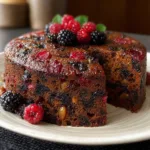
Christmas Dark Fruit Cake – A Rich, Moist, Traditional Holiday Recipe
- Total Time: Approximately 4 hours, excluding overnight soaking
Description
Nothing captures the warmth and nostalgia of the holiday season quite like a homemade Christmas Dark Fruit Cake. Rich, moist, deeply flavored, and filled with colorful dried fruits, crunchy nuts, warm spices, and a beautiful dark crumb, this traditional Christmas dessert has earned its place on holiday tables for generations.
Ingredients
For the dried fruit mixture
- 2 cups (300 g) raisins: Provide natural sweetness and a classic fruitcake flavor.
- 1 cup (150 g) chopped dates: Add moisture, richness, and a naturally caramel-like taste.
- 1 cup (150 g) mixed candied peel and chopped candied cherries: Bring bright color and traditional holiday flavor.
- 1/2 cup (75 g) dried cranberries: Add a pleasant tartness that balances the sweetness.
- 1/2 cup (75 g) chopped dried apricots: Provide a soft texture and fruity flavor.
- 1/2 cup (120 ml) orange juice: Helps soften the fruit and adds citrus flavor.
- 1/4 cup (60 ml) water or apple juice: Provides additional liquid for soaking.
- 1 tablespoon finely grated orange zest: Adds a fresh, fragrant citrus note.
You can substitute other dried fruits, such as currants, chopped prunes, or additional raisins, depending on your preferences.
For the cake batter
- 2 cups (250 g) all-purpose flour: Forms the structure of the cake.
- 1 cup (200 g) packed dark brown sugar: Adds sweetness, moisture, and a deeper caramel flavor.
- 1/2 cup (113 g) unsalted butter, softened: Creates a rich, tender crumb.
- 3 large eggs, at room temperature: Bind the ingredients together and support the cake’s structure.
- 1/4 cup (60 ml) molasses or dark treacle: Gives the cake its signature dark color and robust flavor.
- 1/2 cup (60 g) chopped walnuts or pecans: Add a delicious nutty crunch.
- 1 teaspoon baking powder: Helps the cake rise slightly.
- 1 teaspoon ground cinnamon: Provides warm, familiar holiday flavor.
- 1/2 teaspoon ground nutmeg: Adds aromatic depth.
- 1/4 teaspoon ground cloves: Gives the cake a traditional spiced flavor.
- 1/2 teaspoon ground ginger, optional: Adds a subtle warming note.
- 1/2 teaspoon salt: Balances the sweetness.
- 1 teaspoon vanilla extract: Enhances the fruit and spice flavors.
- 2 tablespoons all-purpose flour, reserved for coating the fruit: Helps distribute the fruit evenly through the batter.
Optional finishing ingredients
- A little orange juice or apple juice for brushing the cooled cake
- Extra chopped nuts for decoration
- A light dusting of powdered sugar
- Candied cherries or strips of candied orange peel
- A small amount of brandy or rum for an alcoholic version, if desired
Instructions
Begin by preparing the dried fruit mixture. Place the raisins, chopped dates, candied peel, candied cherries, dried cranberries, and chopped dried apricots in a large bowl.
Pour in the orange juice and water or apple juice. Add the grated orange zest and stir until the fruit is evenly coated.
Cover the bowl and allow the fruit to soak for at least 30 minutes. For a softer, more flavorful mixture, refrigerate it for several hours or overnight.
Soaking helps the fruit absorb moisture, making it softer and more pleasant to eat in the finished cake. It also allows the citrus flavors to spread throughout the mixture.
If you soak the fruit overnight, keep it refrigerated and bring it closer to room temperature before preparing the batter. If there is excess liquid after soaking, do not automatically discard it; incorporate an appropriate amount into the batter so that the cake retains its moisture without becoming overly wet.
Step 2: Prepare the oven and cake pan
Preheat your oven to 300°F (150°C). A relatively low baking temperature is useful for a dense fruit cake because it allows the center to bake without the outside becoming too dark too quickly.
Grease a deep 9-inch round cake pan and line the bottom and sides with parchment paper. If your pan is particularly shallow, choose a larger pan or divide the batter between two pans to prevent overflowing.
For an especially long baking time, you can use two layers of parchment paper around the sides of the pan. This provides additional protection against excessive browning.
Place the oven rack in the center or slightly below the center of the oven. Make sure there is enough space above the pan for heat to circulate.
Step 3: Mix the dry ingredients
In a medium bowl, whisk together the flour, baking powder, cinnamon, nutmeg, cloves, optional ginger, and salt.
Mix thoroughly so that the spices and leavening agent are evenly distributed throughout the flour.
Measure the ingredients carefully. Because this cake contains a substantial quantity of dried fruit, the batter needs enough structure to support the fruit without becoming heavy or crumbly.
Set the dry mixture aside while you prepare the butter and sugar.
Step 4: Cream the butter and brown sugar
Place the softened butter and dark brown sugar in a large mixing bowl.
Beat with an electric mixer on medium speed for approximately 2–3 minutes, until the mixture looks creamy and well combined. Scrape down the sides of the bowl as needed.
The mixture does not need to become as pale and fluffy as a light sponge cake batter. The goal is to distribute the butter and sugar evenly and incorporate a little air.
Add the eggs one at a time, beating after each addition. If the mixture begins to look slightly separated, add a spoonful of the measured flour mixture and continue mixing gently.
Stir in the molasses or dark treacle and vanilla extract. The batter should now have a rich brown color and a deep, sweet aroma.
Step 5: Add the flour and spices
Add the dry ingredients to the butter mixture in two or three additions. Mix on low speed or fold with a spatula until the flour is almost completely incorporated.
Avoid overmixing, as excessive mixing can make the cake tough.
The batter will be thicker than a typical sponge cake batter because it needs to hold a generous amount of dried fruit and nuts.
Drain any excessive soaking liquid from the fruit if necessary, reserving a little to adjust the consistency. Toss the soaked fruit and chopped nuts with the reserved 2 tablespoons of flour.
This light coating can help distribute the fruit more evenly, although it does not guarantee that every piece will remain suspended in the cake.
Step 6: Fold in the dried fruit and nuts
Add the prepared fruit and nuts to the cake batter. Fold gently with a sturdy spatula until they are evenly distributed.
Scrape the bottom and sides of the bowl to make sure no dry flour or concentrated pockets of batter remain.
If the batter seems exceptionally stiff, add a small amount of the reserved soaking liquid, one tablespoon at a time. The mixture should be thick but still possible to spread into the cake pan.
Do not add all the soaking liquid automatically. The amount absorbed by dried fruit varies, and too much liquid can make the cake take longer to bake or affect its structure.
Once the fruit and nuts are incorporated, transfer the batter to the prepared cake pan.
Step 7: Fill and prepare the cake pan
Spoon the batter into the lined pan. Use a spatula to spread it evenly, pressing gently into the corners and edges.
Smooth the top and make a slight shallow depression in the center if you wish to reduce excessive doming.
Tap the pan lightly on the countertop to release large air pockets. Avoid striking it too hard, as the batter is dense and contains plenty of fruit.
For a decorative finish, arrange a few extra nuts or candied cherries on top. Keep the decoration relatively simple so that the cake bakes evenly.
Step 8: Bake the Christmas dark fruit cake
Place the pan in the preheated oven and bake at 300°F (150°C) for approximately 2–2 1/2 hours, depending on the pan size, oven accuracy, and moisture content of the fruit.
Begin checking the cake around the 1-hour-and-45-minute mark. If the top is browning too quickly, loosely cover it with aluminum foil.
The cake is ready when a skewer inserted into the center comes out without wet batter. A few moist crumbs are acceptable, but the center should not look liquid or underbaked.
Because fruitcake is dense, a toothpick can pass through a piece of fruit and give a misleading result. Test more than one spot if necessary.
Avoid increasing the oven temperature to speed up baking. The outside may become excessively dark before the center has cooked through.
Once the cake is baked, remove it from the oven and place the pan on a heatproof rack.
Step 9: Cool the cake properly
Allow the cake to cool in its pan for approximately 20–30 minutes.
Carefully loosen the edges if necessary, then lift or turn the cake out onto a wire rack. Remove the parchment paper and allow the cake to cool completely.
Do not wrap the cake while it is still warm. Trapped steam can create condensation and make the surface wet.
A fruit cake often becomes easier to slice after resting for several hours. The fruit, spices, and molasses also have time to settle into a more harmonious flavor.
Step 10: Add moisture and finish the cake
Once the cake has cooled completely, brush the surface lightly with orange juice or apple juice if you want extra moisture and citrus flavor.
Use only a small amount at a time. Too much liquid can make the cake soggy or shorten its storage life.
For a traditional alcoholic version, a small amount of brandy or rum may be used instead, but the cake must still be stored appropriately and should not be assumed shelf-stable simply because alcohol has been added.
Decorate the cake with extra nuts, candied cherries, candied orange peel, or a light dusting of powdered sugar.
For the neatest slices, use a long, sharp knife and wipe it between cuts. Serve the cake at room temperature so that its texture and flavor are at their best.
Notes
The most important part of making a successful Christmas dark fruit cake is controlling moisture and baking temperature.
Dried fruit absorbs liquid differently depending on its size, variety, and age. If the fruit absorbs most of the soaking liquid, the batter may need a small adjustment. If it remains very wet, too much liquid can prevent the center from baking properly.
Use a low oven temperature and allow plenty of time for the center to cook. If the top becomes dark before the center is ready, cover it loosely with foil rather than raising or lowering the temperature dramatically.
Molasses and dark brown sugar give the cake a deep color, but they can also make the batter appear darker before it is fully baked. Always check the center carefully.
For the best flavor, allow the cake to rest after baking. Once cooled, wrap it well and refrigerate it if it will not be eaten within a few days. Freeze longer-term portions for better quality.
If you want to age a traditional fruit cake, use a recipe specifically formulated for that purpose and follow reliable food-storage guidance. A moist, homemade, alcohol-free cake containing juice-soaked fruit should not be stored at room temperature for weeks.
- Prep Time: 30 minutes
- Cooling Time: 1–2 hours
- Cook Time: Approximately 2–2 1/2 hours
Nutrition
- Calories: 350–450
- Sodium: 100–200 mg
- Protein: 4–6 g
