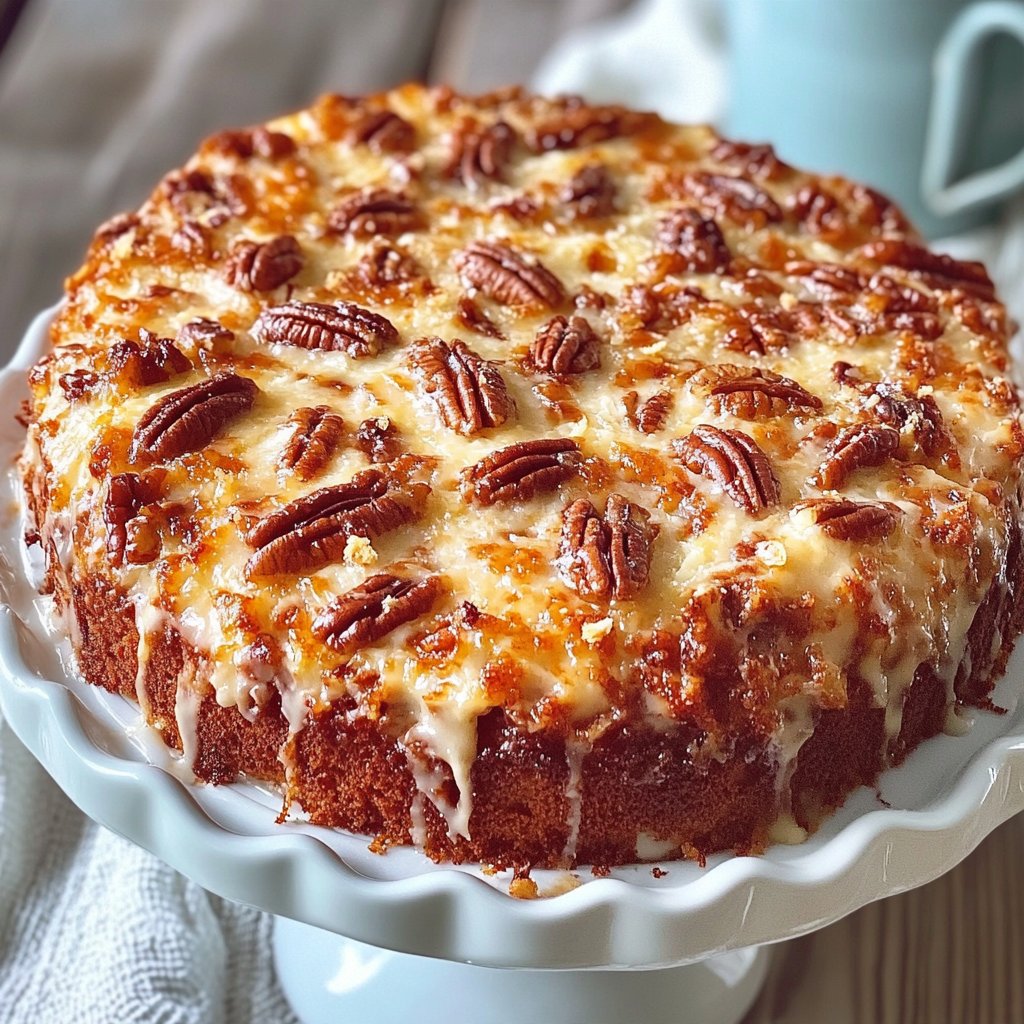
Aunt Mary’s Coconut Pecan Butter Cake is the kind of old-fashioned dessert that brings everyone to the kitchen before the first slice is even served. With its rich buttery crumb, sweet shredded coconut, crunchy pecans, and creamy coconut-pecan topping, this homemade cake is full of comforting Southern-inspired flavor. Every bite combines a tender cake with a little nutty crunch, creating a dessert that feels perfect for family gatherings, Sunday dinners, and holiday celebrations.
Inspired by the warmth of traditional family baking, this coconut pecan butter cake uses familiar pantry ingredients to create something truly special. Butter gives the cake its rich flavor, buttermilk helps keep the crumb tender, and vanilla adds a classic homemade aroma. Coconut and pecans bring texture and sweetness, while the creamy topping makes every slice feel extra indulgent.
One of the best things about this recipe is its versatility. You can serve it as a simple afternoon treat with coffee, dress it up for a birthday celebration, or add it to a Thanksgiving or Christmas dessert table. It also makes a wonderful make-ahead dessert because the flavors have time to blend as the cake rests.
Whether you grew up enjoying Southern-style cakes or are looking for a new recipe to add to your collection, Aunt Mary’s Coconut Pecan Butter Cake is a delicious choice. The combination of buttery cake, coconut, pecans, and creamy frosting creates a nostalgic dessert that is easy to love.
Why You’ll Love This Coconut Pecan Butter Cake
- Rich buttery flavor: Butter gives the cake a classic homemade taste and tender texture.
- Sweet coconut and crunchy pecans: The combination adds flavor and texture to every slice.
- Moist and tender crumb: Buttermilk helps create a soft cake that stays enjoyable for days when stored properly.
- Perfect for celebrations: This cake is suitable for birthdays, holidays, potlucks, and family dinners.
- Easy-to-find ingredients: Most ingredients are available at ordinary American grocery stores.
- Beautiful presentation: The coconut and pecan topping makes the cake look inviting without complicated decorating.
- Great for making ahead: Prepare the cake a day in advance so the flavors have time to develop.
Ingredients for Aunt Mary’s Coconut Pecan Butter Cake
This recipe makes one 9-by-13-inch cake, approximately 12–15 servings.
For the Cake
- 1 cup unsalted butter, softened
- 1 3/4 cups granulated sugar
- 4 large eggs, at room temperature
- 2 teaspoons vanilla extract
- 3 cups all-purpose flour
- 2 teaspoons baking powder
- 1/2 teaspoon baking soda
- 1/2 teaspoon salt
- 1 cup buttermilk, at room temperature
- 1 1/2 cups sweetened shredded coconut
- 1 cup chopped pecans
For the Coconut Pecan Frosting
- 1/2 cup unsalted butter
- 1 can (12 ounces) evaporated milk
- 3/4 cup granulated sugar
- 3 large egg yolks
- 1 teaspoon vanilla extract
- 1 1/2 cups sweetened shredded coconut
- 1 cup chopped pecans
Ingredient Notes
Butter: Use unsalted butter for the best control over the cake’s flavor. Let it soften at room temperature so it can cream properly with the sugar.
Buttermilk: Buttermilk contributes moisture and a subtle tang that balances the sweetness. If necessary, make a quick substitute by adding 1 tablespoon of lemon juice or white vinegar to a measuring cup, filling it to the 1-cup line with milk, and letting it stand for 5–10 minutes.
Shredded coconut: Sweetened shredded coconut creates a traditional dessert flavor. Unsweetened coconut can be used, although the cake and topping will be less sweet.
Pecans: Finely or coarsely chopped pecans both work. Smaller pieces distribute evenly, while larger pieces provide a more noticeable crunch.
Eggs: Room-temperature eggs blend more easily into the butter mixture and help the batter bake evenly.
Evaporated milk: This creates a rich frosting base. Do not confuse it with sweetened condensed milk, which contains added sugar and has a different consistency.
Preparation: How to Make Aunt Mary’s Coconut Pecan Butter Cake
Step 1: Prepare the Pan and Mix the Dry Ingredients
Preheat your oven to 350°F. Grease a 9-by-13-inch baking pan with butter or cooking spray, then lightly flour it or line the bottom with parchment paper.
In a medium bowl, whisk together the flour, baking powder, baking soda, and salt. Mixing these ingredients separately helps distribute the leavening agents evenly throughout the cake.
Measure the buttermilk, shred or measure the coconut, and chop the pecans. Having everything ready before mixing helps the batter come together smoothly.
For the best results, allow the butter, eggs, and buttermilk to reach room temperature. Cold ingredients can cause the butter mixture to look curdled and may make it harder to achieve an even batter.
Step 2: Cream the Butter and Sugar
Place the softened butter and granulated sugar in a large mixing bowl. Using a hand mixer or stand mixer, beat them together for approximately 3–4 minutes, until the mixture looks pale and fluffy.
This step helps incorporate air into the batter, contributing to the cake’s texture. Scrape down the sides and bottom of the bowl occasionally so the ingredients mix evenly.
Add the eggs one at a time, beating after each addition. Stir in the vanilla extract.
If the mixture looks slightly uneven after adding the eggs, do not worry. Scrape the bowl and continue mixing gently until the ingredients are mostly combined.
Step 3: Combine the Batter and Add Coconut and Pecans
Add about one-third of the dry ingredients to the butter mixture and mix on low speed until just combined. Add half of the buttermilk, then another portion of the dry ingredients.
Continue alternating the remaining buttermilk and flour mixture, finishing with the dry ingredients. Mix only until no large streaks of flour remain.
Fold in the shredded coconut and chopped pecans using a spatula. Avoid overmixing, because excessive mixing after adding flour can make the cake dense.
The finished batter should be thick but spreadable, with coconut and pecans distributed throughout.
Step 4: Bake the Cake
Transfer the batter to the prepared pan and spread it evenly into the corners. Smooth the surface with a spatula.
Bake for approximately 35–45 minutes, checking toward the earlier end of the range. The cake is ready when the top is golden, the center springs back lightly when touched, and a toothpick inserted into the middle comes out clean or with a few moist crumbs.
If the top browns too quickly, loosely cover it with aluminum foil during the final part of baking.
Remove the pan from the oven and place it on a cooling rack. Let the cake cool completely before adding the frosting. Applying frosting while the cake is warm can cause it to melt and slide off.
Step 5: Make the Coconut Pecan Frosting
In a medium saucepan, combine the butter, evaporated milk, granulated sugar, and egg yolks. Whisk thoroughly before turning on the heat so the egg yolks are evenly distributed.
Cook over medium-low heat, stirring constantly with a heat-resistant spatula or whisk. Continue cooking for approximately 8–12 minutes, or until the mixture thickens enough to coat the back of a spoon.
Do not let the mixture boil vigorously, and do not leave it unattended. The egg yolks need to cook thoroughly, and constant stirring helps prevent scorching or curdling.
Remove the saucepan from the heat and stir in the vanilla, shredded coconut, and chopped pecans. Allow the frosting to cool until it thickens to a spreadable consistency.
Spread the frosting evenly over the completely cooled cake. Let it settle for 15–20 minutes before slicing.
For clean slices, use a sharp knife and wipe it between cuts. Serve at room temperature for the best buttery flavor and tender texture.
Variations to Try
Toasted Coconut Pecan Butter Cake
Toast the shredded coconut in a dry skillet over low heat, stirring frequently until lightly golden. Let it cool completely before adding it to the batter or frosting. Toasted coconut brings a deeper flavor and extra aroma.
Brown Butter Coconut Pecan Cake
Brown a portion of the butter in a saucepan over medium-low heat until it develops golden-brown specks and a nutty aroma. Let it cool until softened but not solid before using it in the cake. Watch carefully because butter can burn quickly.
Extra-Pecan Butter Cake
Increase the chopped pecans in the cake by 1/4 cup if you enjoy a stronger nutty flavor. Avoid adding too many extra nuts, as excessive additions can make the crumb heavier.
Coconut Cream Cake
Replace the vanilla extract with coconut extract, using a small amount at first because the flavor can be strong. This variation creates a more pronounced coconut aroma.
Chocolate Coconut Pecan Cake
Add 1/2 cup of mini semisweet chocolate chips to the batter for a richer dessert. Tossing the chips with a teaspoon of flour before folding them in may help distribute them more evenly.
Layered Coconut Pecan Butter Cake
Bake the batter in two greased 8-inch round pans, checking for doneness after approximately 25–35 minutes. Cool the layers completely before frosting and stacking. Baking times vary by pan, so rely on the doneness tests rather than the clock alone.
Cooking Notes for the Best Results
- Measure flour correctly: Spoon flour into the measuring cup and level it off rather than packing it down.
- Use room-temperature ingredients: Butter, eggs, and buttermilk combine more smoothly when they are not cold.
- Do not overmix: Stop mixing as soon as the flour disappears.
- Check your oven temperature: An oven thermometer can help identify temperature differences that affect baking.
- Cool completely before frosting: This prevents the topping from melting.
- Stir the frosting constantly: The egg-yolk mixture can scorch or curdle if left unattended.
- Allow the frosting to thicken: Cool it enough to spread without running off the cake.
- Use fresh pecans: Nuts that smell stale or rancid can spoil the flavor of the finished dessert.
Serving Suggestions
Aunt Mary’s Coconut Pecan Butter Cake is delicious on its own, but it can also be served in several inviting ways.
- With coffee: Serve a slice alongside hot coffee, espresso, or a latte.
- After Sunday dinner: Pair it with a simple meal for a comforting homemade dessert.
- Holiday dessert tables: Add it to a spread with pecan pie, pumpkin pie, cookies, and fudge.
- With vanilla ice cream: A small scoop of ice cream complements the buttery cake and sweet topping.
- For birthdays and celebrations: Decorate the top with a few extra pecans for an attractive finish.
- At potlucks: Bake the cake in a rectangular pan so it is easy to transport and portion.
- For afternoon treats: Enjoy a small slice with tea or a glass of cold milk.
For a polished presentation, sprinkle a few extra chopped pecans over the frosting before it sets. You can also reserve a small amount of toasted coconut to scatter across the top.
Tips for Perfect Coconut Pecan Butter Cake
Do not rush the creaming stage. Beating butter and sugar until fluffy helps develop a lighter texture.
Add eggs one at a time. This gives them time to blend into the butter mixture.
Alternate dry ingredients and buttermilk. This helps prevent the batter from becoming difficult to mix.
Fold in the coconut and pecans gently. Use a spatula and avoid unnecessary mixing.
Test the center of the cake. The edges can look done before the middle has finished baking.
Let the frosting cool before spreading. If it is too warm, it may slide off the cake instead of staying in place.
Plan ahead for gatherings. Bake the cake earlier in the day or the day before serving, then store it appropriately once completely cool.
Organize your kitchen tools. Having mixing bowls, measuring cups, a spatula, and a reliable baking pan ready makes the process easier. Good kitchenware and practical home kitchen tips can make homemade baking more enjoyable, especially when preparing several desserts for a holiday meal.
Prep Time, Cooking Time, and Total Time
- Prep Time: 25 minutes
- Cake Baking Time: 35–45 minutes
- Frosting Preparation Time: 15 minutes
- Cooling Time: Approximately 1 hour
- Total Time: Approximately 2 hours to 2 hours 25 minutes
- Yield: 12–15 servings
These times are estimates and depend on your oven, pan, and cooling conditions.
Nutritional Information
Estimated values per serving, assuming 15 servings:
- Calories: 520
- Protein: 6 grams
- Sodium: 280 milligrams
Actual nutrition varies depending on the ingredients, frosting thickness, and portion size. These figures are estimates rather than laboratory-verified values.
Frequently Asked Questions
What makes coconut pecan butter cake different from regular butter cake?
A regular butter cake focuses mainly on a rich, tender crumb. This version includes shredded coconut and chopped pecans in the cake, then adds a coconut pecan frosting for extra texture, sweetness, and nutty flavor.
Can I use sweetened condensed milk instead of evaporated milk?
Not as a direct substitute. Sweetened condensed milk contains added sugar and is much thicker, which would change the frosting’s sweetness and consistency. Use evaporated milk for the recipe as written.
Can I make this cake ahead of time?
Yes. You can bake the cake a day ahead and allow it to cool completely. Once frosted, store it covered in the refrigerator because the frosting contains milk and egg yolks.
How should I store Aunt Mary’s Coconut Pecan Butter Cake?
Store the frosted cake in an airtight container or tightly covered pan in the refrigerator. For best quality, enjoy it within approximately 3–4 days. Let individual slices stand briefly at room temperature before serving if you prefer a softer texture.
Can I freeze coconut pecan butter cake?
The unfrosted cake can be frozen for approximately 2–3 months when wrapped tightly and placed in a freezer-safe container. Thaw it in the refrigerator while wrapped. The frosting may change texture after freezing, so freezing the cake before frosting is generally the better option.
Why is my cake dense?
Overmixing, too much flour, or butter that was too cold can contribute to a dense cake. Measure flour carefully, cream the butter and sugar until fluffy, and mix the batter only until the ingredients are combined.
Why is my frosting too thin?
The mixture may not have cooked long enough to thicken, or it may still be too warm. Continue stirring over medium-low heat until it coats the back of a spoon, then let it cool before spreading. Do not leave the frosting unattended while cooking.
Can I use unsweetened coconut?
Yes. Unsweetened coconut will work, but the cake and frosting will be less sweet. The texture may also be slightly different depending on the coconut’s size and moisture content.
Can I substitute walnuts for pecans?
Yes. Chopped walnuts can replace pecans in the cake or frosting, although the flavor will be different. Pecans provide the most traditional Southern-style taste.
How do I keep the cake moist?
Measure the flour correctly, avoid overbaking, and store the cooled cake covered. Buttermilk also helps keep the crumb tender. Check the center with a toothpick near the end of baking so you can remove the cake as soon as it is done.
Conclusion
Aunt Mary’s Coconut Pecan Butter Cake is a rich, comforting dessert that brings together a tender buttery crumb, sweet coconut, crunchy pecans, and creamy homemade frosting. It is a wonderful choice for family dinners, holiday gatherings, birthdays, and any occasion that calls for a homemade cake.
The secret to success is using room-temperature ingredients, mixing the batter gently, baking until just done, and allowing the cake to cool completely before frosting. With these simple techniques, you can create a cake that looks inviting and delivers plenty of classic Southern-inspired flavor.
Serve it with coffee, add it to a holiday dessert table, or share it with friends and family. This coconut pecan butter cake is a delicious way to bring a little old-fashioned homemade sweetness to your kitchen.
Print
Aunt Mary’s Coconut Pecan Butter Cake
Ingredients
For the Cake
- 1 cup unsalted butter, softened
- 1 3/4 cups granulated sugar
- 4 large eggs, at room temperature
- 2 teaspoons vanilla extract
- 3 cups all-purpose flour
- 2 teaspoons baking powder
- 1/2 teaspoon baking soda
- 1/2 teaspoon salt
- 1 cup buttermilk, at room temperature
- 1 1/2 cups sweetened shredded coconut
- 1 cup chopped pecans
For the Coconut Pecan Frosting
- 1/2 cup unsalted butter
- 1 can (12 ounces) evaporated milk
- 3/4 cup granulated sugar
- 3 large egg yolks
- 1 teaspoon vanilla extract
- 1 1/2 cups sweetened shredded coconut
- 1 cup chopped pecans
Instructions
Preheat your oven to 350°F. Grease a 9-by-13-inch baking pan with butter or cooking spray, then lightly flour it or line the bottom with parchment paper.
In a medium bowl, whisk together the flour, baking powder, baking soda, and salt. Mixing these ingredients separately helps distribute the leavening agents evenly throughout the cake.
Measure the buttermilk, shred or measure the coconut, and chop the pecans. Having everything ready before mixing helps the batter come together smoothly.
For the best results, allow the butter, eggs, and buttermilk to reach room temperature. Cold ingredients can cause the butter mixture to look curdled and may make it harder to achieve an even batter.
Step 2: Cream the Butter and Sugar
Place the softened butter and granulated sugar in a large mixing bowl. Using a hand mixer or stand mixer, beat them together for approximately 3–4 minutes, until the mixture looks pale and fluffy.
This step helps incorporate air into the batter, contributing to the cake’s texture. Scrape down the sides and bottom of the bowl occasionally so the ingredients mix evenly.
Add the eggs one at a time, beating after each addition. Stir in the vanilla extract.
If the mixture looks slightly uneven after adding the eggs, do not worry. Scrape the bowl and continue mixing gently until the ingredients are mostly combined.
Step 3: Combine the Batter and Add Coconut and Pecans
Add about one-third of the dry ingredients to the butter mixture and mix on low speed until just combined. Add half of the buttermilk, then another portion of the dry ingredients.
Continue alternating the remaining buttermilk and flour mixture, finishing with the dry ingredients. Mix only until no large streaks of flour remain.
Fold in the shredded coconut and chopped pecans using a spatula. Avoid overmixing, because excessive mixing after adding flour can make the cake dense.
The finished batter should be thick but spreadable, with coconut and pecans distributed throughout.
Step 4: Bake the Cake
Transfer the batter to the prepared pan and spread it evenly into the corners. Smooth the surface with a spatula.
Bake for approximately 35–45 minutes, checking toward the earlier end of the range. The cake is ready when the top is golden, the center springs back lightly when touched, and a toothpick inserted into the middle comes out clean or with a few moist crumbs.
If the top browns too quickly, loosely cover it with aluminum foil during the final part of baking.
Remove the pan from the oven and place it on a cooling rack. Let the cake cool completely before adding the frosting. Applying frosting while the cake is warm can cause it to melt and slide off.
Step 5: Make the Coconut Pecan Frosting
In a medium saucepan, combine the butter, evaporated milk, granulated sugar, and egg yolks. Whisk thoroughly before turning on the heat so the egg yolks are evenly distributed.
Cook over medium-low heat, stirring constantly with a heat-resistant spatula or whisk. Continue cooking for approximately 8–12 minutes, or until the mixture thickens enough to coat the back of a spoon.
Do not let the mixture boil vigorously, and do not leave it unattended. The egg yolks need to cook thoroughly, and constant stirring helps prevent scorching or curdling.
Remove the saucepan from the heat and stir in the vanilla, shredded coconut, and chopped pecans. Allow the frosting to cool until it thickens to a spreadable consistency.
Spread the frosting evenly over the completely cooled cake. Let it settle for 15–20 minutes before slicing.
For clean slices, use a sharp knife and wipe it between cuts. Serve at room temperature for the best buttery flavor and tender texture.
Notes
- Measure flour correctly: Spoon flour into the measuring cup and level it off rather than packing it down.
- Use room-temperature ingredients: Butter, eggs, and buttermilk combine more smoothly when they are not cold.
- Do not overmix: Stop mixing as soon as the flour disappears.
- Check your oven temperature: An oven thermometer can help identify temperature differences that affect baking.
- Cool completely before frosting: This prevents the topping from melting.
- Stir the frosting constantly: The egg-yolk mixture can scorch or curdle if left unattended.
- Allow the frosting to thicken: Cool it enough to spread without running off the cake.
- Use fresh pecans: Nuts that smell stale or rancid can spoil the flavor of the finished dessert.
