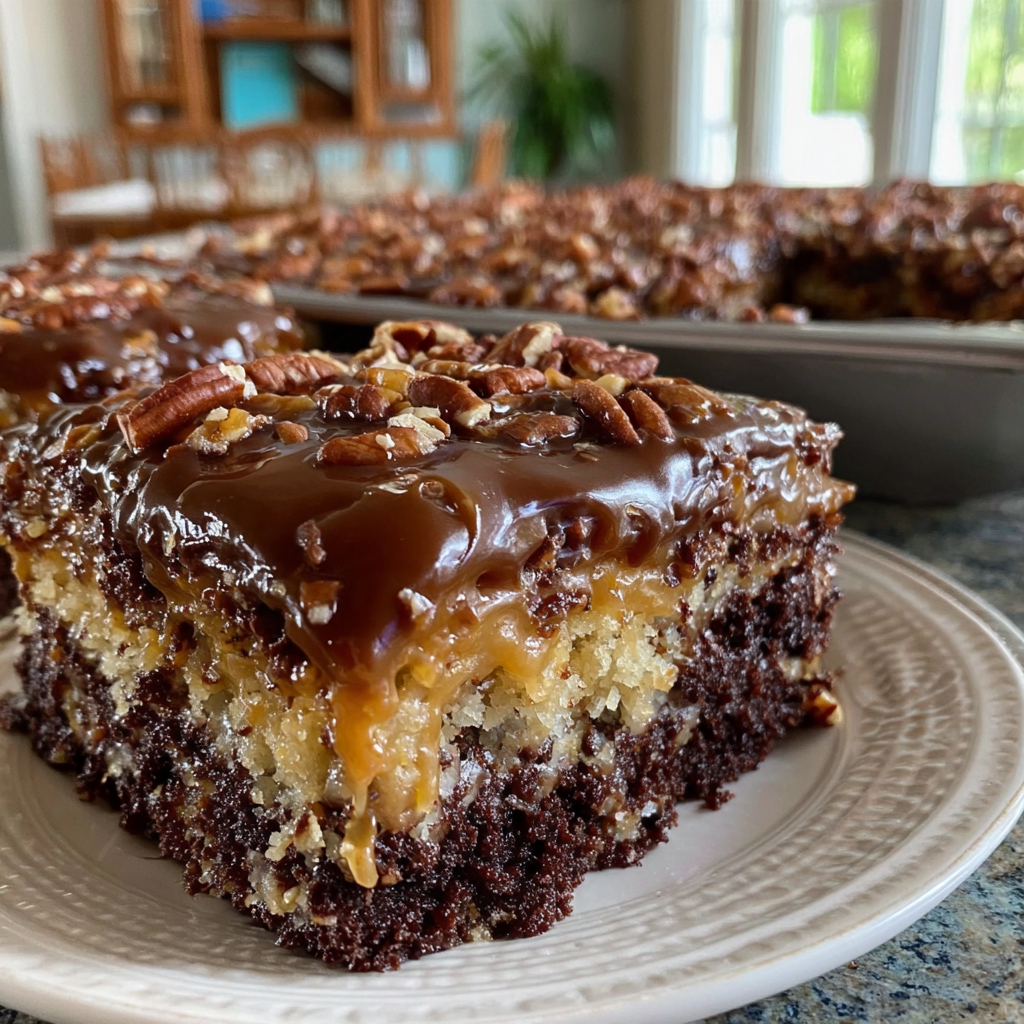
If you love rich chocolate desserts, gooey caramel, crunchy pecans, and smooth chocolate frosting, this Texas Turtle Sheet Cake is a recipe you will want to make again and again. Inspired by the classic Texas sheet cake and the irresistible flavors of turtle candies, this homemade dessert combines a soft, moist chocolate cake with buttery caramel, toasted pecans, and a rich chocolate topping. Every bite delivers the perfect balance of sweetness, chocolate richness, nutty crunch, and creamy caramel goodness.
A traditional Texas sheet cake is known for its thin, tender texture and its warm chocolate frosting, which is often poured directly over the cake while it is still warm. This version takes that beloved Southern dessert to another level by adding the signature ingredients of turtle desserts: caramel, pecans, and chocolate. The result is an indulgent chocolate caramel pecan sheet cake that looks impressive but is surprisingly easy to prepare.
One of the best things about this easy Texas turtle cake recipe is that it is baked in a rectangular sheet pan rather than assembled in multiple layers. That means less decorating, less complicated preparation, and more time to enjoy your dessert with family and friends. It is ideal for potlucks, birthday celebrations, family gatherings, holidays, bake sales, and weekend baking projects.
The chocolate cake itself is soft and tender, with a deep cocoa flavor that pairs beautifully with the sweetness of the caramel. Chopped pecans add a delightful crunch, while the chocolate frosting creates a smooth, decadent finish. You can drizzle extra caramel sauce over the top for an elegant presentation or sprinkle additional toasted pecans across the frosting for even more texture.
Whether you are searching for a classic Southern chocolate cake with a twist, an easy caramel pecan dessert, or a crowd-pleasing chocolate sheet cake recipe, this Texas Turtle Sheet Cake is an excellent choice. The ingredients are familiar, the preparation is straightforward, and the finished cake serves a crowd without requiring individual portions or elaborate decorations.
Prepare this homemade Texas turtle sheet cake for your next gathering, and enjoy the wonderful combination of chocolate, caramel, and pecans in every delicious slice.
Ingredients
This recipe uses simple baking ingredients to create a moist chocolate sheet cake with a rich caramel pecan topping. For the best results, measure your ingredients carefully and prepare everything before you begin.
For the chocolate sheet cake
- 2 cups (250 g) all-purpose flour: Provides the structure needed for a soft, tender sheet cake.
- 2 cups (400 g) granulated sugar: Sweetens the cake and helps keep the crumb moist.
- 1/2 cup (45–50 g) unsweetened cocoa powder: Creates a deep chocolate flavor. Use unsweetened baking cocoa rather than sweetened chocolate drink powder.
- 1 teaspoon baking soda: Helps the cake rise and develop a light texture.
- 1/2 teaspoon baking powder: Provides additional lift.
- 1/2 teaspoon salt: Balances the sweetness and enhances the chocolate flavor.
- 1 cup (240 ml) water: Helps dissolve the cocoa and creates a smooth cake batter.
- 1/2 cup (113 g) unsalted butter: Adds richness and tenderness.
- 1/2 cup (120 ml) buttermilk: Helps produce a moist, tender crumb with a subtle tang.
- 2 large eggs: Bind the ingredients together and contribute to the cake’s structure.
- 1 teaspoon vanilla extract: Enhances the chocolate flavor and adds warmth.
For the caramel pecan filling and topping
- 1 cup (approximately 300 g) soft caramel candies: Unwrapped caramels work well for a simple homemade-style caramel layer.
- 2–3 tablespoons milk or heavy cream: Helps melt the caramel into a smooth, pourable consistency.
- 1 cup (100–120 g) chopped pecans: Adds the traditional nutty flavor associated with turtle desserts.
- 2 tablespoons unsalted butter: Helps create a smooth, rich caramel mixture.
- 1/4 teaspoon salt, optional: Balances the sweetness and creates a delicious salted caramel variation.
You can substitute a thick, ready-made caramel sauce for the caramel candies if you prefer. Choose a sauce suitable for baking and layering rather than a very thin syrup.
For the chocolate frosting
- 1/2 cup (113 g) unsalted butter: Creates a rich base for the frosting.
- 1/4 cup (25 g) unsweetened cocoa powder: Adds chocolate flavor and color.
- 1/3 cup (80 ml) milk: Helps the frosting reach a smooth consistency.
- 3 cups (360 g) powdered sugar: Sweetens and thickens the frosting.
- 1 teaspoon vanilla extract: Enhances the flavor.
- 1 pinch of salt: Balances the sweetness.
Optional finishing ingredients
- Extra caramel sauce for drizzling
- Additional chopped or toasted pecans
- Mini chocolate chips
- Chocolate shavings
- A small pinch of flaky sea salt
These optional ingredients make the finished cake especially attractive for parties and celebrations.
Preparation: How to Make Texas Turtle Sheet Cake
Follow these steps to create a delicious homemade chocolate turtle sheet cake with moist chocolate cake, gooey caramel, crunchy pecans, and smooth chocolate frosting.
Step 1: Prepare the oven and baking pan
Preheat your oven to 350°F (175°C). Grease a 9-by-13-inch baking pan with butter or nonstick cooking spray. For easier removal, you can line the bottom with parchment paper, leaving a little overhang along the sides.
Although Texas sheet cakes are traditionally made in larger, shallow pans, a 9-by-13-inch pan produces a thicker cake that works particularly well for a home-style dessert with caramel and pecans.
If you prefer a thinner, more traditional sheet cake, use a larger rimmed sheet pan, approximately 13 by 18 inches, and begin checking for doneness earlier. The baking time will vary depending on the pan size and batter depth.
Measure the flour, cocoa powder, sugar, baking soda, baking powder, and salt before starting. Sifting the cocoa powder can help eliminate lumps and distribute the chocolate flavor evenly.
Step 2: Make the chocolate cake batter
In a large mixing bowl, whisk together the all-purpose flour, granulated sugar, cocoa powder, baking soda, baking powder, and salt. Make sure the dry ingredients are evenly combined.
Place the butter and water in a medium saucepan over medium heat. Stir gently until the butter melts and the mixture becomes hot. Whisk in the cocoa powder if you prefer to bloom it in the liquid, allowing the chocolate flavor to develop.
Remove the saucepan from the heat and let the mixture cool slightly. Pour it into the dry ingredients and stir until combined.
Add the buttermilk, eggs, and vanilla extract. Whisk or beat gently until the batter is smooth and free of large lumps. Avoid overmixing, because excessive mixing can make the finished cake dense.
The batter should be relatively thin compared with many traditional cake batters. This is normal for a moist chocolate sheet cake.
Pour the batter into the prepared baking pan and spread it evenly into the corners.
Step 3: Bake the chocolate sheet cake
Place the pan in the preheated oven and bake for approximately 25–35 minutes for a 9-by-13-inch pan. The exact time depends on your oven, pan material, and batter depth.
Begin checking the cake around the 25-minute mark. Insert a toothpick into the center. If it comes out clean or with a few moist crumbs, the cake is ready. If it comes out covered in wet batter, continue baking for several minutes before checking again.
Avoid overbaking. A chocolate cake that stays in the oven too long can become dry, especially around the edges.
Remove the cake from the oven and place the pan on a heatproof surface. Allow it to rest briefly before adding the caramel pecan layer. The cake should still be warm enough for the topping to spread easily, but it should not be so hot that the caramel becomes excessively runny.
Step 4: Prepare the caramel pecan topping
Place the unwrapped caramel candies, milk or heavy cream, and butter in a small saucepan. Heat over low heat, stirring frequently, until the caramels melt and the mixture becomes smooth.
Keep the heat gentle. Caramel can scorch if it is heated too quickly, and high heat may cause the mixture to become unpleasantly thick.
If the caramel seems too thick to spread, add another teaspoon of milk or cream at a time until it reaches a smooth, spoonable consistency.
Stir in most of the chopped pecans, reserving a small handful for decorating the top of the cake.
Spoon the caramel pecan mixture over the warm chocolate cake. Spread it gently with a spatula, leaving a small border around the edges if you prefer a neater appearance.
For a stronger turtle candy flavor, drizzle a little additional caramel sauce across the surface. Do not add too much liquid caramel, as an overly thick layer may make the cake difficult to slice.
Step 5: Prepare the chocolate frosting
In a medium saucepan, melt the butter over low heat. Stir in the cocoa powder until the mixture is smooth and fragrant.
Add the milk and continue stirring until the mixture is well combined. Remove the saucepan from the heat.
Gradually whisk in the powdered sugar, adding it in batches to prevent lumps. Stir in the vanilla extract and a pinch of salt.
The frosting should be smooth, glossy, and thick enough to coat the cake while remaining easy to spread. If it is too thick, add a small amount of milk. If it is too thin, add a little more powdered sugar.
For a traditional Texas sheet cake texture, pour the warm chocolate frosting over the cake while the frosting is still fluid. Spread it gently over the caramel pecan layer.
Some of the caramel may blend slightly with the frosting, creating a delicious marbled effect. This is perfectly fine and adds to the homemade appearance.
Step 6: Decorate with pecans and caramel
Sprinkle the reserved chopped pecans over the chocolate frosting before it sets. For additional flavor, lightly toast the pecans in a dry skillet for a few minutes, stirring frequently and allowing them to cool before using.
Drizzle extra caramel sauce over the cake in thin lines. You can also add melted chocolate or chocolate shavings for a more decorative finish.
If you enjoy the sweet-and-salty combination, add a very light sprinkle of flaky sea salt. The salt complements the chocolate and caramel without making the dessert taste overly salty.
For a festive presentation, arrange a few pecan halves across the top before the frosting firms.
Step 7: Allow the cake to cool and serve
Let the Texas Turtle Sheet Cake cool until the frosting has set sufficiently for clean slicing. Depending on the temperature of your kitchen and the thickness of the frosting, this may take approximately 30–60 minutes.
For especially neat slices, allow the cake to cool completely. Use a sharp knife and wipe the blade between cuts.
Serve the cake at room temperature for the softest texture and richest flavor. If you prefer a firmer caramel layer, refrigerate the cake briefly before slicing, then allow individual portions to sit at room temperature for a short time before serving.
Enjoy each slice with its combination of moist chocolate cake, gooey caramel, crunchy pecans, and rich chocolate frosting.
Variations
One of the best things about this Texas Turtle Sheet Cake recipe is how easily you can adapt it to suit different tastes, occasions, and dietary preferences.
1. Salted caramel Texas turtle cake
For a more sophisticated dessert, use salted caramel sauce instead of plain caramel. Finish the frosting with a small sprinkle of flaky sea salt.
The salt balances the sweetness of the caramel and chocolate, creating a delicious contrast. Use the salt sparingly so that it enhances the dessert without overpowering the pecans.
2. Texas turtle cake with chocolate chips
If you love extra chocolate, add 1/2 cup of semisweet chocolate chips to the batter or sprinkle them over the warm frosting.
Chocolate chips provide additional richness and small pockets of melted chocolate. Semisweet chocolate is particularly suitable because it balances the sweetness of the caramel.
3. Dark chocolate turtle sheet cake
Replace part of the regular cocoa powder with a good-quality dark cocoa powder, or use a darker chocolate frosting made with semisweet chocolate.
Dark chocolate creates a more intense flavor that pairs beautifully with sweet caramel. This variation is ideal for people who enjoy rich chocolate desserts that are not excessively sweet.
4. Turtle cake with toasted pecans
Toast the chopped pecans before adding them to the caramel layer. Spread them on a baking sheet and toast at approximately 350°F (175°C) for 5–8 minutes, watching carefully to prevent burning.
Allow the pecans to cool before using them. Toasting develops their nutty aroma and adds a deeper flavor to the cake.
5. Turtle sheet cake with walnuts
If pecans are unavailable or you prefer a different nut, substitute chopped walnuts. Walnuts have a slightly more pronounced, earthy flavor and work well with chocolate and caramel.
You can also omit the nuts entirely for a nut-free variation, although the cake will no longer have the traditional turtle dessert texture and flavor. If serving someone with a nut allergy, check every ingredient for cross-contact warnings and prepare the dessert with clean equipment.
6. Cream cheese turtle cake
For a tangy twist, serve the cake with a cream cheese frosting instead of the traditional chocolate frosting, or add a small amount of cream cheese to a separately prepared frosting recipe.
Keep the caramel and pecan layers for the recognizable turtle flavor. Because cream cheese frosting is perishable, refrigerate the finished cake and avoid leaving it at room temperature for extended periods.
7. Turtle brownie sheet cake
For an even denser dessert, replace the chocolate cake base with your favorite brownie batter. Bake according to the brownie recipe, then add the caramel pecans and chocolate topping once the base has cooled enough to support them.
This variation creates a fudgy chocolate caramel pecan brownie cake that is especially delicious with vanilla ice cream.
8. Mini Texas turtle cakes
Instead of making one large cake, bake the batter in individual muffin tins or mini cake pans. Adjust the baking time according to the size of the portions and check for doneness early.
Add a small amount of caramel pecan topping and chocolate frosting to each portion. Mini turtle cakes are ideal for parties, dessert tables, and bake sales.
9. Coffee-flavored chocolate turtle cake
Add 1–2 teaspoons of instant espresso powder to the hot water and butter mixture. Coffee enhances chocolate’s natural depth without necessarily making the finished cake taste strongly of coffee.
This variation is perfect for adults who appreciate a richer, more complex chocolate dessert.
10. Homemade caramel turtle sheet cake
If you prefer to make caramel from scratch, prepare a caramel sauce using sugar, butter, and cream. Allow it to cool slightly before spreading it over the cake.
Homemade caramel offers excellent flavor, but it requires careful temperature control. Avoid touching or tasting hot caramel directly because melted sugar can cause serious burns.
Cooking Note
For the best Texas Turtle Sheet Cake, pay attention to the temperature of the ingredients, the consistency of the caramel, and the baking time.
Use room-temperature eggs and buttermilk. These ingredients blend more evenly into the batter and help create a uniform cake texture.
Do not overmix the batter. Once the flour has been incorporated, stop mixing. Overmixing can develop excess gluten and result in a tougher cake.
Watch the caramel carefully. Melt the caramel candies slowly over low heat and stir frequently. If the mixture becomes too thick, add a little more milk or cream.
Choose the right pan. A 9-by-13-inch pan creates a thicker cake, while a larger rimmed sheet pan produces a thinner cake that is closer to traditional Texas sheet cake. Baking times will differ.
Let the cake cool before slicing. Cutting the cake while the caramel is extremely hot can cause the topping to slide and make the pieces messy. Allow the frosting to set for a cleaner presentation.
Store the cake correctly. Because caramel consistency changes with temperature, the cake may be softer at room temperature and firmer when chilled. Both textures can be enjoyable.
Check the ingredients for allergens. This recipe contains wheat, eggs, milk, and pecans. If serving a group, make the ingredients clear to anyone with food allergies.
Serving Suggestions
Texas Turtle Sheet Cake is rich enough to serve on its own, but pairing it with the right accompaniments can make the dessert even more memorable.
Serve with vanilla ice cream
A scoop of vanilla ice cream is one of the best accompaniments for warm chocolate turtle cake. The cool, creamy texture contrasts beautifully with the chocolate frosting and caramel pecan topping.
For an especially indulgent dessert, warm an individual slice slightly and add the ice cream just before serving.
Add whipped cream
A spoonful of freshly whipped cream provides a light contrast to the rich cake. You can prepare it with heavy whipping cream and a small amount of powdered sugar.
For additional flavor, add a little vanilla extract. Serve the cream on the side rather than spreading it over the entire cake if you plan to store leftovers.
Serve with coffee
Coffee complements the deep cocoa flavor and balances the sweetness of the caramel. Serve the cake with freshly brewed coffee, espresso, or a cappuccino.
For an after-dinner dessert, small portions of cake with hot coffee create a simple but elegant presentation.
Pair with cold milk
A glass of cold milk is a classic choice for chocolate cake. Its mild flavor and creamy texture pair well with the sweet caramel and crunchy pecans.
This combination is particularly popular for family gatherings and casual afternoon treats.
Make it part of a dessert table
Cut the cake into small squares and arrange them on a serving platter alongside cookies, brownies, fruit, and other bite-sized desserts.
Small squares are convenient for potlucks and parties because guests can sample several treats without committing to a large slice.
Serve for special occasions
This chocolate caramel pecan cake is suitable for birthdays, holiday gatherings, family reunions, office celebrations, and weekend dinners.
Decorate the top with additional pecans and caramel drizzle to make the cake look festive without requiring complicated piping or professional cake-decorating skills.
Tips for the Best Texas Turtle Sheet Cake
Use these practical tips to improve the texture, flavor, and appearance of your homemade turtle sheet cake.
- Measure flour accurately. Spoon flour into your measuring cup and level it off rather than packing it down. Too much flour can make the cake dry.
- Use good-quality cocoa powder. Since chocolate is the main flavor, a cocoa powder you enjoy will make a noticeable difference.
- Bloom the cocoa powder. Mixing cocoa with hot liquid helps develop a fuller chocolate flavor and reduces dry cocoa lumps.
- Use fresh leavening agents. Baking soda and baking powder lose effectiveness over time, which can affect the cake’s rise.
- Toast the pecans. A few minutes of gentle toasting can enhance their flavor and make the finished dessert taste more complex.
- Reserve pecans for the top. Adding some pecans after frosting creates a more attractive finish and ensures that the nutty texture remains noticeable.
- Do not add too much caramel. A generous drizzle looks beautiful, but an excessively thick layer may cause the topping to slide when sliced.
- Make the frosting while the cake is cooling. Warm chocolate frosting spreads easily and helps create the traditional Texas sheet cake finish.
- Use a sharp knife. Clean the blade between slices to reduce frosting smears and keep the pieces neat.
- Allow time for setting. Although the cake is simple to prepare, giving the frosting and caramel enough time to settle makes serving easier.
- Adjust the sweetness. Semisweet chocolate, dark cocoa, and a small pinch of salt can help balance the sweetness of the caramel and powdered sugar.
- Prepare it ahead of time. Bake the cake several hours before serving to give the topping time to set. Store it according to the ingredients used and the temperature of your kitchen.
- Avoid overbaking. Begin checking the cake before the end of the estimated baking time, particularly if you use a dark metal pan.
- Keep the toppings balanced. The best turtle cake has a noticeable chocolate flavor, a rich but manageable caramel layer, and enough pecans for crunch without overwhelming the cake.
- Let chilled slices soften slightly. If you refrigerate the cake, allow a slice to stand at room temperature briefly before serving for a softer cake texture.
Prep Time, Cooking Time, and Total Time
The following times are estimates for preparing the recipe in a 9-by-13-inch pan.
- Prep Time: 25 minutes
- Cooking Time: 30 minutes
- Cooling and Setting Time: 45 minutes
- Total Time: Approximately 1 hour and 40 minutes, including cooling and setting
The actual time may vary depending on your baking experience, oven, pan size, and how long the frosting takes to set. If you prepare homemade caramel from scratch, allow additional time.
Nutritional Information
The nutritional values below are approximate estimates for one serving when the cake is cut into 15 portions. Actual values will vary according to the ingredients, caramel brand, frosting quantity, and serving size.
- Calories: Approximately 500–600 per serving
- Protein: Approximately 5–7 g
- Sodium: Approximately 250–400 mg
Understanding the nutritional values
Calories: Most of the calories come from the sugar, butter, caramel, chocolate frosting, and pecans. A smaller slice can help you enjoy the dessert while keeping the portion size manageable.
Protein: Eggs, flour, milk, and pecans contribute small amounts of protein. This cake is primarily a dessert rather than a significant source of protein.
Sodium: The sodium content depends on the butter, baking soda, salt, caramel, and other ingredients used. Choosing unsalted butter gives you more control over the amount of salt in the recipe.
These values are not laboratory-tested nutrition facts. For more precise information, calculate the nutrition using the exact brands and quantities of ingredients you use.
Frequently Asked Questions About Texas Turtle Sheet Cake
1. What is Texas Turtle Sheet Cake?
Texas Turtle Sheet Cake is a chocolate sheet cake inspired by the flavors of turtle candies. It combines a moist chocolate cake with caramel, pecans, and chocolate frosting. The result is a rich dessert with several complementary textures and flavors.
Traditional turtle candies typically feature chocolate, caramel, and pecans. This cake transforms those ingredients into a dessert that can be sliced and shared with a crowd.
2. What makes this cake different from regular Texas sheet cake?
Traditional Texas sheet cake usually consists of a thin, tender chocolate cake topped with warm chocolate frosting. Texas Turtle Sheet Cake adds caramel and pecans, giving it extra sweetness, nuttiness, and texture.
The turtle-inspired toppings make the cake especially rich and decadent while preserving the familiar chocolate flavor of the original dessert.
3. Can I make Texas Turtle Sheet Cake ahead of time?
Yes. You can bake the cake several hours before serving and allow the frosting and caramel to set. This makes it convenient for holidays, parties, and potlucks.
For the best texture, store the cake according to the ingredients used. If your version contains cream cheese frosting or another highly perishable topping, refrigerate it.
4. How should I store leftover Texas Turtle Sheet Cake?
Store leftovers in an airtight container. If the cake contains only the chocolate cake, caramel, pecans, and standard chocolate frosting, it can generally be kept at cool room temperature for a short period, provided the recipe ingredients and local food-safety conditions allow it.
For longer storage or in a warm kitchen, refrigerate the cake. Follow safe food-storage guidance, particularly if using perishable toppings.
5. Can I freeze Texas Turtle Sheet Cake?
Yes. For the best results, allow the cake and frosting to set completely. Cut it into individual portions and wrap each piece securely, then place the portions in a freezer-safe container.
Freeze for approximately 2–3 months for best quality. Thaw the portions in the refrigerator and allow them to soften slightly before serving. Caramel may change texture after freezing and thawing, but the cake should still be enjoyable.
6. Can I use store-bought caramel sauce?
Yes. A thick store-bought caramel sauce is a convenient alternative to melting caramel candies. Choose a sauce with a consistency suitable for spreading and drizzling.
If the sauce is very thin, use a smaller quantity to prevent the cake from becoming soggy. You can also combine it with chopped pecans immediately before spreading it over the cake.
7. Why did my chocolate cake turn out dry?
The most common causes are too much flour, overbaking, or inaccurate ingredient measurements. Flour should be measured carefully, and the cake should be removed from the oven when a toothpick inserted into the center comes out clean or with a few moist crumbs.
Using buttermilk and the correct amount of butter also helps create a tender crumb.
8. Why is my caramel topping too hard?
Caramel may become too firm if it is heated for too long, if too little cream or milk is added, or if it becomes very cold.
Melt the caramel gently and add a little milk or cream to achieve a smooth, spreadable consistency. Allow the finished cake to return toward room temperature before serving if refrigeration has made the caramel too firm.
9. Can I make this cake without pecans?
Yes. You can omit the pecans if you prefer a smooth chocolate and caramel dessert. You may also use chopped walnuts if there is no nut allergy concern.
For anyone with a nut allergy, remember that omitting the pecans alone does not guarantee the dessert is safe if other ingredients or equipment may have been exposed to nuts.
10. Can I use a boxed chocolate cake mix?
Yes. A boxed chocolate cake mix is a convenient shortcut. Prepare it according to the package directions, bake it in an appropriately sized pan, and add the caramel pecan topping and chocolate frosting.
The finished dessert may have a slightly different texture from a cake made entirely from scratch, but it can still deliver the classic turtle-inspired flavors.
11. How do I keep the cake from sticking to the pan?
Grease the pan thoroughly before adding the batter. You can also line the bottom with parchment paper, particularly if you plan to lift the cake out of the pan.
Allow the cake to cool before attempting to remove or slice it. Because caramel can stick, serving directly from the baking pan is often the easiest option.
12. What kind of cocoa powder should I use?
Unsweetened natural cocoa powder works well in this recipe. Dutch-process cocoa may also be suitable, but changing the cocoa type can affect the cake’s flavor and its interaction with the leavening agents.
For predictable results, use the cocoa type specified in the recipe and measure it accurately.
13. Can I make this recipe in a larger sheet pan?
Yes. A larger rimmed sheet pan produces a thinner cake and may reduce the baking time considerably. Start checking for doneness earlier than you would with a 9-by-13-inch pan.
Make sure the pan is deep enough to hold the batter safely, and do not overfill it. The caramel and frosting should also remain within the pan’s edges.
14. Is Texas Turtle Sheet Cake suitable for potlucks?
Absolutely. This cake is an excellent potluck dessert because it is easy to slice into multiple portions and transport in its baking pan.
Allow the topping to set before covering the pan. Keep the cake protected during transport, and refrigerate it when required by the ingredients or weather conditions.
15. What can I serve with Texas Turtle Sheet Cake?
Vanilla ice cream, whipped cream, coffee, and cold milk are all excellent choices. Fresh strawberries or raspberries can also provide a fruity contrast to the rich chocolate and caramel flavors.
Because the cake is already sweet and rich, simple accompaniments usually work best.
16. Can I make the cake less sweet?
You can use semisweet or dark chocolate, reduce the amount of optional caramel drizzle, and add a small pinch of salt to balance the sweetness.
Be cautious about substantially reducing sugar in the cake batter, since sugar contributes to moisture, tenderness, and structure as well as sweetness.
17. How do I get clean slices?
Let the cake cool until the frosting and caramel have set. Use a sharp knife and wipe it clean between cuts.
If the caramel is particularly soft, briefly chilling the cake can help make slicing easier. Allow the pieces to soften slightly before serving if you prefer a tender texture.
18. Can I make Texas Turtle Sheet Cake without buttermilk?
Yes. One common substitute is to place 1 tablespoon of lemon juice or white vinegar in a measuring cup and add enough milk to reach 1 cup. Let it stand for approximately 5–10 minutes before using the amount required by the recipe.
Because this recipe calls for only 1/2 cup of buttermilk, prepare a smaller quantity if desired. The texture may differ slightly from a cake made with real buttermilk.
19. How can I make the cake look more professional?
Use a smooth layer of chocolate frosting, sprinkle toasted pecans evenly over the top, and finish with thin lines of caramel sauce. Keep the decoration simple so the chocolate, caramel, and pecans remain the focus.
For a party, slice the cake into uniform squares and arrange them neatly on a serving platter.
20. Is Texas Turtle Sheet Cake served warm or cold?
It can be served at room temperature or slightly warm. Room temperature is usually ideal because the cake stays soft and the caramel remains pleasantly chewy.
If the cake has been refrigerated, let individual slices soften slightly before serving. Avoid heating the entire cake for too long, as the caramel can become excessively hot and runny.
Conclusion
This Texas Turtle Sheet Cake is a delicious homemade dessert that brings together everything people love about chocolate, caramel, and pecans. With its tender chocolate cake, gooey caramel layer, crunchy pecans, and smooth chocolate frosting, it transforms familiar baking ingredients into an indulgent treat suitable for almost any occasion.
The recipe is straightforward enough for everyday baking but impressive enough for birthdays, holidays, potlucks, family dinners, and celebrations. Because it is baked in a sheet pan, it is easy to portion and share without the extra work involved in assembling a traditional layered cake.
One of the biggest advantages of this easy chocolate turtle cake recipe is its flexibility. You can use homemade or store-bought caramel, add toasted pecans for extra flavor, choose dark chocolate for a deeper cocoa taste, or finish each slice with vanilla ice cream. Small adjustments allow you to personalize the dessert while keeping its signature chocolate-caramel-pecan combination.
For the best results, measure your ingredients carefully, avoid overbaking, melt the caramel gently, and give the frosting enough time to set before slicing. These simple techniques help create a moist cake with a balanced topping and a beautiful presentation.
Whether you are a longtime fan of traditional Texas sheet cake or discovering turtle desserts for the first time, this recipe is a wonderful addition to your collection of homemade chocolate desserts.
Bake a pan, share it with the people you love, and enjoy every rich, gooey, chocolatey bite of this irresistible Texas Turtle Sheet Cake.
Print
Texas Turtle Sheet Cake – Easy Chocolate Cake with Caramel, Pecans, and Chocolate Frosting
- Total Time: 1 hour and 40 minutes
Description
If you love rich chocolate desserts, gooey caramel, crunchy pecans, and smooth chocolate frosting, this Texas Turtle Sheet Cake is a recipe you will want to make again and again. Inspired by the classic Texas sheet cake and the irresistible flavors of turtle candies, this homemade dessert combines a soft, moist chocolate cake with buttery caramel, toasted pecans, and a rich chocolate topping. Every bite delivers the perfect balance of sweetness, chocolate richness, nutty crunch, and creamy caramel goodness.
Ingredients
For the chocolate sheet cake
- 2 cups (250 g) all-purpose flour: Provides the structure needed for a soft, tender sheet cake.
- 2 cups (400 g) granulated sugar: Sweetens the cake and helps keep the crumb moist.
- 1/2 cup (45–50 g) unsweetened cocoa powder: Creates a deep chocolate flavor. Use unsweetened baking cocoa rather than sweetened chocolate drink powder.
- 1 teaspoon baking soda: Helps the cake rise and develop a light texture.
- 1/2 teaspoon baking powder: Provides additional lift.
- 1/2 teaspoon salt: Balances the sweetness and enhances the chocolate flavor.
- 1 cup (240 ml) water: Helps dissolve the cocoa and creates a smooth cake batter.
- 1/2 cup (113 g) unsalted butter: Adds richness and tenderness.
- 1/2 cup (120 ml) buttermilk: Helps produce a moist, tender crumb with a subtle tang.
- 2 large eggs: Bind the ingredients together and contribute to the cake’s structure.
- 1 teaspoon vanilla extract: Enhances the chocolate flavor and adds warmth.
For the caramel pecan filling and topping
- 1 cup (approximately 300 g) soft caramel candies: Unwrapped caramels work well for a simple homemade-style caramel layer.
- 2–3 tablespoons milk or heavy cream: Helps melt the caramel into a smooth, pourable consistency.
- 1 cup (100–120 g) chopped pecans: Adds the traditional nutty flavor associated with turtle desserts.
- 2 tablespoons unsalted butter: Helps create a smooth, rich caramel mixture.
- 1/4 teaspoon salt, optional: Balances the sweetness and creates a delicious salted caramel variation.
For the chocolate frosting
- 1/2 cup (113 g) unsalted butter: Creates a rich base for the frosting.
- 1/4 cup (25 g) unsweetened cocoa powder: Adds chocolate flavor and color.
- 1/3 cup (80 ml) milk: Helps the frosting reach a smooth consistency.
- 3 cups (360 g) powdered sugar: Sweetens and thickens the frosting.
- 1 teaspoon vanilla extract: Enhances the flavor.
- 1 pinch of salt: Balances the sweetness.
Optional finishing ingredients
- Extra caramel sauce for drizzling
- Additional chopped or toasted pecans
- Mini chocolate chips
- Chocolate shavings
- A small pinch of flaky sea salt
Instructions
Preheat your oven to 350°F (175°C). Grease a 9-by-13-inch baking pan with butter or nonstick cooking spray. For easier removal, you can line the bottom with parchment paper, leaving a little overhang along the sides.
Although Texas sheet cakes are traditionally made in larger, shallow pans, a 9-by-13-inch pan produces a thicker cake that works particularly well for a home-style dessert with caramel and pecans.
If you prefer a thinner, more traditional sheet cake, use a larger rimmed sheet pan, approximately 13 by 18 inches, and begin checking for doneness earlier. The baking time will vary depending on the pan size and batter depth.
Measure the flour, cocoa powder, sugar, baking soda, baking powder, and salt before starting. Sifting the cocoa powder can help eliminate lumps and distribute the chocolate flavor evenly.
Step 2: Make the chocolate cake batter
In a large mixing bowl, whisk together the all-purpose flour, granulated sugar, cocoa powder, baking soda, baking powder, and salt. Make sure the dry ingredients are evenly combined.
Place the butter and water in a medium saucepan over medium heat. Stir gently until the butter melts and the mixture becomes hot. Whisk in the cocoa powder if you prefer to bloom it in the liquid, allowing the chocolate flavor to develop.
Remove the saucepan from the heat and let the mixture cool slightly. Pour it into the dry ingredients and stir until combined.
Add the buttermilk, eggs, and vanilla extract. Whisk or beat gently until the batter is smooth and free of large lumps. Avoid overmixing, because excessive mixing can make the finished cake dense.
The batter should be relatively thin compared with many traditional cake batters. This is normal for a moist chocolate sheet cake.
Pour the batter into the prepared baking pan and spread it evenly into the corners.
Step 3: Bake the chocolate sheet cake
Place the pan in the preheated oven and bake for approximately 25–35 minutes for a 9-by-13-inch pan. The exact time depends on your oven, pan material, and batter depth.
Begin checking the cake around the 25-minute mark. Insert a toothpick into the center. If it comes out clean or with a few moist crumbs, the cake is ready. If it comes out covered in wet batter, continue baking for several minutes before checking again.
Avoid overbaking. A chocolate cake that stays in the oven too long can become dry, especially around the edges.
Remove the cake from the oven and place the pan on a heatproof surface. Allow it to rest briefly before adding the caramel pecan layer. The cake should still be warm enough for the topping to spread easily, but it should not be so hot that the caramel becomes excessively runny.
Step 4: Prepare the caramel pecan topping
Place the unwrapped caramel candies, milk or heavy cream, and butter in a small saucepan. Heat over low heat, stirring frequently, until the caramels melt and the mixture becomes smooth.
Keep the heat gentle. Caramel can scorch if it is heated too quickly, and high heat may cause the mixture to become unpleasantly thick.
If the caramel seems too thick to spread, add another teaspoon of milk or cream at a time until it reaches a smooth, spoonable consistency.
Stir in most of the chopped pecans, reserving a small handful for decorating the top of the cake.
Spoon the caramel pecan mixture over the warm chocolate cake. Spread it gently with a spatula, leaving a small border around the edges if you prefer a neater appearance.
For a stronger turtle candy flavor, drizzle a little additional caramel sauce across the surface. Do not add too much liquid caramel, as an overly thick layer may make the cake difficult to slice.
Step 5: Prepare the chocolate frosting
In a medium saucepan, melt the butter over low heat. Stir in the cocoa powder until the mixture is smooth and fragrant.
Add the milk and continue stirring until the mixture is well combined. Remove the saucepan from the heat.
Gradually whisk in the powdered sugar, adding it in batches to prevent lumps. Stir in the vanilla extract and a pinch of salt.
The frosting should be smooth, glossy, and thick enough to coat the cake while remaining easy to spread. If it is too thick, add a small amount of milk. If it is too thin, add a little more powdered sugar.
For a traditional Texas sheet cake texture, pour the warm chocolate frosting over the cake while the frosting is still fluid. Spread it gently over the caramel pecan layer.
Some of the caramel may blend slightly with the frosting, creating a delicious marbled effect. This is perfectly fine and adds to the homemade appearance.
Step 6: Decorate with pecans and caramel
Sprinkle the reserved chopped pecans over the chocolate frosting before it sets. For additional flavor, lightly toast the pecans in a dry skillet for a few minutes, stirring frequently and allowing them to cool before using.
Drizzle extra caramel sauce over the cake in thin lines. You can also add melted chocolate or chocolate shavings for a more decorative finish.
If you enjoy the sweet-and-salty combination, add a very light sprinkle of flaky sea salt. The salt complements the chocolate and caramel without making the dessert taste overly salty.
For a festive presentation, arrange a few pecan halves across the top before the frosting firms.
Step 7: Allow the cake to cool and serve
Let the Texas Turtle Sheet Cake cool until the frosting has set sufficiently for clean slicing. Depending on the temperature of your kitchen and the thickness of the frosting, this may take approximately 30–60 minutes.
For especially neat slices, allow the cake to cool completely. Use a sharp knife and wipe the blade between cuts.
Serve the cake at room temperature for the softest texture and richest flavor. If you prefer a firmer caramel layer, refrigerate the cake briefly before slicing, then allow individual portions to sit at room temperature for a short time before serving.
Enjoy each slice with its combination of moist chocolate cake, gooey caramel, crunchy pecans, and rich chocolate frosting.
Notes
For the best Texas Turtle Sheet Cake, pay attention to the temperature of the ingredients, the consistency of the caramel, and the baking time.
Use room-temperature eggs and buttermilk. These ingredients blend more evenly into the batter and help create a uniform cake texture.
Do not overmix the batter. Once the flour has been incorporated, stop mixing. Overmixing can develop excess gluten and result in a tougher cake.
Watch the caramel carefully. Melt the caramel candies slowly over low heat and stir frequently. If the mixture becomes too thick, add a little more milk or cream.
Choose the right pan. A 9-by-13-inch pan creates a thicker cake, while a larger rimmed sheet pan produces a thinner cake that is closer to traditional Texas sheet cake. Baking times will differ.
Let the cake cool before slicing. Cutting the cake while the caramel is extremely hot can cause the topping to slide and make the pieces messy. Allow the frosting to set for a cleaner presentation.
Store the cake correctly. Because caramel consistency changes with temperature, the cake may be softer at room temperature and firmer when chilled. Both textures can be enjoyable.
Check the ingredients for allergens. This recipe contains wheat, eggs, milk, and pecans. If serving a group, make the ingredients clear to anyone with food allergies.
- Prep Time: 25 minutes
- Cooling and Setting Time: 45 minutes
- Cook Time: 30 minutes
Nutrition
- Calories: 500–600 per serving
- Sodium: 250–400 mg
- Protein: 5–7 g
