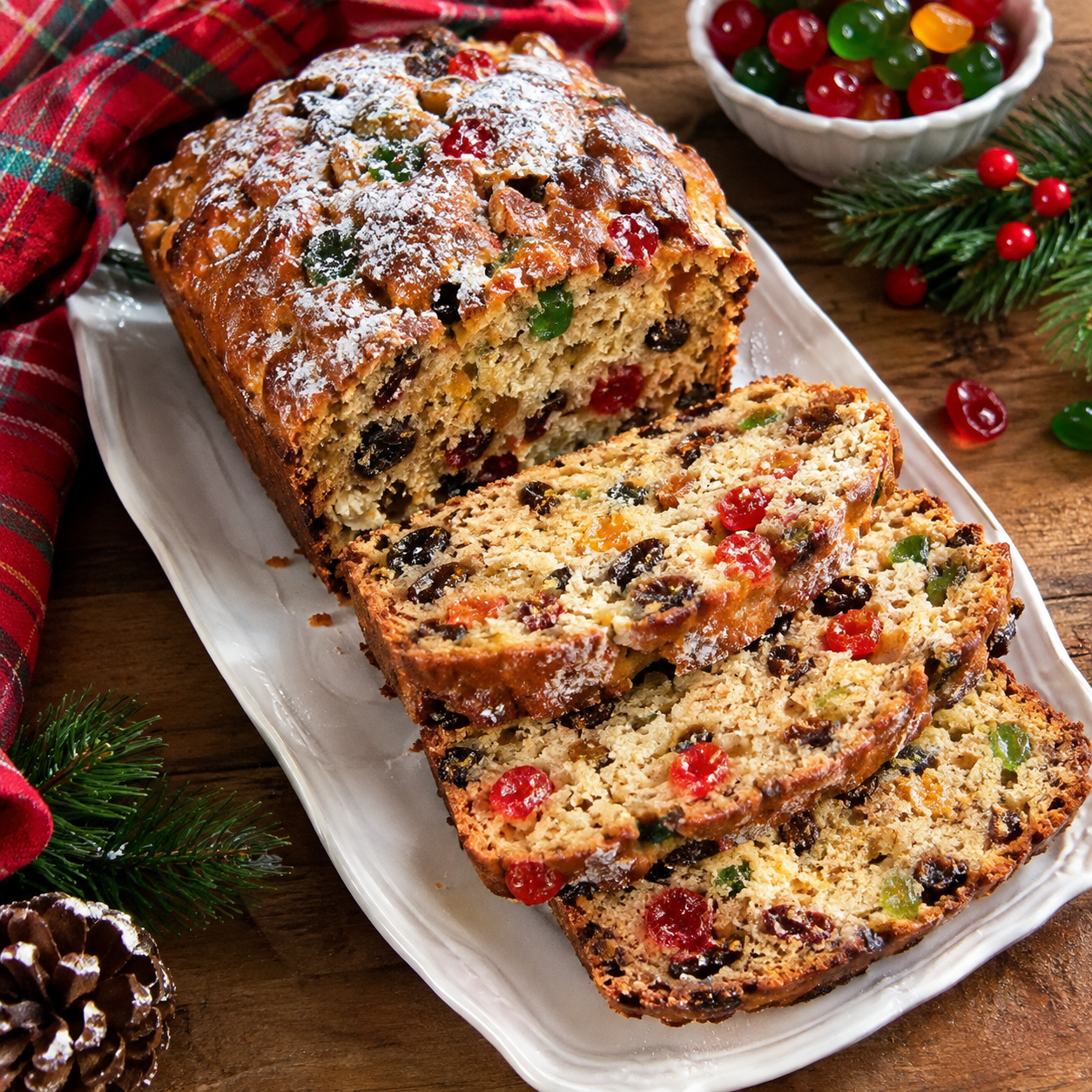
Christmas Fruit Bread is a festive homemade treat filled with colorful candied fruit, sweet raisins, crunchy nuts, and warm holiday flavors. With its beautiful appearance, tender crumb, and delicious combination of fruit and spices, this traditional holiday bread is perfect for Christmas morning, winter brunches, afternoon coffee, and homemade edible gifts.
This Christmas Fruit Bread recipe combines the comforting texture of homemade sweet bread with the sweetness of dried and candied fruits. Every slice offers a little bit of everything: soft bread, chewy raisins, bright pieces of candied cherries, and the satisfying crunch of nuts. A touch of cinnamon and vanilla brings all the flavors together, creating a loaf that feels special enough for the holidays but is simple enough to bake at home.
Unlike a dense traditional fruitcake, this Christmas fruit loaf has a lighter, bread-like texture. It can be enjoyed plain, lightly toasted with butter, or served with cream cheese for a delicious breakfast or snack. It also makes a wonderful addition to a holiday brunch spread alongside coffee, tea, eggs, and fresh fruit.
One of the best things about homemade Christmas fruit bread is its versatility. You can customize the fruit mixture according to your preferences, use pecans or walnuts for extra crunch, add orange zest for a bright citrus flavor, or include a handful of dried cranberries for a festive red color.
Whether you are looking for an old-fashioned holiday bread, a colorful Christmas breakfast recipe, or a thoughtful homemade gift, this festive fruit loaf is a wonderful choice. Bake it in advance, wrap it beautifully, and share a slice of homemade holiday comfort with family and friends.
Ingredients
For the Christmas Fruit Bread
- 3 cups all-purpose flour
- 2 ¼ teaspoons active dry yeast
- ½ cup warm milk, approximately 105–110°F
- ¼ cup granulated sugar
- ½ teaspoon salt
- 2 large eggs, at room temperature
- ¼ cup unsalted butter, softened
- 1 teaspoon vanilla extract
- 1 teaspoon ground cinnamon
- ½ teaspoon ground nutmeg
- 1 tablespoon finely grated orange zest
- ¾ cup raisins
- ½ cup chopped candied cherries
- ½ cup mixed candied citrus peel or mixed candied fruit
- ½ cup chopped pecans or walnuts
- 2–4 tablespoons additional flour, if needed
For the Egg Wash
- 1 egg
- 1 tablespoon milk
Optional Glaze
- ½ cup powdered sugar
- 1–2 tablespoons milk or orange juice
- ¼ teaspoon vanilla extract
Optional Decorations
- Extra candied cherries
- Chopped pecans
- Orange zest
- A light dusting of powdered sugar
Preparation
Step 1: Prepare the Fruit and Activate the Yeast
Place the raisins, candied cherries, and mixed candied fruit in a bowl. If the raisins seem especially dry, soak them in warm water for approximately 10 minutes, then drain and pat them completely dry.
In a separate small bowl, combine the warm milk, a teaspoon of the measured sugar, and the active dry yeast. Stir gently and let the mixture stand for approximately 5–10 minutes, until foamy.
The milk should be warm rather than hot. Excessive heat can damage the yeast and prevent the bread from rising properly.
Step 2: Mix the Dough
In a large mixing bowl, combine the flour, remaining sugar, salt, cinnamon, and nutmeg.
Add the eggs, softened butter, vanilla extract, orange zest, and activated yeast mixture.
Mix until a shaggy dough forms. If using a stand mixer, knead with a dough hook on low speed before increasing to medium-low speed. If mixing by hand, bring the ingredients together with a wooden spoon before transferring the dough to a lightly floured surface.
The dough should be soft and slightly tacky. Add extra flour a tablespoon at a time only if the dough is excessively sticky.
Step 3: Knead Until Smooth
Knead the dough for approximately 8–10 minutes by hand, or 5–7 minutes in a stand mixer.
As you knead, the dough should gradually become smoother, more elastic, and easier to handle.
Proper kneading helps develop the gluten structure that gives homemade Christmas fruit bread its soft, tender texture.
Avoid adding too much flour. A dough that is slightly tacky generally produces a softer loaf than a dry, stiff dough.
Step 4: Add the Fruit and Nuts
Flatten the dough gently and distribute the prepared raisins, candied cherries, mixed candied fruit, and chopped pecans or walnuts over the surface.
Fold the dough over the filling and knead gently until the fruit and nuts are evenly distributed.
Some pieces may fall out while mixing; simply press them back into the dough.
Try not to crush the fruit or overwork the dough at this stage.
Step 5: Let the Dough Rise
Place the dough in a lightly greased bowl and turn it once so the surface is lightly coated.
Cover the bowl with a clean kitchen towel or plastic wrap.
Let the dough rise in a warm, draft-free place for approximately 1–1½ hours, or until it has roughly doubled in size.
The exact rising time depends on the temperature of your kitchen. A cooler room may require more time.
Step 6: Shape the Loaf
Gently press down on the risen dough to release excess air.
Turn it onto a lightly floured surface and shape it into a loaf.
Place the dough into a greased 9×5-inch loaf pan, seam-side down.
If you prefer a more rustic appearance, you can shape the dough into a rounded oval and bake it on a parchment-lined baking sheet instead.
Step 7: Allow the Second Rise
Cover the shaped loaf loosely and let it rise for another 30–45 minutes, or until noticeably puffy.
Meanwhile, preheat the oven to 350°F (175°C).
Avoid allowing the dough to rise too much, as an overproofed loaf may collapse or develop a weaker structure during baking.
Step 8: Brush with Egg Wash
Whisk the egg and milk together in a small bowl.
Gently brush the mixture over the top of the loaf. This helps create a shiny, golden-brown crust.
If desired, arrange a few extra pieces of candied fruit or chopped nuts on top, pressing them lightly into the surface so they adhere.
Step 9: Bake the Christmas Fruit Bread
Bake for approximately 35–45 minutes, depending on the shape of the loaf and your oven.
The bread should develop a golden-brown crust and feel set when gently tapped.
If the top begins browning too quickly, cover it loosely with aluminum foil during the final portion of baking.
For a reliable doneness check, the center of the loaf should reach approximately 190°F (88°C) on an instant-read thermometer.
Step 10: Cool the Bread
Remove the loaf from the oven and let it rest in the pan for approximately 10 minutes.
Carefully transfer it to a wire rack and allow it to cool completely before slicing.
Cooling helps the crumb finish setting and prevents the slices from becoming gummy or compressed.
Step 11: Add the Optional Glaze
If you want a sweeter, bakery-style finish, whisk the powdered sugar, milk or orange juice, and vanilla extract together until smooth.
Drizzle the glaze over the completely cooled loaf.
Allow the glaze to set before slicing or wrapping the bread.
For a simpler presentation, skip the glaze and serve the bread plain or with a light dusting of powdered sugar.
Variation
1. Christmas Cranberry Orange Bread
Replace part of the raisins with dried cranberries and add extra orange zest. The tart cranberries balance the sweetness of the candied fruit, while orange gives the loaf a bright holiday aroma.
2. Christmas Fruit and Nut Bread
Increase the pecans or walnuts to ¾ cup and add a small handful of chopped almonds. This variation has extra crunch and a richer, nuttier flavor.
3. Chocolate Chip Christmas Fruit Bread
Add ½ cup of semi-sweet chocolate chips along with the fruit. Chocolate pairs especially well with raisins, orange zest, and candied cherries.
4. Spiced Christmas Fruit Loaf
For a deeper holiday flavor, add a small pinch of ground cloves or allspice. Keep the amounts modest so the spices do not overwhelm the fruit.
5. Tropical Christmas Fruit Bread
Replace some of the candied citrus with chopped dried pineapple, dried mango, or shredded coconut. This creates a sweeter, tropical-style fruit loaf.
6. Glazed Christmas Fruit Bread
Finish the cooled loaf with a simple orange glaze. The citrus sweetness complements the candied fruit and makes the bread look beautiful on a holiday table.
7. Mini Christmas Fruit Loaves
Divide the dough among several small loaf pans. Smaller loaves are convenient for gifting, but baking time will be shorter, so check them early.
8. Christmas Fruit Bread Without Nuts
Simply omit the pecans or walnuts. Add extra raisins, dried cranberries, or candied fruit if desired.
COOKING Note
The most important factors for successful Christmas Fruit Bread are yeast activity, dough texture, rising time, and proper baking.
Use warm, not hot, milk. Milk that is too hot can damage the yeast. Aim for approximately 105–110°F when activating active dry yeast.
Keep the dough soft. Adding too much flour is a common reason homemade fruit bread turns out dry or heavy. Add extra flour gradually and only when necessary.
Dry soaked fruit thoroughly. If you soak the raisins, drain and pat them dry before adding them to the dough. Excess moisture can make the dough difficult to handle.
Allow enough time to rise. Dough rises according to temperature and yeast activity, not just the clock. Look for the dough to roughly double during the first rise.
Protect the top during baking. Candied fruit can darken quickly. If the loaf becomes too brown before the center is done, cover it loosely with foil.
Cool before slicing. Cutting the loaf while it is very hot can compress the crumb and make the bread seem underbaked.
This recipe produces a sweet, yeast-raised fruit bread rather than a dense, long-aged traditional fruitcake. For the best texture, serve it once cooled or lightly toasted the following day.
Serving Suggestions
Christmas Fruit Bread is versatile enough to enjoy at breakfast, brunch, afternoon tea, or dessert.
1. Serve with Butter
Cut a thick slice and spread it with softened butter. The butter melts slightly into the bread and complements the sweet fruit.
2. Toast and Serve Warm
Lightly toast slices and serve them warm. Toasting creates a delicate crisp exterior while keeping the center tender.
3. Pair with Coffee or Tea
Enjoy a slice with coffee, cappuccino, hot tea, or a homemade latte for a comforting winter snack.
4. Add Cream Cheese
Spread a thin layer of cream cheese over a slice for a creamy, slightly tangy contrast to the candied fruit.
5. Serve at Christmas Brunch
Arrange slices on a platter alongside scrambled eggs, fresh fruit, yogurt, and other breakfast favorites.
6. Make a Festive Dessert Plate
Serve small slices with whipped cream, vanilla ice cream, or a drizzle of orange glaze.
7. Use for French Toast
Slightly stale Christmas fruit bread can be used to make festive French toast. Dip thick slices in a mixture of egg, milk, cinnamon, and vanilla, then cook in a buttered skillet until golden and cooked through.
8. Give as a Homemade Gift
Wrap the completely cooled loaf in parchment paper or food-safe wrapping, then place it in a decorative holiday bag or box. Add a ribbon and a recipe card for a thoughtful homemade gift.
Tips
- Use fresh yeast that is within its expiration date.
- Keep the milk warm rather than hot.
- Measure flour accurately to avoid a dry loaf.
- Use room-temperature eggs for easier mixing.
- Pat soaked raisins completely dry before adding them.
- Knead until the dough becomes smooth and elastic.
- Add the fruit and nuts after the initial dough has formed.
- Let the dough rise until visibly doubled rather than relying only on a fixed time.
- Grease the loaf pan thoroughly to prevent sticking.
- Brush with egg wash for a shiny, golden crust.
- Cover the loaf loosely with foil if the top browns too quickly.
- Check the center with a thermometer when possible.
- Allow the bread to cool before cutting.
- Store the loaf in an airtight container once completely cool.
- Freeze extra slices individually for convenient future servings.
- Add orange zest for a brighter flavor.
- Use a mixture of raisins, dried cranberries, and candied cherries for a colorful festive appearance.
- Avoid adding too much candied fruit, which can weigh down the dough and make shaping more difficult.
- For gifts, glaze the loaf only after it has cooled completely.
- If you prefer less sweetness, omit the glaze and reduce the candied fruit slightly.
Prep Time
25 minutes
Rising Time
1 hour 30 minutes to 2 hours 15 minutes
Cooking Time
35–45 minutes
Cooling Time
45–60 minutes
Total Time
Approximately 3 hours 15 minutes to 4 hours 25 minutes
The total time includes rising and cooling, although actual hands-on preparation is much shorter.
Nutritional Information
Approximate values per slice, assuming 12 slices per loaf and the ingredients listed above, without the optional glaze. Actual values vary with ingredient brands, fruit quantities, and slice size.
Calories: Approximately 280
Protein: Approximately 6 g
Sodium: Approximately 220 mg
The optional glaze, additional nuts, or extra butter served with the bread will increase the nutritional values.
FAQs
What is Christmas Fruit Bread?
Christmas Fruit Bread is a sweet, yeast-raised loaf containing dried or candied fruit, often with nuts and warm spices. It is traditionally enjoyed during the holiday season for breakfast, brunch, snacking, or gifting.
Is Christmas Fruit Bread the same as fruitcake?
No. Christmas fruit bread is generally lighter and more bread-like because it is made with yeast and kneaded dough. Traditional fruitcake is usually denser, richer, and made with a cake-style batter containing a large amount of fruit and sometimes alcohol.
Can I make Christmas Fruit Bread ahead of time?
Yes. You can bake it a day ahead and allow it to cool completely before wrapping it tightly. The flavors will continue to blend as the loaf rests.
How should I store Christmas Fruit Bread?
Once completely cool, store the loaf in an airtight container at room temperature for approximately 2–3 days. For longer storage, refrigerate it or freeze it in well-wrapped portions.
Can Christmas Fruit Bread be frozen?
Yes. Wrap the completely cooled loaf or individual slices tightly, then place them in a freezer-safe bag or container. Freeze for up to approximately 2–3 months for best quality.
Thaw at room temperature before serving, or toast individual slices directly from frozen.
Can I use instant yeast instead of active dry yeast?
Yes. Instant yeast can generally be substituted in a similar amount. It can be mixed directly with the dry ingredients, although the rising time may differ.
Can I use fresh fruit instead of candied fruit?
Dried fruit is usually a better choice because fresh fruit contains more moisture, which can change the dough texture. If using fresh fruit, it should be prepared carefully and the recipe may need adjustments.
Why didn’t my Christmas Fruit Bread rise?
Possible reasons include inactive yeast, milk that was too hot, a cold environment, or insufficient rising time. Make sure your yeast is fresh and allow the dough to rise in a warm, draft-free place.
Why is my fruit bread dense?
Dense bread can result from too much flour, insufficient kneading, inactive yeast, or inadequate rising time. Keep the dough soft and allow it to rise until visibly puffy.
How do I stop the fruit from sinking or clumping?
Distribute the fruit evenly after the dough has formed and knead gently. Chop large pieces into smaller portions and pat soaked fruit dry before adding it.
Can I make Christmas Fruit Bread without nuts?
Absolutely. Leave out the nuts and use additional raisins, cranberries, or candied fruit if you prefer.
What nuts work best in Christmas Fruit Bread?
Pecans and walnuts are excellent choices because they provide a pleasant crunch and pair well with raisins, cherries, and citrus peel. Almonds can also be used.
Can I make this recipe into mini loaves?
Yes. Divide the dough among smaller loaf pans, leaving enough room for the second rise. Reduce the baking time and check each loaf for doneness early.
Can I make Christmas Fruit Bread without alcohol?
Yes. This recipe contains no alcohol. You can soak raisins in warm water or orange juice instead of rum or another alcoholic liquid.
How do I know when the bread is fully baked?
The loaf should have a golden-brown crust and a set center. An instant-read thermometer inserted into the center should register approximately 190°F (88°C).
Can I make this bread sweeter?
Yes. You can increase the sugar slightly or add the optional powdered sugar glaze. Keep in mind that candied fruit already contributes significant sweetness.
What is the best way to serve Christmas Fruit Bread?
It is delicious sliced and served with butter, lightly toasted, or paired with coffee or tea. It can also be used to make festive French toast.
Can I use this recipe for holiday gifts?
Yes. Allow the bread to cool completely, then wrap it securely in food-safe packaging. For the best quality and freshness, give it with storage instructions and a suggested serving date.
Can I make the dough the night before?
Yes, with adjustments. After kneading, place the covered dough in the refrigerator for a slow overnight rise. The following day, allow it to warm slightly, shape it if needed, complete the final rise, and bake. Rising times will vary depending on the dough temperature and yeast activity.
Conclusion
This Christmas Fruit Bread is a festive homemade loaf that brings together sweet candied fruit, chewy raisins, crunchy nuts, and warm holiday spices in every slice. Its soft texture and beautiful golden crust make it a delicious addition to Christmas breakfasts, family brunches, afternoon coffee breaks, and holiday dessert tables.
The recipe is easy to customize with dried cranberries, orange zest, pecans, walnuts, or a simple citrus glaze. Serve it plain, spread it with butter, toast it lightly, or turn leftover slices into delicious French toast.
For the best results, use fresh yeast, keep the dough soft, allow enough time for rising, and let the loaf cool completely before slicing. These simple steps help produce a tender, flavorful bread that looks beautiful and tastes wonderful.
Whether you are baking for your family, preparing a holiday brunch, or wrapping homemade gifts for friends and neighbors, this Christmas Fruit Bread recipe is a lovely way to bring homemade warmth to the holiday season. Bake a loaf, slice it generously, and enjoy the comforting flavors of Christmas with every bite.
PrintChristmas Fruit Bread Recipe
- Total Time: 3 hours 15 minutes
Description
Christmas Fruit Bread is a festive homemade treat filled with colorful candied fruit, sweet raisins, crunchy nuts, and warm holiday flavors. With its beautiful appearance, tender crumb, and delicious combination of fruit and spices, this traditional holiday bread is perfect for Christmas morning, winter brunches, afternoon coffee, and homemade edible gifts.
Ingredients
For the Christmas Fruit Bread
- 3 cups all-purpose flour
- 2 ¼ teaspoons active dry yeast
- ½ cup warm milk, approximately 105–110°F
- ¼ cup granulated sugar
- ½ teaspoon salt
- 2 large eggs, at room temperature
- ¼ cup unsalted butter, softened
- 1 teaspoon vanilla extract
- 1 teaspoon ground cinnamon
- ½ teaspoon ground nutmeg
- 1 tablespoon finely grated orange zest
- ¾ cup raisins
- ½ cup chopped candied cherries
- ½ cup mixed candied citrus peel or mixed candied fruit
- ½ cup chopped pecans or walnuts
- 2–4 tablespoons additional flour, if needed
For the Egg Wash
- 1 egg
- 1 tablespoon milk
Optional Glaze
- ½ cup powdered sugar
- 1–2 tablespoons milk or orange juice
- ¼ teaspoon vanilla extract
Optional Decorations
- Extra candied cherries
- Chopped pecans
- Orange zest
- A light dusting of powdered sugar
Instructions
Place the raisins, candied cherries, and mixed candied fruit in a bowl. If the raisins seem especially dry, soak them in warm water for approximately 10 minutes, then drain and pat them completely dry.
In a separate small bowl, combine the warm milk, a teaspoon of the measured sugar, and the active dry yeast. Stir gently and let the mixture stand for approximately 5–10 minutes, until foamy.
The milk should be warm rather than hot. Excessive heat can damage the yeast and prevent the bread from rising properly.
Step 2: Mix the Dough
In a large mixing bowl, combine the flour, remaining sugar, salt, cinnamon, and nutmeg.
Add the eggs, softened butter, vanilla extract, orange zest, and activated yeast mixture.
Mix until a shaggy dough forms. If using a stand mixer, knead with a dough hook on low speed before increasing to medium-low speed. If mixing by hand, bring the ingredients together with a wooden spoon before transferring the dough to a lightly floured surface.
The dough should be soft and slightly tacky. Add extra flour a tablespoon at a time only if the dough is excessively sticky.
Step 3: Knead Until Smooth
Knead the dough for approximately 8–10 minutes by hand, or 5–7 minutes in a stand mixer.
As you knead, the dough should gradually become smoother, more elastic, and easier to handle.
Proper kneading helps develop the gluten structure that gives homemade Christmas fruit bread its soft, tender texture.
Avoid adding too much flour. A dough that is slightly tacky generally produces a softer loaf than a dry, stiff dough.
Step 4: Add the Fruit and Nuts
Flatten the dough gently and distribute the prepared raisins, candied cherries, mixed candied fruit, and chopped pecans or walnuts over the surface.
Fold the dough over the filling and knead gently until the fruit and nuts are evenly distributed.
Some pieces may fall out while mixing; simply press them back into the dough.
Try not to crush the fruit or overwork the dough at this stage.
Step 5: Let the Dough Rise
Place the dough in a lightly greased bowl and turn it once so the surface is lightly coated.
Cover the bowl with a clean kitchen towel or plastic wrap.
Let the dough rise in a warm, draft-free place for approximately 1–1½ hours, or until it has roughly doubled in size.
The exact rising time depends on the temperature of your kitchen. A cooler room may require more time.
Step 6: Shape the Loaf
Gently press down on the risen dough to release excess air.
Turn it onto a lightly floured surface and shape it into a loaf.
Place the dough into a greased 9×5-inch loaf pan, seam-side down.
If you prefer a more rustic appearance, you can shape the dough into a rounded oval and bake it on a parchment-lined baking sheet instead.
Step 7: Allow the Second Rise
Cover the shaped loaf loosely and let it rise for another 30–45 minutes, or until noticeably puffy.
Meanwhile, preheat the oven to 350°F (175°C).
Avoid allowing the dough to rise too much, as an overproofed loaf may collapse or develop a weaker structure during baking.
Step 8: Brush with Egg Wash
Whisk the egg and milk together in a small bowl.
Gently brush the mixture over the top of the loaf. This helps create a shiny, golden-brown crust.
If desired, arrange a few extra pieces of candied fruit or chopped nuts on top, pressing them lightly into the surface so they adhere.
Step 9: Bake the Christmas Fruit Bread
Bake for approximately 35–45 minutes, depending on the shape of the loaf and your oven.
The bread should develop a golden-brown crust and feel set when gently tapped.
If the top begins browning too quickly, cover it loosely with aluminum foil during the final portion of baking.
For a reliable doneness check, the center of the loaf should reach approximately 190°F (88°C) on an instant-read thermometer.
Step 10: Cool the Bread
Remove the loaf from the oven and let it rest in the pan for approximately 10 minutes.
Carefully transfer it to a wire rack and allow it to cool completely before slicing.
Cooling helps the crumb finish setting and prevents the slices from becoming gummy or compressed.
Step 11: Add the Optional Glaze
If you want a sweeter, bakery-style finish, whisk the powdered sugar, milk or orange juice, and vanilla extract together until smooth.
Drizzle the glaze over the completely cooled loaf.
Allow the glaze to set before slicing or wrapping the bread.
For a simpler presentation, skip the glaze and serve the bread plain or with a light dusting of powdered sugar.
Notes
The most important factors for successful Christmas Fruit Bread are yeast activity, dough texture, rising time, and proper baking.
Use warm, not hot, milk. Milk that is too hot can damage the yeast. Aim for approximately 105–110°F when activating active dry yeast.
Keep the dough soft. Adding too much flour is a common reason homemade fruit bread turns out dry or heavy. Add extra flour gradually and only when necessary.
Dry soaked fruit thoroughly. If you soak the raisins, drain and pat them dry before adding them to the dough. Excess moisture can make the dough difficult to handle.
Allow enough time to rise. Dough rises according to temperature and yeast activity, not just the clock. Look for the dough to roughly double during the first rise.
Protect the top during baking. Candied fruit can darken quickly. If the loaf becomes too brown before the center is done, cover it loosely with foil.
Cool before slicing. Cutting the loaf while it is very hot can compress the crumb and make the bread seem underbaked.
This recipe produces a sweet, yeast-raised fruit bread rather than a dense, long-aged traditional fruitcake. For the best texture, serve it once cooled or lightly toasted the following day.
- Prep Time: 25 minutes
- Cooling Time: 45–60 minutes
- Cook Time: 35–45 minutes
Nutrition
- Calories: 280
- Sodium: 220 mg
- Protein: 6 g
