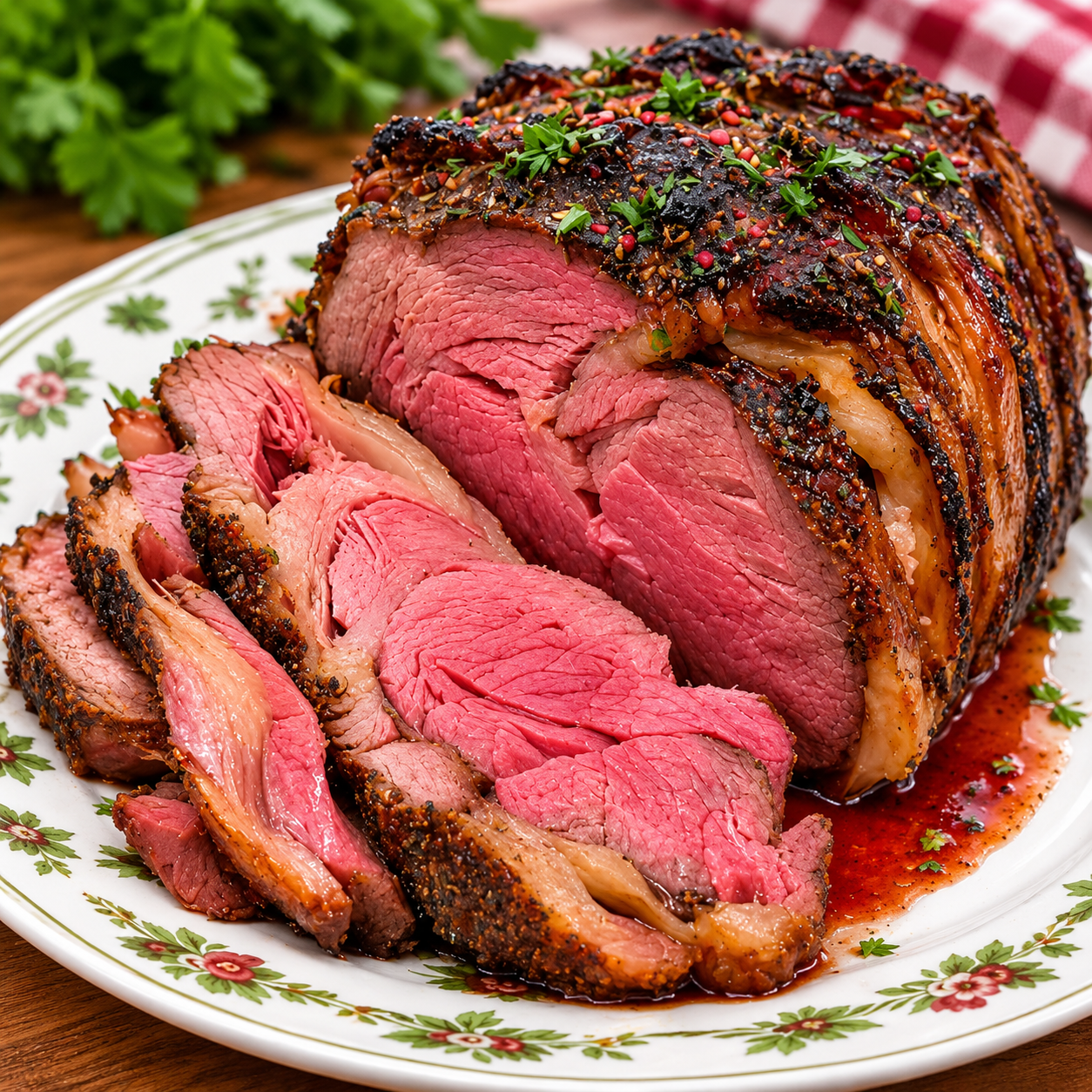
Want to serve a beautiful, tender, and flavorful beef roast for Christmas dinner without spending a fortune on an expensive prime rib? This Christmas Poor Man’s Prime Rib is the perfect holiday solution! Made with an affordable beef roast, a rich garlic butter mixture, and fragrant herbs, this recipe delivers a delicious centerpiece that looks impressive and tastes like a special-occasion meal.
The secret is choosing the right cut of beef and cooking it carefully. A budget-friendly top sirloin roast or another suitable beef roasting cut can become wonderfully tender when seasoned generously, roasted to the correct internal temperature, and allowed to rest before slicing. A golden garlic-herb crust adds incredible flavor, while the juicy interior makes every slice delicious.
This recipe is perfect for Christmas dinner, Sunday family meals, holiday gatherings, or any occasion when you want a traditional roast beef dinner without the premium price of prime rib. Serve it with creamy mashed potatoes, roasted vegetables, homemade gravy, and warm dinner rolls for a complete holiday feast.
Best of all, the preparation is simple. Mix the garlic butter, season the roast, place it in the oven, and let the delicious aroma fill your kitchen. You don’t need an expensive cut of beef to create a memorable Christmas dinner!
Why You’ll Love This Christmas Poor Man’s Prime Rib
- Budget-friendly: Uses a more affordable beef roasting cut instead of expensive prime rib.
- Rich garlic butter flavor: Fresh garlic, butter, rosemary, and thyme create a delicious savory crust.
- Beautiful holiday centerpiece: Perfect for serving at Christmas dinner or special family gatherings.
- Simple preparation: A handful of everyday ingredients creates an impressive meal.
- Customizable doneness: Adjust the cooking time and use a meat thermometer to reach your preferred level of doneness.
- Perfect for leftovers: Extra roast beef is delicious in sandwiches, wraps, and hearty meals.
Ingredients
This recipe serves approximately 6–8 people.
- 3–4 pounds boneless top sirloin roast or another suitable beef roasting cut
- 4 tablespoons unsalted butter, softened
- 4 cloves garlic, minced
- 1 tablespoon olive oil
- 2 teaspoons kosher salt
- 1 teaspoon freshly ground black pepper
- 1 tablespoon fresh rosemary, finely chopped
- 1 tablespoon fresh thyme leaves
- 1 teaspoon onion powder
- 1 teaspoon smoked paprika, optional
- 1 tablespoon Worcestershire sauce, optional
For the Roasting Pan:
- 1 large yellow onion, sliced
- 1 cup low-sodium beef broth
- 2–3 sprigs fresh rosemary
- 2–3 sprigs fresh thyme
Optional for Serving:
- Homemade beef gravy
- Fresh rosemary for garnish
- Creamy mashed potatoes
- Roasted carrots
- Green beans
- Yorkshire puddings
Ingredient Notes and Substitutions
Beef roast: Top sirloin roast is a good choice for a flavorful, relatively affordable roast that can be sliced for a holiday meal. Other options include eye of round or bottom round, but these leaner cuts require careful cooking and thin slicing against the grain. Chuck roast is another budget-friendly option, but it needs a longer, slower cooking method to become tender and should not be cooked like a lean sirloin roast.
Butter: Softened unsalted butter helps create a rich garlic-herb coating. You can use salted butter, but reduce the added salt slightly.
Garlic: Fresh minced garlic provides the strongest flavor. Garlic powder can be used in a pinch, but fresh garlic gives the roast a more aromatic finish.
Olive oil: Helps the seasoning spread evenly and encourages browning.
Rosemary and thyme: These classic herbs give the beef a wonderful holiday aroma. Fresh herbs are especially delicious, but dried herbs work too. Use about one-third as much dried herb as fresh.
Kosher salt: Proper seasoning is essential for flavorful roast beef. If using fine table salt, use less because it is more concentrated by volume.
Black pepper: Freshly ground pepper adds warmth and a little bite.
Smoked paprika: Optional, but it adds a subtle smoky flavor and helps deepen the color of the crust.
Beef broth: Adds moisture to the roasting pan and provides flavorful drippings that can be used to make gravy. It does not need to cover the roast.
How to Make Christmas Poor Man’s Prime Rib
Step 1: Prepare the Beef Roast
Remove the beef roast from its packaging and pat it thoroughly dry with paper towels.
If the roast has excess loose fat or uneven pieces, trim them carefully while leaving a thin layer of fat where appropriate.
For more even cooking, tie the roast with kitchen twine at 1½–2-inch intervals if it is irregularly shaped. This helps it maintain a more uniform shape while roasting.
For better seasoning, salt the roast several hours ahead or overnight in the refrigerator, uncovered, if you have time. If preparing it immediately, simply season it as directed.
Let the roast sit at room temperature for approximately 30–45 minutes while you prepare the garlic butter. This helps take the chill off the meat, although it does not replace using a thermometer to check doneness.
Step 2: Prepare the Garlic Herb Butter
In a small bowl, combine the softened butter, minced garlic, olive oil, chopped rosemary, thyme, black pepper, onion powder, smoked paprika, and Worcestershire sauce if using.
Mix until everything is evenly combined.
Taste a tiny amount of the butter mixture and adjust the seasoning if needed, keeping in mind that the roast will also be seasoned with salt.
Step 3: Season the Roast
Sprinkle the kosher salt evenly over all sides of the beef roast.
Rub the garlic herb butter mixture over the entire surface, including the sides and ends.
Use your hands or a small spatula to spread the mixture evenly so every part of the roast receives plenty of flavor.
For an extra-rich crust, make sure the herb butter reaches the edges rather than collecting only on top.
Step 4: Prepare the Roasting Pan
Preheat your oven to 450°F (232°C).
Arrange the sliced onion in the bottom of a roasting pan. Add the beef broth, rosemary sprigs, and thyme sprigs.
Place a roasting rack inside the pan and position the seasoned beef roast on top, fat side up if the cut has a fat cap.
The roast should sit above the liquid rather than being submerged in it.
Step 5: Roast at High Temperature
Place the roast in the preheated oven and cook at 450°F (232°C) for approximately 15 minutes.
This initial high-temperature roasting helps develop a flavorful, browned exterior.
Avoid opening the oven repeatedly because this allows heat to escape and can affect cooking time.
Step 6: Reduce the Temperature and Continue Cooking
After the first 15 minutes, reduce the oven temperature to 325°F (163°C).
Continue roasting until the center reaches your desired temperature.
Cooking time depends on the exact cut, thickness, starting temperature, oven, and shape of the roast. For a 3–4-pound top sirloin roast, the total roasting time may be around 1½–2 hours, but this is only a planning estimate.
Begin checking the internal temperature well before the expected finish time. Insert an instant-read thermometer into the thickest part of the roast, avoiding large areas of fat.
For a whole beef roast, the USDA recommends reaching 145°F (63°C), followed by at least a 3-minute rest. If you prefer a more thoroughly cooked roast, continue cooking to a higher temperature, understanding that leaner cuts may become drier.
Step 7: Rest Before Slicing
Remove the roast from the oven once it reaches the appropriate temperature.
Transfer it to a cutting board and loosely cover it with foil.
Allow the roast to rest for at least 15–20 minutes before slicing. Resting helps the juices redistribute and makes the beef easier to carve.
Do not slice immediately after removing it from the oven, or you may lose more of the flavorful juices.
Step 8: Slice and Serve
Remove the kitchen twine if used.
Use a sharp carving knife to slice the roast against the grain. For lean cuts such as sirloin or eye of round, thin slices are usually the most tender.
Arrange the beef on a warm serving platter and spoon a little of the flavorful pan juices over the slices.
Garnish with fresh rosemary and thyme for a beautiful Christmas presentation.
Serve with mashed potatoes, roasted vegetables, and homemade beef gravy.
Helpful Cooking Notes
Choose the right cut. A top sirloin roast is a good choice for a traditional roast beef texture. Lean round roasts are more affordable but should be sliced thinly against the grain. Chuck roast needs a different, slower cooking approach.
Use a meat thermometer. This is the most reliable way to avoid overcooking. Roasting time alone cannot guarantee the correct doneness.
Dry the surface before seasoning. Patting the beef dry helps the garlic butter adhere and encourages better browning.
Season ahead when possible. Salting the roast several hours in advance can improve flavor throughout the meat.
Don’t add too much liquid. The broth should sit in the bottom of the pan, not cover the beef. The goal is roasting, not boiling.
Rest before carving. Allowing the roast to rest helps keep the slices juicy.
Slice against the grain. This is particularly important for lean cuts because it shortens the muscle fibers and makes each bite easier to chew.
Adjust cooking time for the shape. A long, narrow roast may cook faster than a thick, compact roast of the same weight.
Variations
1. Garlic Butter Christmas Roast
Increase the minced garlic to 6 cloves and add an extra tablespoon of softened butter. This creates an especially rich, aromatic crust that garlic lovers will enjoy.
2. Rosemary and Thyme Beef Roast
Use 2 tablespoons of fresh rosemary and 2 tablespoons of fresh thyme. This herb-forward version has a classic holiday flavor and pairs beautifully with roasted potatoes.
3. Dijon Mustard Herb Roast
Add 1 tablespoon Dijon mustard to the garlic butter mixture. The mustard provides a little tanginess and complements the savory beef flavor.
4. Pepper-Crusted Roast Beef
Increase the black pepper to 2 teaspoons and add ½ teaspoon crushed coriander seeds. This creates a more pronounced peppery crust.
5. Onion and Garlic Roast Beef
Add extra sliced onions and several whole garlic cloves to the roasting pan. The vegetables become deeply flavored as they cook in the beef drippings.
6. Slow-Roasted Sirloin
For a more evenly cooked roast, use a lower-temperature roasting method instead of the high-temperature start. Roast at approximately 250°F (121°C), monitoring the internal temperature carefully, then briefly brown the exterior in a hot oven if desired. Follow the same safe final-temperature guidance.
7. Poor Man’s Prime Rib with Homemade Gravy
After removing the roast, strain the pan drippings into a saucepan. Whisk 2 tablespoons of flour with 2 tablespoons of softened butter in a separate bowl to form a paste. Gradually whisk it into about 2 cups of warm pan juices or beef broth and simmer until thickened. Adjust the seasoning to taste.
Serving Suggestions
This Christmas Poor Man’s Prime Rib deserves a delicious holiday spread. Pair it with classic sides to create a memorable Christmas dinner.
- Creamy mashed potatoes: A classic side that pairs perfectly with garlic butter and beef gravy.
- Roasted carrots: Their natural sweetness balances the savory beef.
- Green beans: Serve with garlic butter or toasted almonds.
- Roasted Brussels sprouts: Add a little olive oil, salt, and pepper for a delicious vegetable side.
- Yorkshire puddings: A traditional accompaniment to roast beef.
- Homemade dinner rolls: Perfect for soaking up the flavorful gravy.
- Creamed spinach: A rich, comforting side for a special holiday meal.
- Cranberry sauce: A small serving adds a bright, tangy contrast to the rich beef.
Tips for the Perfect Christmas Beef Roast
- Choose a suitable roasting cut: Top sirloin is a good option for a juicy, sliceable roast without the prime rib price.
- Bring the meat out briefly before cooking: Letting it lose some of its refrigerator chill can help with more even roasting.
- Pat the roast dry: A dry surface helps develop a better crust.
- Season generously: Beef benefits from proper seasoning, especially when preparing a large roast.
- Use fresh herbs when possible: Rosemary and thyme provide wonderful holiday flavor.
- Check the temperature early: Begin checking before the estimated cooking time is reached.
- Avoid cutting too soon: Resting is essential for juicy slices.
- Slice against the grain: This makes the beef more tender to eat.
- Warm the serving platter: A warm platter helps keep the sliced beef from cooling too quickly.
- Make gravy from the drippings: The pan juices contain wonderful flavor and should not go to waste.
Storage Instructions
Allow leftover roast beef to cool slightly, then refrigerate it promptly.
- Refrigerator: Store cooked beef in an airtight container for 3–4 days.
- Freezer: Freeze sliced roast beef in airtight freezer-safe packaging for 2–3 months for best quality.
- Gravy: Store separately in a covered container in the refrigerator for 3–4 days.
For food safety, refrigerate perishable leftovers within 2 hours of cooking, or within 1 hour if the temperature is above 90°F.
When reheating, warm the beef gently with a little broth or gravy to help prevent it from drying out. Reheat leftovers to 165°F (74°C).
Make-Ahead Instructions
You can prepare several parts of this recipe in advance to make Christmas dinner easier.
The day before: Pat the roast dry, season it with salt, and refrigerate it uncovered on a tray. Prepare the garlic herb butter separately and keep it covered in the refrigerator.
On cooking day: Remove the butter mixture from the refrigerator briefly to soften. Spread it over the roast, prepare the roasting pan, and cook according to the instructions.
You can also prepare your side dishes and gravy ingredients ahead of time so everything is ready when the roast comes out of the oven.
For the best texture, roast the beef on the day you plan to serve it.
Freezing Instructions
Freezing cooked roast beef: Allow the beef to cool, slice it against the grain, and divide it into meal-sized portions. Place the slices in freezer-safe bags or airtight containers. Add a little cooled beef broth or gravy to help protect the meat from drying out.
Freeze for up to 2–3 months for best quality.
Thawing: Thaw frozen roast beef overnight in the refrigerator.
Reheating: Place the slices in a covered baking dish with a little broth or gravy. Warm gently in a 300°F (150°C) oven until heated through, or reheat leftovers to 165°F (74°C).
Avoid repeatedly reheating the same portion.
Recipe Details
- Prep Time: 20 minutes
- Seasoning Rest: 30–45 minutes, optional
- Cook Time: Approximately 1½–2 hours, depending on the cut and thickness
- Resting Time: 15–20 minutes
- Total Time: Approximately 2 hours 15 minutes to 2 hours 45 minutes, including the optional seasoning rest
- Yield: 1 beef roast
- Servings: 6–8
- Serving Size: Approximately 5–6 ounces cooked beef
Nutritional Information
Estimated nutrition per serving, assuming 8 servings and using top sirloin roast with the garlic butter:
- Calories: 390
- Protein: 48g
- Carbohydrates: 2g
- Total Fat: 20g
- Saturated Fat: 9g
- Sugar: 0g
- Sodium: 650mg
- Cholesterol: 145mg
Nutrition values are estimates and vary depending on the beef cut, trimming, serving size, and amount of butter and pan juices consumed.
Frequently Asked Questions
1. What is Poor Man’s Prime Rib?
Poor Man’s Prime Rib is a name commonly used for a more affordable beef roast prepared with seasonings and cooking techniques that create a special-occasion roast beef dinner. It is not actual prime rib, but it can still be flavorful and impressive when the right cut is selected and cooked carefully.
2. What is the best cut of beef for Poor Man’s Prime Rib?
Top sirloin roast is a good choice for a juicy, sliceable roast. Eye of round and bottom round are usually more economical, but they are leaner and benefit from careful temperature control and thin slicing against the grain.
3. Can I use chuck roast instead?
Yes, but chuck roast should not be cooked using the same method as sirloin or round roast. Chuck contains more connective tissue and is better suited to slow braising or low-and-slow cooking until tender.
4. How do I keep the beef roast from drying out?
Choose an appropriate cut, avoid overcooking, use a meat thermometer, and allow the roast to rest before slicing. For lean cuts, slicing thinly against the grain also makes a big difference.
5. Should I sear the roast before putting it in the oven?
It is optional. The initial high-temperature roasting in this recipe helps brown the exterior. You can also sear the roast in a hot skillet before roasting if you prefer, but make sure to avoid burning the garlic butter.
6. How long should I cook a 4-pound beef roast?
Cooking time varies based on the cut, thickness, shape, and oven temperature. A 4-pound top sirloin roast may take around 1½–2 hours using this method, but always use a thermometer rather than relying on time alone.
7. What temperature should Poor Man’s Prime Rib be cooked to?
For a whole beef roast, the USDA recommends an internal temperature of 145°F (63°C), followed by at least a 3-minute rest. Use a reliable food thermometer inserted into the thickest part of the roast.
8. Can I prepare this recipe the night before Christmas?
Yes. You can season the roast with salt and refrigerate it uncovered overnight. Prepare the garlic butter separately and spread it over the roast shortly before cooking.
9. What should I serve with Christmas Poor Man’s Prime Rib?
Mashed potatoes, roasted carrots, green beans, Brussels sprouts, Yorkshire puddings, dinner rolls, and homemade beef gravy are all excellent choices.
10. Can I use the leftovers for sandwiches?
Absolutely! Thinly sliced leftover roast beef makes delicious sandwiches. Serve it on toasted rolls with horseradish sauce, melted cheese, or a little warm gravy.
Conclusion
This Christmas Poor Man’s Prime Rib proves that you don’t need to spend a fortune to serve an impressive holiday beef dinner. With a flavorful beef roast, rich garlic herb butter, and a little patience, you can create a beautiful centerpiece that your family and guests will love.
Serve it with creamy mashed potatoes, roasted vegetables, and homemade gravy for a traditional Christmas feast. Whether you’re hosting a large holiday gathering or preparing a special dinner for your family, this budget-friendly roast is a delicious way to make Christmas memorable without stretching your grocery budget!
Print
Christmas Poor Man’s Prime Rib – Tender, Juicy, and Budget-Friendly Holiday Roast
Ingredients
This recipe serves approximately 6–8 people.
- 3–4 pounds boneless top sirloin roast or another suitable beef roasting cut
- 4 tablespoons unsalted butter, softened
- 4 cloves garlic, minced
- 1 tablespoon olive oil
- 2 teaspoons kosher salt
- 1 teaspoon freshly ground black pepper
- 1 tablespoon fresh rosemary, finely chopped
- 1 tablespoon fresh thyme leaves
- 1 teaspoon onion powder
- 1 teaspoon smoked paprika, optional
- 1 tablespoon Worcestershire sauce, optional
For the Roasting Pan:
- 1 large yellow onion, sliced
- 1 cup low-sodium beef broth
- 2–3 sprigs fresh rosemary
- 2–3 sprigs fresh thyme
Optional for Serving:
- Homemade beef gravy
- Fresh rosemary for garnish
- Creamy mashed potatoes
- Roasted carrots
- Green beans
- Yorkshire puddings
Instructions
Remove the beef roast from its packaging and pat it thoroughly dry with paper towels.
If the roast has excess loose fat or uneven pieces, trim them carefully while leaving a thin layer of fat where appropriate.
For more even cooking, tie the roast with kitchen twine at 1½–2-inch intervals if it is irregularly shaped. This helps it maintain a more uniform shape while roasting.
For better seasoning, salt the roast several hours ahead or overnight in the refrigerator, uncovered, if you have time. If preparing it immediately, simply season it as directed.
Let the roast sit at room temperature for approximately 30–45 minutes while you prepare the garlic butter. This helps take the chill off the meat, although it does not replace using a thermometer to check doneness.
Step 2: Prepare the Garlic Herb Butter
In a small bowl, combine the softened butter, minced garlic, olive oil, chopped rosemary, thyme, black pepper, onion powder, smoked paprika, and Worcestershire sauce if using.
Mix until everything is evenly combined.
Taste a tiny amount of the butter mixture and adjust the seasoning if needed, keeping in mind that the roast will also be seasoned with salt.
Step 3: Season the Roast
Sprinkle the kosher salt evenly over all sides of the beef roast.
Rub the garlic herb butter mixture over the entire surface, including the sides and ends.
Use your hands or a small spatula to spread the mixture evenly so every part of the roast receives plenty of flavor.
For an extra-rich crust, make sure the herb butter reaches the edges rather than collecting only on top.
Step 4: Prepare the Roasting Pan
Preheat your oven to 450°F (232°C).
Arrange the sliced onion in the bottom of a roasting pan. Add the beef broth, rosemary sprigs, and thyme sprigs.
Place a roasting rack inside the pan and position the seasoned beef roast on top, fat side up if the cut has a fat cap.
The roast should sit above the liquid rather than being submerged in it.
Step 5: Roast at High Temperature
Place the roast in the preheated oven and cook at 450°F (232°C) for approximately 15 minutes.
This initial high-temperature roasting helps develop a flavorful, browned exterior.
Avoid opening the oven repeatedly because this allows heat to escape and can affect cooking time.
Step 6: Reduce the Temperature and Continue Cooking
After the first 15 minutes, reduce the oven temperature to 325°F (163°C).
Continue roasting until the center reaches your desired temperature.
Cooking time depends on the exact cut, thickness, starting temperature, oven, and shape of the roast. For a 3–4-pound top sirloin roast, the total roasting time may be around 1½–2 hours, but this is only a planning estimate.
Begin checking the internal temperature well before the expected finish time. Insert an instant-read thermometer into the thickest part of the roast, avoiding large areas of fat.
For a whole beef roast, the USDA recommends reaching 145°F (63°C), followed by at least a 3-minute rest. If you prefer a more thoroughly cooked roast, continue cooking to a higher temperature, understanding that leaner cuts may become drier.
Step 7: Rest Before Slicing
Remove the roast from the oven once it reaches the appropriate temperature.
Transfer it to a cutting board and loosely cover it with foil.
Allow the roast to rest for at least 15–20 minutes before slicing. Resting helps the juices redistribute and makes the beef easier to carve.
Do not slice immediately after removing it from the oven, or you may lose more of the flavorful juices.
Step 8: Slice and Serve
Remove the kitchen twine if used.
Use a sharp carving knife to slice the roast against the grain. For lean cuts such as sirloin or eye of round, thin slices are usually the most tender.
Arrange the beef on a warm serving platter and spoon a little of the flavorful pan juices over the slices.
Garnish with fresh rosemary and thyme for a beautiful Christmas presentation.
Serve with mashed potatoes, roasted vegetables, and homemade beef gravy.
Notes
Choose the right cut. A top sirloin roast is a good choice for a traditional roast beef texture. Lean round roasts are more affordable but should be sliced thinly against the grain. Chuck roast needs a different, slower cooking approach.
Use a meat thermometer. This is the most reliable way to avoid overcooking. Roasting time alone cannot guarantee the correct doneness.
Dry the surface before seasoning. Patting the beef dry helps the garlic butter adhere and encourages better browning.
Season ahead when possible. Salting the roast several hours in advance can improve flavor throughout the meat.
Don’t add too much liquid. The broth should sit in the bottom of the pan, not cover the beef. The goal is roasting, not boiling.
Rest before carving. Allowing the roast to rest helps keep the slices juicy.
Slice against the grain. This is particularly important for lean cuts because it shortens the muscle fibers and makes each bite easier to chew.
Adjust cooking time for the shape. A long, narrow roast may cook faster than a thick, compact roast of the same weight.
