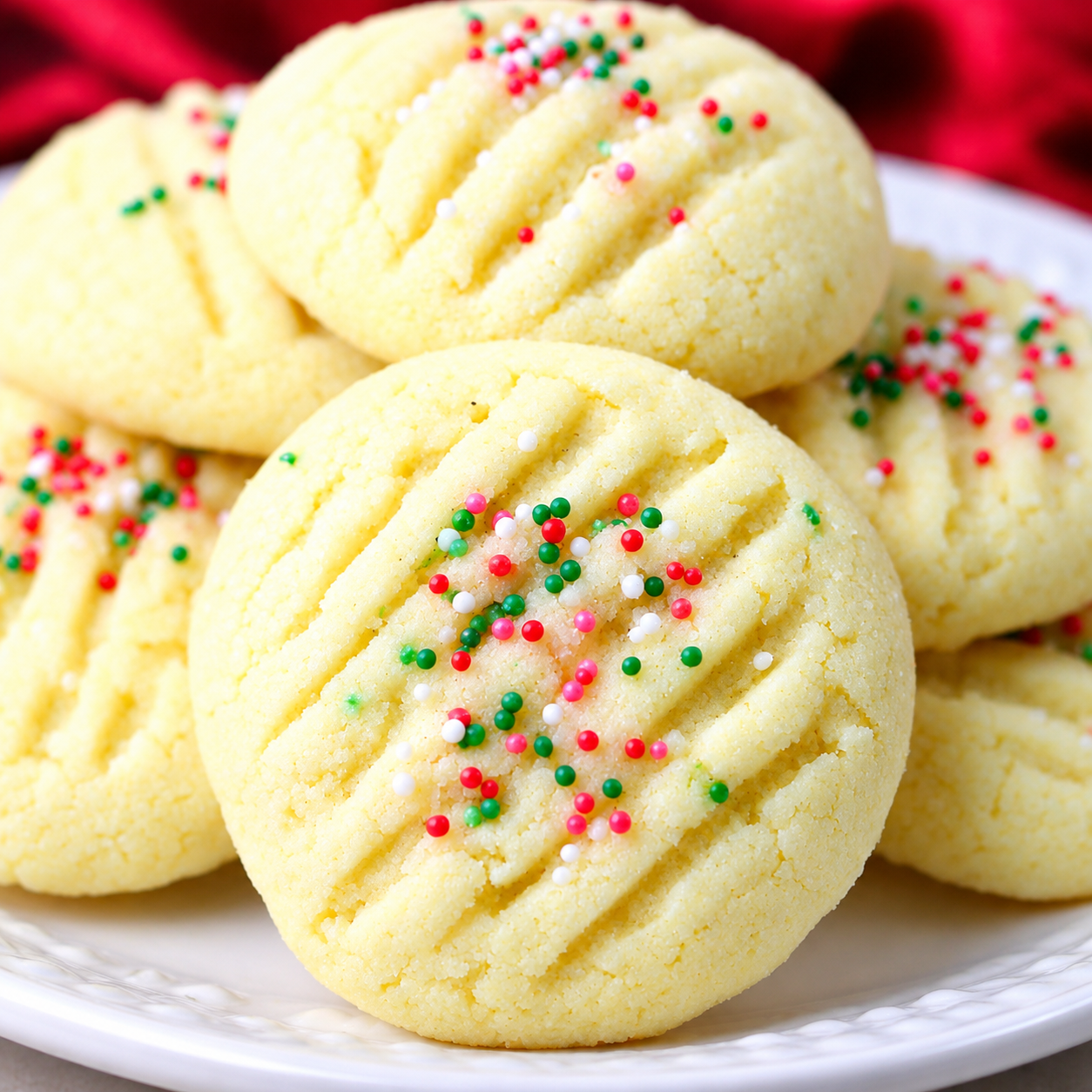
If you love cookies that are incredibly buttery, delicate, and practically melt in your mouth, these Whipped Shortbread Cookies are a must-bake! They’re light, tender, and made with just a handful of simple ingredients. Unlike traditional shortbread, which is usually pressed or shaped into a firm dough, this version is beaten until fluffy, creating a wonderfully delicate texture that almost dissolves with every bite.
These classic cookies are especially popular during the Christmas season. Their pretty piped or fork-pressed shapes, snowy powdered sugar finish, and festive sprinkles make them perfect for holiday cookie trays, homemade gifts, and family gatherings. But honestly, they’re so easy and delicious that you’ll want to make them all year long.
The secret is whipping the butter until it becomes very light and creamy before adding the remaining ingredients. A little cornstarch helps create that signature tender texture, while powdered sugar gives the cookies a delicate sweetness. You don’t need complicated ingredients or special baking skills to make a batch that tastes like it came from a beautiful bakery.
Why You’ll Love These Whipped Shortbread Cookies
- Melt-in-your-mouth texture: Whipping the butter creates an exceptionally light and delicate cookie.
- Simple ingredients: You only need a few pantry staples.
- Perfect for Christmas: Add red and green sprinkles or candied cherries for a festive holiday look.
- Easy to customize: Make piped rosettes, classic rounds, or pretty fork-pressed cookies.
- Great for gifting: Their elegant appearance makes them lovely additions to holiday cookie boxes.
- Make-ahead friendly: The baked cookies can be frozen for convenient holiday preparation.
Ingredients
This recipe makes approximately 30–36 small cookies, depending on how you shape them.
- 1 cup unsalted butter, softened to room temperature
- ½ cup powdered sugar
- 1 ½ cups all-purpose flour
- ½ cup cornstarch
- 1 teaspoon pure vanilla extract
- ¼ teaspoon salt
- 2–3 tablespoons red and green sprinkles, optional
- 12–18 small pieces of candied cherry, optional
Ingredient Notes and Substitutions
Unsalted butter: Butter is the star of shortbread, so use a good-quality butter for the best flavor. It should be softened enough to beat easily but should not be melted or greasy.
Powdered sugar: Also called confectioners’ sugar, powdered sugar helps create a smooth, delicate texture. Avoid substituting granulated sugar because it can change the consistency.
All-purpose flour: Provides structure while allowing the cookies to hold their shape. Measure it carefully to avoid dry, crumbly cookies.
Cornstarch: This is one of the most important ingredients. It reduces the overall gluten development and contributes to the signature tender, almost powdery texture.
Vanilla extract: A little vanilla adds warmth and enhances the buttery flavor. You can use almond extract instead, or combine a small amount of both.
Salt: A small amount balances the sweetness and makes the butter flavor stand out.
Decorations: Holiday sprinkles, colored sanding sugar, or small pieces of candied cherry add a festive touch. Keep decorations light so they don’t weigh down the delicate cookies.
How to Make Whipped Shortbread Cookies
Step 1: Prepare the Baking Sheets
Preheat your oven to 300°F (150°C). Line two baking sheets with parchment paper.
Make sure your butter is softened but not melted. If it feels oily or looks shiny, it may be too warm. Let it cool slightly before whipping.
Prepare your sprinkles or candied cherries if you’re using them.
Step 2: Whip the Butter and Powdered Sugar
Place the softened butter in a large mixing bowl. Using an electric hand mixer or a stand mixer fitted with the paddle attachment, beat the butter for about 3–4 minutes until pale, smooth, and fluffy.
Add the powdered sugar gradually, mixing on low speed at first to prevent it from scattering. Once incorporated, increase the speed and beat for another 2–3 minutes.
The mixture should look noticeably lighter and creamy. This whipping stage is what gives the cookies their delicate texture, so don’t rush it.
Scrape down the sides and bottom of the bowl as needed.
Step 3: Add the Vanilla and Dry Ingredients
Add the vanilla extract and salt, mixing until combined.
In a separate bowl, whisk together the all-purpose flour and cornstarch. Gradually add this mixture to the whipped butter in two or three additions.
Mix on low speed just until the dough comes together. Stop as soon as there are no visible dry patches. Avoid overmixing, as too much mixing after adding the flour can make the cookies less tender.
The dough should be soft and creamy enough to pipe, but firm enough to hold its shape.
Step 4: Shape the Cookies
There are two easy ways to shape these cookies.
Option 1: Piped Cookies
Transfer the dough to a piping bag fitted with a large open-star tip. Pipe small rosettes or swirls onto the prepared baking sheets, leaving about 1½ inches between each cookie.
If the dough feels too firm to pipe, let it rest at room temperature for a few minutes. Avoid adding extra liquid.
Option 2: Fork-Pressed Cookies
Scoop small portions of dough, approximately 1 tablespoon each, and gently roll them into balls. Place them on the prepared baking sheets.
Lightly press each cookie with a fork to create a simple pattern. If the fork sticks, lightly dust it with powdered sugar.
For a Christmas touch, add a small piece of candied cherry or a few sprinkles to the center of each cookie.
If the dough becomes too soft while shaping, refrigerate the tray for about 10–15 minutes before baking.
Step 5: Bake Until Set
Bake the cookies at 300°F (150°C) for approximately 18–22 minutes, depending on their size.
The cookies should look pale, with bottoms that are just beginning to turn lightly golden. The tops should not become deeply browned.
Remove the baking sheets from the oven and allow the cookies to cool on the pans for at least 10 minutes. These cookies are fragile while warm, so avoid moving them too soon.
Once they have firmed up, carefully transfer them to a wire rack to cool completely.
Enjoy them plain, dusted with powdered sugar, or decorated with your favorite festive toppings.
Helpful Cooking Notes
Whip the butter properly. The butter should become pale and fluffy before you add the flour. This helps create the light texture that makes whipped shortbread special.
Use softened butter, not melted butter. Melted butter can make the dough too loose and cause the cookies to spread.
Measure the flour accurately. Too much flour can make the dough stiff, difficult to pipe, and crumbly after baking.
Don’t overmix after adding flour. Mix only until the ingredients are incorporated to keep the cookies delicate.
Choose a large piping tip. A large open-star tip makes shaping much easier. Small tips can clog because the dough is thicker than ordinary frosting.
Bake at a lower temperature. The relatively low oven temperature helps the cookies cook gently without becoming too brown.
Let them cool before handling. Freshly baked whipped shortbread is delicate and can break easily while warm.
Variations
1. Christmas Whipped Shortbread Cookies
Add red and green sprinkles to the tops before baking. You can also place a tiny piece of candied cherry in the center of each piped rosette for a traditional holiday appearance.
2. Almond Whipped Shortbread
Replace the vanilla extract with ½ teaspoon almond extract, or use ½ teaspoon vanilla and ¼ teaspoon almond extract together. The almond flavor pairs beautifully with the buttery cookie.
3. Chocolate-Dipped Whipped Shortbread
After the cookies have cooled completely, dip half of each cookie into melted semisweet or white chocolate. Place them on parchment paper and allow the chocolate to set before serving.
4. Lemon Whipped Shortbread
Add 1 teaspoon of finely grated lemon zest to the butter before whipping. The citrus adds a fresh flavor that balances the richness of the butter.
5. Cherry-Topped Shortbread
Press a small piece of candied cherry into the center of each piped cookie before baking. The bright red color looks especially pretty on Christmas dessert platters.
6. Cinnamon Sugar Shortbread
Mix 1 tablespoon of granulated sugar with ½ teaspoon ground cinnamon. Lightly sprinkle over the shaped cookies before baking for a warm, festive flavor.
7. White Chocolate Sprinkle Cookies
Dip the cooled cookies halfway into melted white chocolate and finish with festive sprinkles. Let the coating set completely before storing.
Serving Suggestions
Whipped Shortbread Cookies are wonderful on their own, but they also make a beautiful addition to holiday desserts.
- Christmas cookie trays: Arrange them alongside gingerbread cookies, sugar cookies, and chocolate crinkles.
- With coffee or tea: Their buttery flavor pairs perfectly with hot coffee, black tea, or a creamy latte.
- With hot chocolate: Serve a few cookies with a warm mug of homemade hot cocoa.
- As edible gifts: Package completely cooled cookies in small food-safe tins or gift boxes with parchment paper between layers.
- For holiday parties: Arrange them on a festive platter with chocolate-dipped treats and other homemade cookies.
- As an after-dinner treat: Serve two or three cookies with fresh berries and a cup of coffee.
Tips for Perfect Whipped Shortbread Cookies
- Start with properly softened butter: It should be soft enough to press with a finger but not greasy or melted.
- Whip long enough: Give the butter and sugar mixture several minutes to become light and fluffy.
- Use powdered sugar: It creates a smoother, more delicate texture than regular granulated sugar.
- Don’t add too much flour: Accurate measurements are essential for a soft, pipeable dough.
- Use parchment paper: It prevents sticking and makes removing the delicate cookies easier.
- Keep the cookies small: Smaller cookies bake more evenly and are less likely to break.
- Chill soft dough briefly: If the piped shapes lose their definition, refrigerate the baking sheet before placing it in the oven.
- Avoid overbaking: The tops should remain pale. Look for lightly golden bottoms and set edges.
- Cool completely before packaging: Warm cookies can create condensation inside storage containers.
Storage Instructions
Once the cookies have cooled completely, store them in an airtight container.
- Room temperature: Keep plain cookies in a cool, dry place for up to 1 week for best quality.
- Refrigerator: Refrigeration is generally unnecessary for plain, undecorated whipped shortbread and may affect its delicate texture.
- Chocolate-dipped cookies: Store according to the chocolate coating used, in a cool, dry place. Refrigerate only if the topping or filling requires it.
Place parchment paper between layers to prevent the cookies from rubbing against each other or breaking.
Keep the container away from heat, moisture, and direct sunlight.
Make-Ahead Instructions
Whipped shortbread cookies are excellent for holiday baking because you can prepare them ahead of time.
You can make the dough up to 24 hours in advance. Cover the bowl tightly and refrigerate it. Before piping, allow the dough to soften slightly at room temperature until it is manageable.
You can also pipe the cookies onto parchment-lined baking sheets, cover them carefully, and refrigerate them for several hours before baking. If the shapes are very firm, bake them directly from the refrigerator and check for doneness as usual.
Freezing Instructions
Freezing baked cookies: Allow the cookies to cool completely. Arrange them in a freezer-safe airtight container, placing parchment paper between the layers. Freeze for up to 2 months for best quality.
To serve, let the cookies thaw at room temperature while still covered. Handle them gently because they are naturally delicate.
Freezing unbaked dough: Pipe or shape the cookies onto a parchment-lined baking sheet. Freeze until firm, then transfer the frozen shapes to a freezer-safe container.
Bake from frozen at 300°F (150°C), adding a few minutes to the baking time as needed. Check that the cookies are set and lightly golden underneath before removing them from the oven.
Recipe Details
- Prep Time: 20 minutes
- Cook Time: 18–22 minutes per batch
- Cooling Time: 20 minutes
- Total Time: Approximately 1 hour, depending on the number of baking batches
- Yield: 30–36 small cookies
- Serving Size: 1 cookie
Nutritional Information
Estimated nutrition per cookie, assuming the recipe makes 36 cookies without optional decorations:
- Calories: 95
- Protein: 1g
- Carbohydrates: 9g
- Total Fat: 6g
- Saturated Fat: 4g
- Sugar: 3g
- Sodium: 25mg
- Cholesterol: 16mg
Nutrition values are estimates and will vary depending on the butter, flour, cookie size, and decorations used.
Frequently Asked Questions
1. Why are my whipped shortbread cookies so delicate?
Their delicate texture comes from the high butter content, powdered sugar, and cornstarch. They are naturally more fragile than traditional sugar cookies, especially while warm. Let them cool on the baking sheet before moving them.
2. Why is my whipped shortbread dough too stiff to pipe?
The butter may have been too cold, or the flour may have been overmeasured. Let the dough rest at room temperature for a few minutes. If it is still difficult to pipe, gently mix it briefly to soften it. Avoid adding milk or water unless you are prepared for a change in texture.
3. Can I make whipped shortbread without cornstarch?
Cornstarch is important for the signature melt-in-your-mouth texture. You can experiment with replacing it with an equal amount of additional flour, but the cookies will be firmer and less delicate.
4. Do I need to chill whipped shortbread dough?
Not always. If the dough is firm enough to pipe or shape and holds its design, you can bake it immediately. If the dough is too soft or the piped shapes are spreading, refrigerate the tray for 10–15 minutes before baking.
5. Why did my cookies spread in the oven?
The butter may have been too warm, the dough may have been too soft, or the baking sheet may have been warm. Make sure the butter is softened but not greasy, and chill the shaped cookies briefly if needed.
6. Can I use salted butter?
Yes. If using salted butter, omit the additional ¼ teaspoon of salt in the recipe. The flavor may vary slightly depending on the brand of butter.
7. Can I use a hand mixer instead of a stand mixer?
Absolutely! A hand mixer works very well. Just make sure to whip the butter and powdered sugar long enough to create a pale, fluffy mixture.
8. Can I add sprinkles to the dough?
Yes, but use small sprinkles and fold them in gently at the end. Avoid adding too many because they can affect the delicate dough and make piping more difficult.
9. How do I keep whipped shortbread cookies from breaking?
Allow them to cool completely before handling. Use a thin spatula to lift them from the baking sheet, and store them in a sturdy airtight container with parchment paper between layers.
10. Can I make these cookies ahead for Christmas?
Yes! Bake them ahead and freeze them for up to 2 months for best quality. Thaw them at room temperature while covered, then arrange them on your Christmas cookie tray.
Conclusion
These Whipped Shortbread Cookies are a simple but special homemade treat with a wonderfully buttery flavor and a delicate, melt-in-your-mouth texture. Made with everyday baking ingredients, they’re easy to prepare, beautiful on a holiday cookie platter, and perfect for sharing with family and friends.
Whether you pipe them into pretty little rosettes, decorate them with festive sprinkles, or enjoy them plain with a cup of coffee, these cookies are sure to become a holiday favorite. Make a batch for Christmas, save a few for yourself, and enjoy every buttery bite!
Print
Whipped Shortbread Cookies – Buttery, Light, and Melt-in-Your-Mouth
Ingredients
This recipe makes approximately 30–36 small cookies, depending on how you shape them.
- 1 cup unsalted butter, softened to room temperature
- ½ cup powdered sugar
- 1 ½ cups all-purpose flour
- ½ cup cornstarch
- 1 teaspoon pure vanilla extract
- ¼ teaspoon salt
- 2–3 tablespoons red and green sprinkles, optional
- 12–18 small pieces of candied cherry, optional
Instructions
Preheat your oven to 300°F (150°C). Line two baking sheets with parchment paper.
Make sure your butter is softened but not melted. If it feels oily or looks shiny, it may be too warm. Let it cool slightly before whipping.
Prepare your sprinkles or candied cherries if you’re using them.
Step 2: Whip the Butter and Powdered Sugar
Place the softened butter in a large mixing bowl. Using an electric hand mixer or a stand mixer fitted with the paddle attachment, beat the butter for about 3–4 minutes until pale, smooth, and fluffy.
Add the powdered sugar gradually, mixing on low speed at first to prevent it from scattering. Once incorporated, increase the speed and beat for another 2–3 minutes.
The mixture should look noticeably lighter and creamy. This whipping stage is what gives the cookies their delicate texture, so don’t rush it.
Scrape down the sides and bottom of the bowl as needed.
Step 3: Add the Vanilla and Dry Ingredients
Add the vanilla extract and salt, mixing until combined.
In a separate bowl, whisk together the all-purpose flour and cornstarch. Gradually add this mixture to the whipped butter in two or three additions.
Mix on low speed just until the dough comes together. Stop as soon as there are no visible dry patches. Avoid overmixing, as too much mixing after adding the flour can make the cookies less tender.
The dough should be soft and creamy enough to pipe, but firm enough to hold its shape.
Step 4: Shape the Cookies
There are two easy ways to shape these cookies.
Option 1: Piped Cookies
Transfer the dough to a piping bag fitted with a large open-star tip. Pipe small rosettes or swirls onto the prepared baking sheets, leaving about 1½ inches between each cookie.
If the dough feels too firm to pipe, let it rest at room temperature for a few minutes. Avoid adding extra liquid.
Option 2: Fork-Pressed Cookies
Scoop small portions of dough, approximately 1 tablespoon each, and gently roll them into balls. Place them on the prepared baking sheets.
Lightly press each cookie with a fork to create a simple pattern. If the fork sticks, lightly dust it with powdered sugar.
For a Christmas touch, add a small piece of candied cherry or a few sprinkles to the center of each cookie.
If the dough becomes too soft while shaping, refrigerate the tray for about 10–15 minutes before baking.
Step 5: Bake Until Set
Bake the cookies at 300°F (150°C) for approximately 18–22 minutes, depending on their size.
The cookies should look pale, with bottoms that are just beginning to turn lightly golden. The tops should not become deeply browned.
Remove the baking sheets from the oven and allow the cookies to cool on the pans for at least 10 minutes. These cookies are fragile while warm, so avoid moving them too soon.
Once they have firmed up, carefully transfer them to a wire rack to cool completely.
Enjoy them plain, dusted with powdered sugar, or decorated with your favorite festive toppings.
Notes
Whip the butter properly. The butter should become pale and fluffy before you add the flour. This helps create the light texture that makes whipped shortbread special.
Use softened butter, not melted butter. Melted butter can make the dough too loose and cause the cookies to spread.
Measure the flour accurately. Too much flour can make the dough stiff, difficult to pipe, and crumbly after baking.
Don’t overmix after adding flour. Mix only until the ingredients are incorporated to keep the cookies delicate.
Choose a large piping tip. A large open-star tip makes shaping much easier. Small tips can clog because the dough is thicker than ordinary frosting.
Bake at a lower temperature. The relatively low oven temperature helps the cookies cook gently without becoming too brown.
Let them cool before handling. Freshly baked whipped shortbread is delicate and can break easily while warm.
