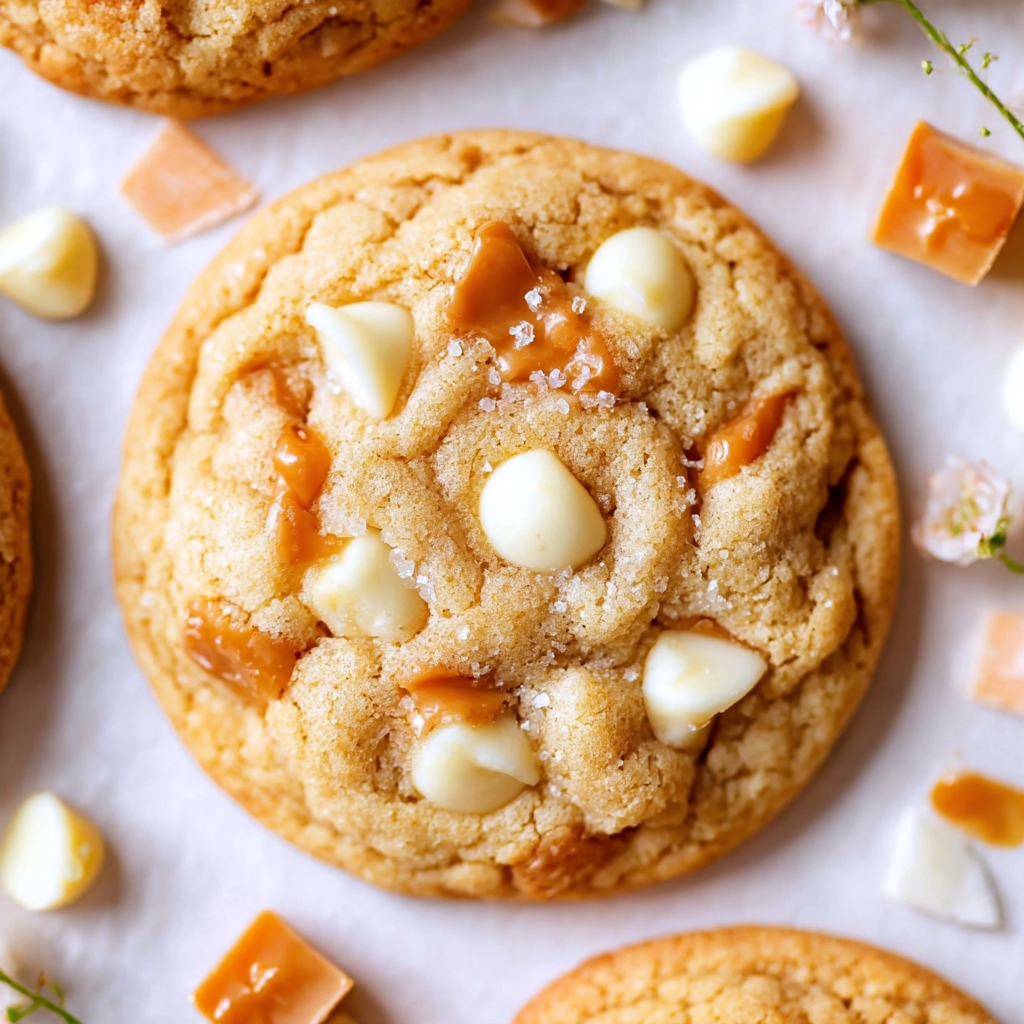
If you love the combination of sweet white chocolate, buttery caramel, and a delicate touch of sea salt, these Salted Caramel White Chocolate Cookies are about to become one of your favorite homemade treats. Every cookie brings together a soft, chewy center, lightly golden edges, creamy white chocolate pieces, and delicious pockets of caramel. A sprinkle of flaky sea salt adds the perfect finishing touch, balancing the sweetness and creating a bakery-style cookie that tastes wonderfully indulgent.
Homemade cookies are already a comforting favorite, but adding salted caramel and white chocolate makes them especially memorable. White chocolate provides a smooth, creamy sweetness, while caramel contributes a rich, buttery flavor. The salt enhances both ingredients, creating a delicious sweet-and-salty contrast that keeps every bite interesting.
One of the best things about this salted caramel white chocolate cookie recipe is that it uses familiar baking ingredients and does not require complicated techniques. You can prepare the dough with a mixing bowl, a whisk or electric mixer, and a baking sheet. After chilling the dough when needed, simply portion the cookies, bake them until the edges turn golden, and let them cool until the centers develop their perfect chewy texture.
These cookies are ideal for Christmas cookie trays, Thanksgiving desserts, birthday parties, bake sales, afternoon snacks, and homemade gifts. They also make a wonderful weekend baking project when you want something special without preparing an elaborate dessert.
The secret to excellent salted caramel cookies is achieving the right balance of moisture, sweetness, and texture. Brown sugar helps create a chewy center, while butter adds richness and flavor. White chocolate chunks provide creamy pockets throughout the dough, and caramel pieces create soft, sweet bites. A little flaky sea salt brings everything together.
You can customize the recipe with caramel baking bits, chopped white chocolate, chocolate chips, or a drizzle of caramel sauce after baking. Whether you prefer thick bakery-style cookies or slightly thinner, crisp-edged treats, the dough can be adapted to suit your taste.
If you are searching for an easy white chocolate caramel cookie recipe that looks beautiful and tastes even better, these homemade cookies are an excellent choice. They are rich enough for special occasions but simple enough to bake whenever a sweet craving strikes.
Ingredients for Salted Caramel White Chocolate Cookies
This recipe makes approximately 18–24 cookies, depending on the size of each portion.
For the cookie dough
- 2 1/4 cups (280 g) all-purpose flour: Provides structure and helps the cookies hold their shape.
- 1/2 teaspoon baking soda: Helps the cookies spread and develop a tender texture.
- 1/2 teaspoon baking powder: Adds a little extra lift for a softer center.
- 1/2 teaspoon fine salt: Balances the sweetness and enhances the other flavors.
- 3/4 cup (170 g) unsalted butter, softened: Creates a rich, buttery flavor and contributes to the cookie texture.
- 3/4 cup (150 g) packed light brown sugar: Adds moisture, caramel-like flavor, and chewiness.
- 1/2 cup (100 g) granulated sugar: Helps the cookies spread and creates lightly crisp edges.
- 1 large egg: Binds the ingredients together and contributes to the structure.
- 1 egg yolk: Adds richness and helps create a soft, chewy center.
- 2 teaspoons vanilla extract: Enhances the buttery flavor and complements the caramel.
- 1 tablespoon milk, if needed: Helps adjust the dough if it seems unusually dry.
For the white chocolate and caramel filling
- 1 cup (170 g) white chocolate chips or chopped white chocolate: Provides creamy sweetness and a smooth texture.
- 3/4 cup (120–150 g) caramel baking bits or soft caramel pieces: Creates pockets of caramel throughout the cookies.
- 1 tablespoon all-purpose flour, optional: Lightly coating particularly sticky caramel pieces may help keep them more evenly distributed.
Choose caramel pieces intended for baking when possible. Very soft caramel candies can melt and spread, so use them in small pieces and keep them away from the edges of the dough.
For the salted caramel topping
- 1–2 tablespoons thick caramel sauce: Optional, for drizzling over the cooled cookies.
- Flaky sea salt, as needed: Adds the characteristic salted caramel finish.
Use flaky sea salt rather than a large amount of ordinary table salt for the final topping. Its delicate crunch and clean salty flavor create a more attractive finish.
Preparation: How to Make Salted Caramel White Chocolate Cookies
Step 1: Prepare the oven and baking sheets
Preheat your oven to 350°F (175°C). Line two baking sheets with parchment paper or silicone baking mats.
Preparing the baking sheets in advance makes the baking process easier, particularly because cookie dough can soften as it sits at room temperature.
Measure the flour, baking soda, baking powder, and fine salt into a medium bowl. Whisk the dry ingredients together until evenly combined. This helps distribute the leavening agents throughout the flour and prevents concentrated pockets of baking soda.
Set the bowl aside while you prepare the butter and sugar mixture.
If your kitchen is particularly warm, keep the butter at a cool room temperature rather than allowing it to become oily or melted. Properly softened butter should yield slightly when pressed but should not look greasy.
Step 2: Cream the butter and sugars
Place the softened butter, brown sugar, and granulated sugar in a large mixing bowl.
Using an electric mixer, beat the mixture for approximately 2–3 minutes, scraping down the sides of the bowl as necessary. The mixture should look creamy and well combined.
Creaming incorporates air into the butter and helps create a pleasant cookie texture. However, avoid beating the mixture excessively, as too much incorporated air can affect how the cookies spread.
Brown sugar is particularly important in this recipe because its molasses content adds moisture and a rich caramel flavor. Combined with butter, it creates the foundation for soft and chewy salted caramel cookies.
Step 3: Add the egg, egg yolk, and vanilla
Add the egg, additional egg yolk, and vanilla extract to the butter mixture.
Beat until the ingredients are fully incorporated and the mixture looks smooth. Scrape the sides and bottom of the bowl to ensure everything is evenly combined.
The extra egg yolk adds richness and helps keep the cookies tender. Vanilla enhances the flavor of the white chocolate and caramel without overpowering them.
If the mixture looks slightly separated at first, continue mixing briefly. Avoid adding the flour before the wet ingredients are properly combined.
Step 4: Combine the dry and wet ingredients
Add the dry ingredient mixture to the bowl in two or three additions.
Mix on low speed or stir with a sturdy spatula until the flour is almost fully incorporated. Stop mixing when only a few small streaks of flour remain.
Overmixing after adding the flour can develop gluten and make the cookies tougher. The dough should be soft and thick rather than runny.
If the dough seems unusually dry and crumbly, add the optional tablespoon of milk gradually. Most batches should not need it if the ingredients have been measured correctly.
Step 5: Fold in the white chocolate and caramel
Add the white chocolate chips or chopped white chocolate to the dough.
Fold in the caramel baking bits or small caramel pieces, distributing them as evenly as possible.
Reserve a few white chocolate pieces and caramel bits for the tops of the dough portions. Pressing a few extra pieces onto each cookie before baking gives the finished cookies a more attractive, bakery-style appearance.
If your caramel pieces are sticky, lightly coating them with a small amount of flour may help prevent them from clumping together.
Avoid placing large pieces of caramel directly against the baking sheet because they may melt and spread. Keep the caramel pieces mostly enclosed inside the dough.
Step 6: Chill the cookie dough
Cover the bowl and refrigerate the dough for approximately 30–45 minutes.
Chilling helps the butter firm up, which can reduce excessive spreading during baking. It also gives the flour time to absorb moisture and allows the flavors to develop.
If you prefer thicker cookies, chilling is especially helpful. For a softer dough, you may portion the cookies before refrigerating them.
If you chill the dough for several hours or overnight, let it sit briefly at room temperature if it becomes too firm to scoop.
Although chilling can be adjusted according to your schedule, avoid leaving the dough uncovered in the refrigerator because it may dry out or absorb unwanted odors.
Step 7: Shape the cookie dough
Scoop the dough into portions of approximately 1 1/2 to 2 tablespoons each.
Roll each portion gently into a ball and place it on the prepared baking sheet. Leave approximately 2 inches (5 cm) between cookies so they have room to spread.
Press a few reserved white chocolate chips and caramel pieces onto the top of each dough ball.
For larger bakery-style cookies, use approximately 3 tablespoons of dough per cookie and allow additional baking time. Keep the portions consistent so that the cookies bake evenly.
If you notice caramel pieces near the outside edges, gently tuck them into the dough. This helps reduce excessive caramel leakage onto the baking sheet.
Step 8: Bake the salted caramel white chocolate cookies
Place the baking sheet in the preheated oven and bake for approximately 10–13 minutes for standard-sized cookies.
The edges should look lightly golden and set, while the centers may still appear slightly soft. This is desirable because the cookies continue cooking briefly from residual heat after they leave the oven.
Avoid waiting until the centers look completely firm. Overbaking can make the cookies dry or hard instead of soft and chewy.
If baking two trays at once, rotate them halfway through the baking time if your oven has uneven heat distribution.
Because ovens vary, begin checking the first batch around the 9-minute mark. Larger cookies may require additional time.
Step 9: Add the finishing sea salt
Remove the cookies from the oven and place the baking sheet on a heatproof surface.
While the cookies are still warm, sprinkle a small amount of flaky sea salt over each one.
The salt should be noticeable but not overwhelming. A few flakes are usually sufficient to balance the white chocolate and caramel.
If you want an extra-decadent presentation, wait until the cookies have cooled slightly before drizzling them with thick caramel sauce. Applying the sauce when the cookies are too hot may cause it to run off the surface.
Step 10: Allow the cookies to cool
Let the cookies rest on the baking sheet for approximately 5–10 minutes.
During this time, the centers continue to set, and the caramel becomes less fluid. Moving the cookies too early may cause them to break, particularly if the caramel is still very soft.
Transfer the cookies carefully to a wire rack and allow them to cool further.
For the best texture, enjoy one when it is slightly warm and the white chocolate is soft. For cleaner handling and a more defined cookie shape, allow the cookies to cool completely before stacking or packaging them.
Variations
These Salted Caramel White Chocolate Cookies are easy to customize. Try one of the following variations to create a different flavor while keeping the classic sweet-and-salty combination.
1. Brown Butter Salted Caramel White Chocolate Cookies
Brown butter adds a toasted, nutty flavor that complements caramel beautifully.
To make this variation, melt the butter in a saucepan over medium heat, stirring frequently until the milk solids turn golden brown and smell nutty. Remove it from the heat and allow it to cool until it is soft but no longer hot before preparing the dough.
Because melted butter changes the dough’s texture, chilling becomes especially important. You may need to adjust the flour slightly depending on the final consistency.
2. Dark Chocolate and Caramel Cookies
Replace half the white chocolate with semisweet or dark chocolate chips.
The darker chocolate provides a slight bitterness that balances the sweet caramel and creates a more complex flavor. This version is ideal for people who enjoy rich chocolate desserts but prefer a less sugary finish.
3. Sea Salt Caramel Stuffed Cookies
Instead of mixing all the caramel into the dough, place a small piece of soft caramel in the center of each dough portion.
Cover the caramel completely with dough, making sure there are no exposed edges. Bake as directed, adding a little extra time if the cookies are larger.
Allow the cookies to cool before biting into them, as the caramel filling can remain very hot after baking.
4. Pecan Salted Caramel White Chocolate Cookies
Add 1/2 cup of chopped toasted pecans to the dough.
Pecans provide a buttery crunch that pairs naturally with caramel and white chocolate. Toast them lightly before adding them to the dough for a richer flavor.
This variation is particularly suitable for autumn baking and holiday cookie platters.
5. Thick Bakery-Style Cookies
For thick, bakery-style cookies, chill the dough thoroughly and shape it into taller portions rather than flattening the dough balls.
Bake until the edges are set while the centers remain slightly soft. Larger portions will require more time than standard cookies.
Let them rest on the baking sheet before transferring them to a rack.
6. Christmas Salted Caramel Cookies
Add a small amount of festive decoration to create a holiday version.
Use white chocolate chunks, caramel pieces, and flaky sea salt as the main toppings. You can also drizzle the cooled cookies with white chocolate for a decorative finish.
Package the cookies in food-safe tins or gift boxes for Christmas parties and homemade gifts.
7. Gluten-Free Salted Caramel Cookies
Use a gluten-free all-purpose flour blend designed for baking, ideally one that contains a suitable binding ingredient.
Gluten-free flour blends vary considerably, so the dough may require a slightly different amount of liquid or chilling time. Verify that the caramel and white chocolate are also suitable for your dietary needs.
8. Mini Salted Caramel Cookies
Use approximately 1 tablespoon of dough per cookie and reduce the baking time.
Begin checking after 7–8 minutes, as smaller cookies can bake quickly. Mini cookies are perfect for dessert tables, lunch boxes, and bite-sized snacks.
9. Espresso Salted Caramel Cookies
Add approximately 1 teaspoon of instant espresso powder to the dry ingredients.
Coffee deepens the flavor of the caramel and white chocolate without necessarily making the cookies taste strongly of coffee. This variation works particularly well with dark chocolate additions.
10. Extra-Chewy Caramel White Chocolate Cookies
For a chewier texture, retain the brown sugar, include the extra egg yolk, and avoid overbaking.
Chilling the dough also helps control spreading. The cookies should be removed from the oven when their edges are set but their centers still appear slightly soft.
Cooking Note
The following notes will help you achieve consistent results when preparing salted caramel white chocolate cookies.
Use properly softened butter. Butter that is too cold will not cream easily, while butter that is melted or greasy may cause excessive spreading.
Measure flour carefully. Too much flour can make cookies dry and thick. Spoon flour into a measuring cup and level it off, or use a kitchen scale for better accuracy.
Choose suitable caramel pieces. Caramel baking bits are designed for cookies and often hold their shape better than very soft caramel candies. If using soft caramels, chop them into small pieces and keep them inside the dough.
Chill the dough when needed. Refrigeration helps control spreading and can improve the final texture.
Do not overbake. The cookies should be lightly golden at the edges with slightly soft centers. They will continue setting after removal from the oven.
Use parchment paper. This makes cleanup easier and reduces sticking from any caramel that escapes during baking.
Add flaky salt while the cookies are warm. The flakes adhere better and provide an attractive finish.
Allow enough cooling time. Warm caramel can be extremely hot. Let the cookies cool before serving them to children or packaging them.
Check ingredient labels. White chocolate products and caramel pieces vary in their ingredients, especially if you need to accommodate allergies or dietary restrictions.
Serving Suggestions
These homemade salted caramel white chocolate cookies are delicious on their own, but they also pair well with several drinks and desserts.
1. Serve with a glass of milk
Cold milk is a classic accompaniment for sweet cookies. Its creamy flavor balances the caramel and white chocolate, making this pairing ideal for an afternoon snack.
2. Pair with coffee
Serve the cookies with black coffee, espresso, or a cappuccino. Coffee’s slight bitterness complements the sweetness of the white chocolate and caramel.
3. Enjoy with hot chocolate
For an especially comforting dessert, pair the cookies with hot chocolate. Choose a less-sweet drink if you want the caramel and white chocolate flavors to remain balanced.
4. Serve with vanilla ice cream
Place a warm cookie beside a scoop of vanilla ice cream. The contrast between the warm cookie and cold ice cream creates a simple but indulgent dessert.
5. Create an ice cream sandwich
Place a small scoop of slightly softened vanilla ice cream between two completely cooled cookies.
Press gently to distribute the filling and freeze briefly before serving. This is a fun option for parties and summer desserts.
6. Add them to a cookie platter
Arrange the cookies alongside brownies, shortbread, chocolate chip cookies, and other small treats.
Their pale white chocolate pieces and golden caramel make them visually appealing on a dessert table.
7. Package them as homemade gifts
Once completely cooled, place the cookies in food-safe bags, tins, or gift boxes. Separate layers with parchment paper to prevent sticking.
They are lovely gifts for Christmas, birthdays, teachers, neighbors, and friends.
Tips for Perfect Salted Caramel White Chocolate Cookies
- Use fresh ingredients. Fresh baking soda and good-quality white chocolate help deliver the best flavor and texture.
- Do not overmix the dough. Mix only until the flour is incorporated to avoid developing excess gluten.
- Chill for thicker cookies. Refrigerating the dough helps the butter remain firm during baking and can reduce spreading.
- Keep caramel away from the edges. Enclose caramel pieces in the dough to reduce leakage and burning.
- Use a light hand with salt. Flaky sea salt should enhance the sweetness, not overwhelm it.
- Bake one test cookie if needed. If you are unsure how much the dough will spread, bake a single portion first and adjust the chilling time or dough consistency.
- Use consistent dough portions. Uniform cookies bake more evenly and are easier to package.
- Avoid overcrowding the baking sheet. Leave enough room for the cookies to spread without touching.
- Let the cookies rest on the tray. The brief resting period helps the cookies set without becoming overly firm.
- Use good-quality white chocolate. White chocolate made with cocoa butter generally offers a richer flavor and smoother melt than some white baking chips.
- Add decorative toppings before baking. Extra white chocolate pieces pressed into the dough help create a bakery-style appearance.
- Drizzle caramel after cooling slightly. This keeps the topping attractive and prevents it from running off the cookies.
- Store the cookies correctly. Keep them in an airtight container once fully cooled to help preserve their texture.
- Freeze extra dough. Portion the dough into balls, freeze them on a tray, and transfer them to a freezer-safe container. Bake from frozen with a little extra time, checking for doneness.
- Adjust baking time for cookie size. Larger cookies require more time, while mini cookies bake much faster.
Prep Time, Cooking Time, and Total Time
For a standard batch of 18–24 cookies, the estimated times are:
- Prep Time: 20 minutes
- Chilling Time: 30 minutes
- Cooking Time: 10–13 minutes per batch
- Cooling Time: 10–15 minutes
- Total Time: Approximately 1 hour and 10 minutes, depending on the number of baking batches
The exact time will vary according to your oven, the size of the cookies, and whether you chill the dough for longer.
Nutritional Information
The following nutritional information is an estimate for one medium cookie, assuming the recipe makes approximately 24 cookies.
- Calories: Approximately 180–230
- Protein: Approximately 2–3 g
- Sodium: Approximately 100–180 mg
Calories
Most of the calories come from butter, sugars, white chocolate, and caramel. Larger cookies or generous caramel drizzles will contain more calories than smaller portions.
Protein
The flour, egg, and white chocolate contribute small amounts of protein. These cookies are primarily a sweet treat rather than a significant protein source.
Sodium
The sodium content depends on the amount of fine salt, flaky sea salt, butter, and the brands of caramel and white chocolate used.
These figures are estimates and are not laboratory-tested nutrition facts. For more accurate information, calculate the nutrition using your exact ingredients and the number of cookies produced.
Frequently Asked Questions
1. Can I use caramel sauce instead of caramel pieces?
You can use caramel sauce, but it is generally better as a topping than as a direct replacement for solid caramel pieces in the dough.
Liquid caramel can make the dough too wet and cause excessive spreading. For the best results, use caramel baking bits or small pieces of firm caramel inside the cookies, then drizzle the sauce over the baked cookies.
2. Why did my cookies spread too much?
Cookies can spread excessively if the butter is too warm, the dough is not chilled, or the flour has been undermeasured.
Make sure the butter is softened rather than melted, measure the flour accurately, and refrigerate the dough before baking. Also check that your oven has reached the correct temperature.
3. How do I keep the cookies soft and chewy?
Use the brown sugar and extra egg yolk specified in the recipe, avoid adding too much flour, and remove the cookies when the edges are set but the centers still look slightly soft.
Allow them to finish setting on the baking sheet. Store them in an airtight container after they have cooled completely.
4. Can I make the cookie dough ahead of time?
Yes. Prepare the dough, cover it tightly, and refrigerate it for up to about 48 hours for best quality.
The dough may become firm in the refrigerator, so allow it to soften slightly before scooping if necessary. Chilling can also deepen the flavor and help control spreading.
5. Can I freeze salted caramel white chocolate cookie dough?
Yes. Portion the dough into balls and freeze them on a lined baking sheet until firm. Transfer the frozen portions to an airtight freezer-safe container.
For best quality, use the frozen dough within approximately 2–3 months. Bake from frozen, adding a few extra minutes as needed and checking the centers carefully.
6. How should I store baked cookies?
Once completely cool, store the cookies in an airtight container at room temperature in a cool, dry place.
For the best texture, keep them away from direct sunlight and sources of heat. If the cookies contain a perishable filling or topping, follow appropriate food-storage guidance for those ingredients.
7. Can I use salted butter?
Yes, but reduce or omit the fine salt in the dough according to your taste and the sodium content of the butter.
You can still add a small amount of flaky sea salt on top, but do so carefully to prevent the cookies from becoming too salty.
8. What kind of white chocolate works best?
Good-quality white chocolate made with cocoa butter usually provides a creamy flavor and smooth texture.
White chocolate chips are convenient, while chopped white chocolate bars create irregular pieces that melt into attractive pockets throughout the cookies.
9. Why did my cookies turn out hard?
Overbaking is one of the most common causes. Too much flour or excessive mixing can also produce a firmer cookie.
Measure carefully, mix just until combined, and remove the cookies while the centers still look slightly soft.
10. Can I make these cookies without eggs?
You can try a commercial egg replacer designed for cookies, but the texture may differ because eggs contribute moisture, structure, and richness.
Use a tested egg-free cookie recipe if you need consistent results, especially if you are baking for someone with an egg allergy.
11. Can I make these cookies gluten-free?
Yes, with a suitable gluten-free all-purpose baking blend. Results vary by brand, so the dough may need a different amount of flour or additional chilling time.
Check that the caramel and white chocolate are also suitable for your dietary requirements.
12. Why did the caramel leak out of my cookies?
Caramel may leak when large pieces sit near the surface or edges of the dough. Very soft caramel can also spread more readily during baking.
Use small pieces, enclose them in the dough, and press any exposed caramel back inside before baking.
13. Can I make larger bakery-style cookies?
Yes. Use approximately 3 tablespoons of dough per cookie and space the portions well apart on the baking sheet.
Larger cookies need additional baking time. Look for lightly golden edges and centers that are still slightly soft.
14. Can I add nuts to the recipe?
Absolutely. Chopped pecans, walnuts, or macadamia nuts complement white chocolate and caramel.
Toast the nuts lightly before adding them for a deeper flavor. If serving a group, clearly identify the nuts and avoid cross-contact for anyone with an allergy.
15. Can I make these cookies for Christmas?
Yes. Salted Caramel White Chocolate Cookies are an excellent addition to holiday baking because they look attractive and have a festive sweet-and-salty flavor.
Bake them in advance, let them cool completely, and package them in food-safe tins or gift boxes.
16. Do I need to chill the dough?
Chilling is recommended because it helps control spreading and can improve the texture. If your kitchen is cool and the dough is already firm, a shorter chill may be sufficient.
For thicker cookies, a full 30–45 minutes is a useful starting point.
17. When should I add the sea salt?
Sprinkle flaky sea salt over the cookies immediately after baking, while they are still warm.
The salt adheres more easily at this stage and remains visible on the surface. Use only a small amount because the caramel and white chocolate already provide plenty of flavor.
18. How can I make the cookies look like they came from a bakery?
Reserve some white chocolate chips and caramel pieces and press them onto the dough balls before baking.
After baking, add a few flakes of sea salt and a light caramel drizzle. Consistent dough portions also help the cookies look uniform.
19. Can I reheat the cookies before serving?
Yes. Warm an individual cookie briefly in a microwave-safe dish, using short intervals and checking frequently.
The white chocolate and caramel may become very hot, so allow the cookie to rest before eating. Avoid overheating, which can make the cookie greasy or overly soft.
20. What makes salted caramel and white chocolate such a good combination?
White chocolate adds creamy sweetness, caramel brings a buttery, slightly toasted flavor, and sea salt provides contrast.
Together, these ingredients create a balanced sweet-and-salty flavor profile that works particularly well in soft, chewy cookies.
Conclusion
These Salted Caramel White Chocolate Cookies combine the best parts of homemade baking: a buttery dough, soft and chewy centers, creamy white chocolate, sweet caramel, and a delicate sprinkle of sea salt.
They are easy enough for everyday baking yet special enough for holiday celebrations, bake sales, dessert platters, and homemade gifts. With familiar ingredients and straightforward preparation, you can create bakery-style cookies without complicated equipment or advanced baking skills.
For the best results, measure the ingredients carefully, chill the dough, keep the caramel pieces inside the cookie portions, and avoid overbaking. These simple techniques help preserve the soft centers and lightly golden edges that make the cookies so irresistible.
You can also make the recipe your own by adding toasted pecans, using brown butter, incorporating dark chocolate, or creating caramel-filled centers. Serve the cookies with milk, coffee, or vanilla ice cream for an especially delicious treat.
Whether you bake them for a special occasion or simply want something sweet to enjoy at home, this easy salted caramel white chocolate cookie recipe deserves a place in your collection. Make a batch, share it with family and friends, and enjoy the wonderful combination of sweet caramel, creamy white chocolate, and perfectly balanced sea salt in every bite.
Print
Salted Caramel White Chocolate Cookies: Soft, Chewy, and Irresistible
- Total Time: 1 hour and 10 minutes
Description
these Salted Caramel White Chocolate Cookies are about to become one of your favorite homemade treats. Every cookie brings together a soft, chewy center, lightly golden edges, creamy white chocolate pieces, and delicious pockets of caramel. A sprinkle of flaky sea salt adds the perfect finishing touch, balancing the sweetness and creating a bakery-style cookie that tastes wonderfully indulgent.
Ingredients
For the cookie dough
- 2 1/4 cups (280 g) all-purpose flour: Provides structure and helps the cookies hold their shape.
- 1/2 teaspoon baking soda: Helps the cookies spread and develop a tender texture.
- 1/2 teaspoon baking powder: Adds a little extra lift for a softer center.
- 1/2 teaspoon fine salt: Balances the sweetness and enhances the other flavors.
- 3/4 cup (170 g) unsalted butter, softened: Creates a rich, buttery flavor and contributes to the cookie texture.
- 3/4 cup (150 g) packed light brown sugar: Adds moisture, caramel-like flavor, and chewiness.
- 1/2 cup (100 g) granulated sugar: Helps the cookies spread and creates lightly crisp edges.
- 1 large egg: Binds the ingredients together and contributes to the structure.
- 1 egg yolk: Adds richness and helps create a soft, chewy center.
- 2 teaspoons vanilla extract: Enhances the buttery flavor and complements the caramel.
- 1 tablespoon milk, if needed: Helps adjust the dough if it seems unusually dry.
For the white chocolate and caramel filling
- 1 cup (170 g) white chocolate chips or chopped white chocolate: Provides creamy sweetness and a smooth texture.
- 3/4 cup (120–150 g) caramel baking bits or soft caramel pieces: Creates pockets of caramel throughout the cookies.
- 1 tablespoon all-purpose flour, optional: Lightly coating particularly sticky caramel pieces may help keep them more evenly distributed.
-
For the salted caramel topping
- 1–2 tablespoons thick caramel sauce: Optional, for drizzling over the cooled cookies.
- Flaky sea salt, as needed: Adds the characteristic salted caramel finish.
Instructions
Preheat your oven to 350°F (175°C). Line two baking sheets with parchment paper or silicone baking mats.
Preparing the baking sheets in advance makes the baking process easier, particularly because cookie dough can soften as it sits at room temperature.
Measure the flour, baking soda, baking powder, and fine salt into a medium bowl. Whisk the dry ingredients together until evenly combined. This helps distribute the leavening agents throughout the flour and prevents concentrated pockets of baking soda.
Set the bowl aside while you prepare the butter and sugar mixture.
If your kitchen is particularly warm, keep the butter at a cool room temperature rather than allowing it to become oily or melted. Properly softened butter should yield slightly when pressed but should not look greasy.
Step 2: Cream the butter and sugars
Place the softened butter, brown sugar, and granulated sugar in a large mixing bowl.
Using an electric mixer, beat the mixture for approximately 2–3 minutes, scraping down the sides of the bowl as necessary. The mixture should look creamy and well combined.
Creaming incorporates air into the butter and helps create a pleasant cookie texture. However, avoid beating the mixture excessively, as too much incorporated air can affect how the cookies spread.
Brown sugar is particularly important in this recipe because its molasses content adds moisture and a rich caramel flavor. Combined with butter, it creates the foundation for soft and chewy salted caramel cookies.
Step 3: Add the egg, egg yolk, and vanilla
Add the egg, additional egg yolk, and vanilla extract to the butter mixture.
Beat until the ingredients are fully incorporated and the mixture looks smooth. Scrape the sides and bottom of the bowl to ensure everything is evenly combined.
The extra egg yolk adds richness and helps keep the cookies tender. Vanilla enhances the flavor of the white chocolate and caramel without overpowering them.
If the mixture looks slightly separated at first, continue mixing briefly. Avoid adding the flour before the wet ingredients are properly combined.
Step 4: Combine the dry and wet ingredients
Add the dry ingredient mixture to the bowl in two or three additions.
Mix on low speed or stir with a sturdy spatula until the flour is almost fully incorporated. Stop mixing when only a few small streaks of flour remain.
Overmixing after adding the flour can develop gluten and make the cookies tougher. The dough should be soft and thick rather than runny.
If the dough seems unusually dry and crumbly, add the optional tablespoon of milk gradually. Most batches should not need it if the ingredients have been measured correctly.
Step 5: Fold in the white chocolate and caramel
Add the white chocolate chips or chopped white chocolate to the dough.
Fold in the caramel baking bits or small caramel pieces, distributing them as evenly as possible.
Reserve a few white chocolate pieces and caramel bits for the tops of the dough portions. Pressing a few extra pieces onto each cookie before baking gives the finished cookies a more attractive, bakery-style appearance.
If your caramel pieces are sticky, lightly coating them with a small amount of flour may help prevent them from clumping together.
Avoid placing large pieces of caramel directly against the baking sheet because they may melt and spread. Keep the caramel pieces mostly enclosed inside the dough.
Step 6: Chill the cookie dough
Cover the bowl and refrigerate the dough for approximately 30–45 minutes.
Chilling helps the butter firm up, which can reduce excessive spreading during baking. It also gives the flour time to absorb moisture and allows the flavors to develop.
If you prefer thicker cookies, chilling is especially helpful. For a softer dough, you may portion the cookies before refrigerating them.
If you chill the dough for several hours or overnight, let it sit briefly at room temperature if it becomes too firm to scoop.
Although chilling can be adjusted according to your schedule, avoid leaving the dough uncovered in the refrigerator because it may dry out or absorb unwanted odors.
Step 7: Shape the cookie dough
Scoop the dough into portions of approximately 1 1/2 to 2 tablespoons each.
Roll each portion gently into a ball and place it on the prepared baking sheet. Leave approximately 2 inches (5 cm) between cookies so they have room to spread.
Press a few reserved white chocolate chips and caramel pieces onto the top of each dough ball.
For larger bakery-style cookies, use approximately 3 tablespoons of dough per cookie and allow additional baking time. Keep the portions consistent so that the cookies bake evenly.
If you notice caramel pieces near the outside edges, gently tuck them into the dough. This helps reduce excessive caramel leakage onto the baking sheet.
Step 8: Bake the salted caramel white chocolate cookies
Place the baking sheet in the preheated oven and bake for approximately 10–13 minutes for standard-sized cookies.
The edges should look lightly golden and set, while the centers may still appear slightly soft. This is desirable because the cookies continue cooking briefly from residual heat after they leave the oven.
Avoid waiting until the centers look completely firm. Overbaking can make the cookies dry or hard instead of soft and chewy.
If baking two trays at once, rotate them halfway through the baking time if your oven has uneven heat distribution.
Because ovens vary, begin checking the first batch around the 9-minute mark. Larger cookies may require additional time.
Step 9: Add the finishing sea salt
Remove the cookies from the oven and place the baking sheet on a heatproof surface.
While the cookies are still warm, sprinkle a small amount of flaky sea salt over each one.
The salt should be noticeable but not overwhelming. A few flakes are usually sufficient to balance the white chocolate and caramel.
If you want an extra-decadent presentation, wait until the cookies have cooled slightly before drizzling them with thick caramel sauce. Applying the sauce when the cookies are too hot may cause it to run off the surface.
Step 10: Allow the cookies to cool
Let the cookies rest on the baking sheet for approximately 5–10 minutes.
During this time, the centers continue to set, and the caramel becomes less fluid. Moving the cookies too early may cause them to break, particularly if the caramel is still very soft.
Transfer the cookies carefully to a wire rack and allow them to cool further.
For the best texture, enjoy one when it is slightly warm and the white chocolate is soft. For cleaner handling and a more defined cookie shape, allow the cookies to cool completely before stacking or packaging them.
Notes
The following notes will help you achieve consistent results when preparing salted caramel white chocolate cookies.
Use properly softened butter. Butter that is too cold will not cream easily, while butter that is melted or greasy may cause excessive spreading.
Measure flour carefully. Too much flour can make cookies dry and thick. Spoon flour into a measuring cup and level it off, or use a kitchen scale for better accuracy.
Choose suitable caramel pieces. Caramel baking bits are designed for cookies and often hold their shape better than very soft caramel candies. If using soft caramels, chop them into small pieces and keep them inside the dough.
Chill the dough when needed. Refrigeration helps control spreading and can improve the final texture.
Do not overbake. The cookies should be lightly golden at the edges with slightly soft centers. They will continue setting after removal from the oven.
Use parchment paper. This makes cleanup easier and reduces sticking from any caramel that escapes during baking.
Add flaky salt while the cookies are warm. The flakes adhere better and provide an attractive finish.
Allow enough cooling time. Warm caramel can be extremely hot. Let the cookies cool before serving them to children or packaging them.
Check ingredient labels. White chocolate products and caramel pieces vary in their ingredients, especially if you need to accommodate allergies or dietary restrictions.
- Prep Time: 20 minutes
- Chilling Time: 30 minutes
- Cook Time: 10–13 minutes per batch
Nutrition
- Calories: 180–230
- Sodium: 100–180 mg
- Protein: 2–3 g
