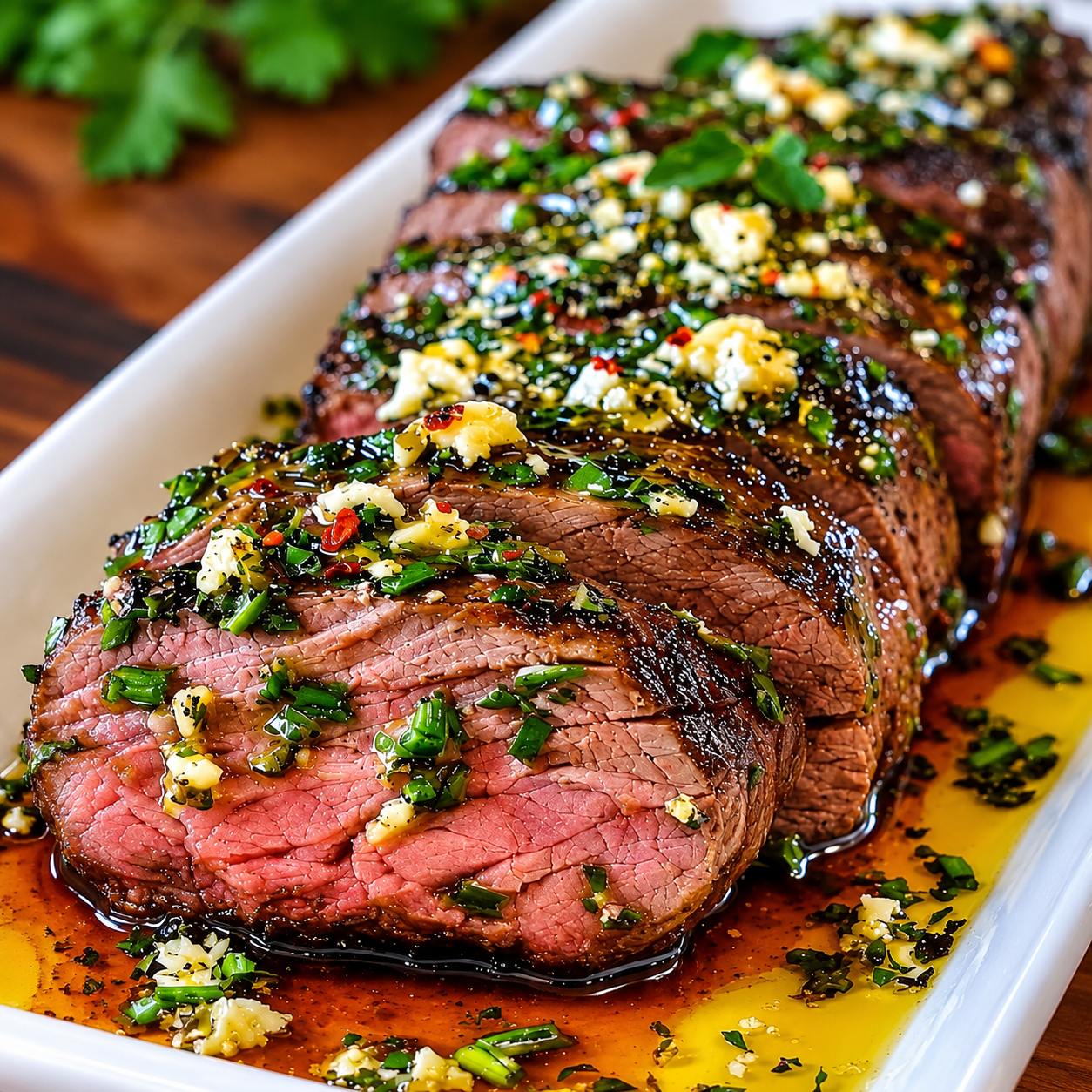
If you’re looking for an elegant main course that will make your holiday dinner unforgettable, this Herb Butter Beef Tenderloin Roast is a wonderful choice. Made with a beautifully seasoned beef tenderloin, fresh garlic, fragrant herbs, and rich melted butter, this roast delivers incredible flavor while keeping the meat tender and juicy.
Beef tenderloin is naturally one of the most tender cuts of beef. When roasted properly, it develops a delicious golden-brown exterior while the center remains moist and flavorful. A generous coating of homemade herb butter adds another layer of richness, allowing the garlic, rosemary, thyme, and parsley to complement the natural flavor of the beef.
This recipe is perfect for Christmas dinner, Thanksgiving gatherings, New Year’s celebrations, anniversary dinners, or any special occasion when you want to serve something impressive without spending the entire day in the kitchen.
The preparation is simple: season the tenderloin, prepare the herb butter, roast the beef, and let it rest before slicing. With a meat thermometer and a few basic ingredients, you can prepare a restaurant-quality centerpiece right in your own kitchen.
Why You’ll Love This Herb Butter Beef Tenderloin Roast
- Incredibly tender: Beef tenderloin is naturally soft and delicate when cooked correctly.
- Rich garlic herb flavor: Butter, fresh garlic, rosemary, and thyme create a delicious savory coating.
- Perfect for special occasions: An elegant centerpiece for Christmas, Thanksgiving, and holiday entertaining.
- Simple preparation: A few quality ingredients create an impressive main course.
- Beautiful presentation: Sliced beef tenderloin looks gorgeous on a serving platter.
- Easy to customize: Adjust the herbs and seasonings to match your favorite flavors.
Ingredients
This recipe serves approximately 8 people.
- 1 whole beef tenderloin roast, about 4 pounds, trimmed
- ½ cup unsalted butter, softened
- 5 cloves garlic, finely minced
- 1 tablespoon fresh rosemary, finely chopped
- 1 tablespoon fresh thyme leaves
- 2 tablespoons fresh parsley, chopped
- 1 tablespoon Dijon mustard
- 2 tablespoons olive oil
- 2 teaspoons kosher salt
- 1 teaspoon freshly ground black pepper
- ½ teaspoon onion powder
- ½ teaspoon smoked paprika (optional)
Optional for serving:
- Fresh rosemary sprigs
- Fresh thyme sprigs
- Flaky sea salt
- Pan juices
- Prepared beef gravy or horseradish sauce
Ingredient Notes and Substitutions
Beef tenderloin: Choose a whole center-cut or trimmed beef tenderloin weighing approximately 4 pounds. Ask your butcher to remove the silver skin and excess fat if it hasn’t already been prepared.
Unsalted butter: Softened butter makes it easy to create a flavorful herb mixture. Unsalted butter also allows you to control the amount of salt in the recipe.
Fresh garlic: Freshly minced garlic provides a stronger, more aromatic flavor than garlic powder. Use garlic powder if fresh garlic is unavailable, but reduce the quantity.
Rosemary and thyme: These classic herbs pair beautifully with beef. Fresh herbs provide a bright aroma, but dried herbs can also be used. Use approximately one-third the amount of dried herbs.
Parsley: Fresh parsley adds color and freshness to the herb butter.
Dijon mustard: Dijon adds a subtle tangy flavor and helps the seasoning complement the richness of the beef. It doesn’t make the roast taste strongly of mustard.
Olive oil: Helps coat the beef before roasting and encourages browning.
Smoked paprika: Optional, but it adds a subtle smoky note and enhances the color of the crust.
How to Make Herb Butter Beef Tenderloin Roast
Step 1: Prepare the Beef Tenderloin
Remove the beef tenderloin from its packaging and pat it thoroughly dry with paper towels. Removing surface moisture helps the outside brown more effectively.
If necessary, trim away any remaining silver skin or excess fat. Tuck the thin tail end underneath the roast to create a more even thickness, then tie the tenderloin with kitchen twine every 1½–2 inches.
This helps the roast maintain a uniform shape and cook more evenly.
Let the beef sit at room temperature for approximately 30–45 minutes while you prepare the herb butter. Do not leave raw beef unrefrigerated for more than 2 hours total, including preparation time.
Step 2: Make the Garlic Herb Butter
In a small bowl, combine the softened butter, minced garlic, chopped rosemary, thyme leaves, parsley, Dijon mustard, onion powder, and smoked paprika if using.
Mix until all the ingredients are evenly distributed and the butter becomes a fragrant herb mixture.
Set aside approximately half of the herb butter for later. You’ll use the remaining portion to coat the tenderloin before roasting.
Step 3: Season the Tenderloin
Preheat your oven to 425°F (220°C).
Place the prepared beef tenderloin on a roasting rack inside a roasting pan or a suitable oven-safe baking dish.
Rub the beef with olive oil, then season all sides with kosher salt and freshly ground black pepper.
Spread half of the garlic herb butter evenly over the surface of the roast, making sure to cover the top and sides.
For an even more flavorful result, prepare the herb butter ahead of time and refrigerate it until needed. Let it soften slightly before spreading.
Step 4: Sear the Beef for Extra Flavor
Heat a large oven-safe skillet over medium-high heat. Add a small amount of olive oil if needed.
Carefully place the seasoned tenderloin in the hot skillet and sear it for approximately 2–3 minutes per side, turning with tongs until the exterior is nicely browned.
Sear the ends briefly as well.
If your roasting pan is suitable for stovetop use, you can sear the beef directly in it. Otherwise, transfer the browned tenderloin to the roasting pan.
Searing creates a flavorful browned exterior, while the oven finishes cooking the center.
Step 5: Roast Until the Desired Doneness
Transfer the tenderloin to the preheated oven and roast until it reaches your preferred internal temperature.
For a 4-pound tenderloin, cooking may take approximately 25–40 minutes after searing, but the actual time depends on the roast’s thickness, starting temperature, oven performance, and desired doneness.
Begin checking the internal temperature early using an instant-read or leave-in meat thermometer. Insert the thermometer into the thickest part of the roast without touching the pan.
For a food-safe whole beef roast, cook to an internal temperature of 145°F (63°C), followed by a minimum 3-minute rest. This is the USDA-recommended minimum safe temperature for whole cuts of beef.
If you prefer a different level of doneness, remember that lower temperatures are not equivalent to the USDA safe-temperature recommendation.
During the final 5–10 minutes of roasting, spread the remaining herb butter over the top of the beef, allowing it to melt over the surface.
Step 6: Rest Before Slicing
Remove the tenderloin from the oven and transfer it to a clean cutting board.
Loosely tent it with aluminum foil and let it rest for at least 10–15 minutes. For food safety, make sure the roast has reached 145°F and rests for at least 3 minutes before serving.
Resting allows the juices to redistribute and makes the meat easier to slice.
Remove the kitchen twine and cut the tenderloin into slices approximately ½–¾ inch thick.
Arrange the slices on a warm serving platter and spoon any resting juices over the beef.
Step 7: Garnish and Serve
Finish with fresh rosemary sprigs, thyme, and a little flaky sea salt if desired.
Serve immediately with roasted potatoes, green beans, glazed carrots, or your favorite holiday side dishes.
The result is a beautiful, flavorful beef tenderloin roast with a savory garlic herb butter coating and a tender texture that makes every bite special.
Helpful Cooking Notes
- Choose a well-trimmed tenderloin: Removing silver skin helps prevent tough, chewy sections.
- Tie the roast evenly: This creates a more uniform shape and helps the tenderloin cook consistently.
- Dry the surface: Patting the beef dry before seasoning encourages better browning.
- Use a meat thermometer: Beef tenderloin can overcook quickly, so temperature is more reliable than cooking time.
- Don’t skip the rest: Resting helps preserve the juices and improves the texture when slicing.
- Watch the garlic: Minced garlic can brown quickly during searing. Keep the heat controlled and avoid burning the herb butter.
- Adjust for roast size: A smaller or thinner tenderloin will cook faster than a thick, larger one.
- Use a roasting rack: Elevating the roast allows hot air to circulate around the beef.
Delicious Variations
Garlic Parmesan Herb Butter: Add 2 tablespoons finely grated Parmesan cheese to the softened butter for a savory, cheesy flavor.
Rosemary Garlic Tenderloin: Increase the rosemary and garlic while reducing the parsley for a stronger classic herb flavor.
Lemon Herb Butter: Add 1 teaspoon finely grated lemon zest to brighten the rich butter mixture.
Spicy Herb Butter: Add ¼ teaspoon crushed red pepper flakes and a pinch of cayenne pepper for gentle heat.
Horseradish Herb Butter: Mix 1 tablespoon prepared horseradish into the butter for a delicious pairing with beef.
Red Wine Pan Sauce: Deglaze the roasting pan or skillet with ½ cup dry red wine, scraping up the browned bits. Add ½ cup beef broth and simmer until slightly reduced. Finish with a small pat of butter.
Smoky Garlic Butter: Add smoked paprika and a little extra black pepper for a deeper savory flavor.
Serving Suggestions
This Herb Butter Beef Tenderloin Roast pairs beautifully with classic holiday sides and fresh vegetables.
- Garlic mashed potatoes: Creamy mashed potatoes are perfect for soaking up the buttery juices.
- Roasted baby potatoes: Crispy potatoes with rosemary and garlic complement the tender beef.
- Green beans almondine: Fresh green beans with toasted almonds add a light, crunchy side.
- Honey-glazed carrots: Their natural sweetness balances the savory herb butter.
- Roasted Brussels sprouts: A delicious vegetable side with caramelized edges.
- Creamy mushroom sauce: Mushrooms and beef make a classic combination.
- Fresh garden salad: A crisp salad adds freshness to a rich holiday meal.
- Dinner rolls: Soft homemade rolls are perfect for enjoying the pan juices.
For a beautiful Christmas presentation, arrange the sliced tenderloin on a large platter surrounded by roasted vegetables and fresh rosemary sprigs.
Tips for the Best Beef Tenderloin Roast
- Buy the right cut: Choose a center-cut beef tenderloin for a more consistent thickness.
- Ask your butcher for help: A properly trimmed and tied tenderloin saves preparation time.
- Prepare the butter ahead: You can make the garlic herb butter a day in advance and refrigerate it in an airtight container.
- Sear carefully: Brown each side without burning the garlic or herbs.
- Use an oven thermometer: Make sure your oven is actually reaching the temperature displayed.
- Check the thickest section: Always measure the internal temperature in the center of the thickest portion.
- Slice against the grain: This helps create tender, easy-to-eat portions.
- Serve on a warm platter: Warm serving dishes help keep the beef at a pleasant temperature.
Storage Instructions
Allow leftover beef tenderloin to cool slightly, then transfer it to an airtight container.
- Refrigerator: Store cooked beef in the refrigerator at 40°F (4°C) or below for 3–4 days.
- Freezer: Freeze leftover slices in an airtight freezer-safe container for up to 2–3 months for best quality.
- Reheating: Warm slices gently in a covered oven-safe dish with a little beef broth or pan juice at 300°F (150°C), just until heated through. Avoid prolonged reheating because tenderloin can become dry.
Refrigerate leftovers within 2 hours of cooking, or within 1 hour if the temperature is above 90°F (32°C).
Make-Ahead Instructions
You can prepare several components ahead of time to make holiday cooking easier.
Prepare the herb butter: Mix the softened butter with garlic, rosemary, thyme, parsley, and seasonings. Store it in an airtight container in the refrigerator for up to 3 days.
Prepare the beef: Trim and tie the tenderloin, then refrigerate it covered until you’re ready to cook. Keep raw beef refrigerated at 40°F (4°C) or below.
Season before roasting: For the best results, season the beef shortly before cooking. If you season it in advance, keep it refrigerated and avoid leaving it uncovered where it could contaminate other foods.
For the freshest texture, roast the tenderloin shortly before serving rather than fully cooking it hours in advance.
Freezing Instructions
Freezing uncooked beef tenderloin: If the tenderloin is fresh and has not previously been thawed, wrap it tightly in freezer-safe plastic wrap or butcher paper, then place it in a freezer bag. Freeze at 0°F (-18°C) or below. For best quality, use within 6–12 months.
Thaw frozen beef in the refrigerator, never on the kitchen counter.
Freezing cooked beef: Let the roast cool, divide it into individual portions, and store the slices in airtight freezer-safe containers. Add a little pan juice to help protect the meat from drying out.
Freeze for up to 2–3 months for best quality. Thaw overnight in the refrigerator before reheating.
Recipe Details
- Prep Time: 20 minutes
- Additional Room-Temperature Preparation: 30 minutes
- Cook Time: Approximately 35–50 minutes, including searing and roasting
- Resting Time: 10–15 minutes
- Total Time: Approximately 1 hour 45 minutes
- Yield: 1 whole beef tenderloin roast
- Servings: 8
- Serving Size: Approximately 6–8 ounces cooked beef per person
Cooking time is an estimate. The roast’s internal temperature, not the clock, determines when it is ready.
Nutritional Information
Estimated per serving, assuming 8 servings and including the herb butter.
- Calories: 560
- Protein: 48 g
- Carbohydrates: 1 g
- Fat: 40 g
- Saturated Fat: 18 g
- Cholesterol: 190 mg
- Sodium: 650 mg
Actual nutrition will vary depending on the size and fat content of the tenderloin, the amount of butter consumed, and the serving size.
Frequently Asked Questions
1. What is the best temperature for roasting beef tenderloin?
A hot oven at 425°F (220°C) helps brown the outside while cooking the center. Use a meat thermometer to monitor the internal temperature. For food safety, cook whole beef roasts to 145°F (63°C) and allow at least a 3-minute rest.
2. How long does a 4-pound beef tenderloin take to cook?
After searing, a 4-pound tenderloin may need approximately 25–40 minutes in a 425°F oven. However, thickness and oven performance can change the cooking time considerably. Always use a thermometer.
3. Can I prepare the herb butter ahead of time?
Yes! Prepare the butter mixture up to 3 days in advance and refrigerate it in an airtight container. Let it soften slightly before spreading it over the beef.
4. Do I have to sear the beef before roasting?
Searing is recommended because it creates a delicious browned exterior and adds flavor. You can roast without searing, but the outside may not develop the same deep color.
5. Can I use dried herbs instead of fresh herbs?
Absolutely. Use approximately one-third the amount of dried herbs compared with fresh herbs. For this recipe, start with 1 teaspoon dried rosemary and 1 teaspoon dried thyme.
6. How do I keep beef tenderloin from drying out?
Choose a good-quality tenderloin, avoid overcooking, monitor the internal temperature carefully, and allow the roast to rest before slicing. Cutting it against the grain also helps create tender portions.
7. Should I cover beef tenderloin while roasting?
No. Roast it uncovered so the exterior can brown properly. You can loosely tent the beef with foil after removing it from the oven while it rests.
8. What sauce goes best with herb butter beef tenderloin?
Red wine sauce, creamy horseradish sauce, mushroom sauce, and garlic pan gravy all pair beautifully with beef tenderloin.
9. Can I make this recipe with a smaller beef tenderloin?
Yes. Reduce the ingredient quantities proportionally and begin checking the internal temperature earlier. Smaller or thinner roasts cook faster.
10. How do I reheat leftover beef tenderloin without drying it out?
Place the slices in a covered oven-safe dish with a little beef broth or pan juice. Warm gently at 300°F (150°C) until heated through. Avoid high heat and prolonged cooking.
Conclusion
This Herb Butter Beef Tenderloin Roast is the kind of special-occasion dinner that makes everyone gather around the table. With its tender beef, rich garlic butter, and fragrant rosemary and thyme, it delivers classic comfort and elegant flavor in every slice.
Whether you’re planning a Christmas feast, hosting a holiday dinner, or celebrating a special family occasion, this roast makes a beautiful centerpiece without requiring complicated preparation. Serve it with creamy mashed potatoes, roasted vegetables, and your favorite sauce for a memorable meal everyone will love.
Print
Herb Butter Beef Tenderloin Roast – Juicy, Tender & Perfect for Christmas Dinner
Ingredients
This recipe serves approximately 8 people.
- 1 whole beef tenderloin roast, about 4 pounds, trimmed
- ½ cup unsalted butter, softened
- 5 cloves garlic, finely minced
- 1 tablespoon fresh rosemary, finely chopped
- 1 tablespoon fresh thyme leaves
- 2 tablespoons fresh parsley, chopped
- 1 tablespoon Dijon mustard
- 2 tablespoons olive oil
- 2 teaspoons kosher salt
- 1 teaspoon freshly ground black pepper
- ½ teaspoon onion powder
- ½ teaspoon smoked paprika (optional)
Optional for serving:
- Fresh rosemary sprigs
- Fresh thyme sprigs
- Flaky sea salt
- Pan juices
- Prepared beef gravy or horseradish sauce
Instructions
Remove the beef tenderloin from its packaging and pat it thoroughly dry with paper towels. Removing surface moisture helps the outside brown more effectively.
If necessary, trim away any remaining silver skin or excess fat. Tuck the thin tail end underneath the roast to create a more even thickness, then tie the tenderloin with kitchen twine every 1½–2 inches.
This helps the roast maintain a uniform shape and cook more evenly.
Let the beef sit at room temperature for approximately 30–45 minutes while you prepare the herb butter. Do not leave raw beef unrefrigerated for more than 2 hours total, including preparation time.
Step 2: Make the Garlic Herb Butter
In a small bowl, combine the softened butter, minced garlic, chopped rosemary, thyme leaves, parsley, Dijon mustard, onion powder, and smoked paprika if using.
Mix until all the ingredients are evenly distributed and the butter becomes a fragrant herb mixture.
Set aside approximately half of the herb butter for later. You’ll use the remaining portion to coat the tenderloin before roasting.
Step 3: Season the Tenderloin
Preheat your oven to 425°F (220°C).
Place the prepared beef tenderloin on a roasting rack inside a roasting pan or a suitable oven-safe baking dish.
Rub the beef with olive oil, then season all sides with kosher salt and freshly ground black pepper.
Spread half of the garlic herb butter evenly over the surface of the roast, making sure to cover the top and sides.
For an even more flavorful result, prepare the herb butter ahead of time and refrigerate it until needed. Let it soften slightly before spreading.
Step 4: Sear the Beef for Extra Flavor
Heat a large oven-safe skillet over medium-high heat. Add a small amount of olive oil if needed.
Carefully place the seasoned tenderloin in the hot skillet and sear it for approximately 2–3 minutes per side, turning with tongs until the exterior is nicely browned.
Sear the ends briefly as well.
If your roasting pan is suitable for stovetop use, you can sear the beef directly in it. Otherwise, transfer the browned tenderloin to the roasting pan.
Searing creates a flavorful browned exterior, while the oven finishes cooking the center.
Step 5: Roast Until the Desired Doneness
Transfer the tenderloin to the preheated oven and roast until it reaches your preferred internal temperature.
For a 4-pound tenderloin, cooking may take approximately 25–40 minutes after searing, but the actual time depends on the roast’s thickness, starting temperature, oven performance, and desired doneness.
Begin checking the internal temperature early using an instant-read or leave-in meat thermometer. Insert the thermometer into the thickest part of the roast without touching the pan.
For a food-safe whole beef roast, cook to an internal temperature of 145°F (63°C), followed by a minimum 3-minute rest. This is the USDA-recommended minimum safe temperature for whole cuts of beef.
If you prefer a different level of doneness, remember that lower temperatures are not equivalent to the USDA safe-temperature recommendation.
During the final 5–10 minutes of roasting, spread the remaining herb butter over the top of the beef, allowing it to melt over the surface.
Step 6: Rest Before Slicing
Remove the tenderloin from the oven and transfer it to a clean cutting board.
Loosely tent it with aluminum foil and let it rest for at least 10–15 minutes. For food safety, make sure the roast has reached 145°F and rests for at least 3 minutes before serving.
Resting allows the juices to redistribute and makes the meat easier to slice.
Remove the kitchen twine and cut the tenderloin into slices approximately ½–¾ inch thick.
Arrange the slices on a warm serving platter and spoon any resting juices over the beef.
Step 7: Garnish and Serve
Finish with fresh rosemary sprigs, thyme, and a little flaky sea salt if desired.
Serve immediately with roasted potatoes, green beans, glazed carrots, or your favorite holiday side dishes.
The result is a beautiful, flavorful beef tenderloin roast with a savory garlic herb butter coating and a tender texture that makes every bite special.
Notes
- Choose a well-trimmed tenderloin: Removing silver skin helps prevent tough, chewy sections.
- Tie the roast evenly: This creates a more uniform shape and helps the tenderloin cook consistently.
- Dry the surface: Patting the beef dry before seasoning encourages better browning.
- Use a meat thermometer: Beef tenderloin can overcook quickly, so temperature is more reliable than cooking time.
- Don’t skip the rest: Resting helps preserve the juices and improves the texture when slicing.
- Watch the garlic: Minced garlic can brown quickly during searing. Keep the heat controlled and avoid burning the herb butter.
- Adjust for roast size: A smaller or thinner tenderloin will cook faster than a thick, larger one.
- Use a roasting rack: Elevating the roast allows hot air to circulate around the beef.
