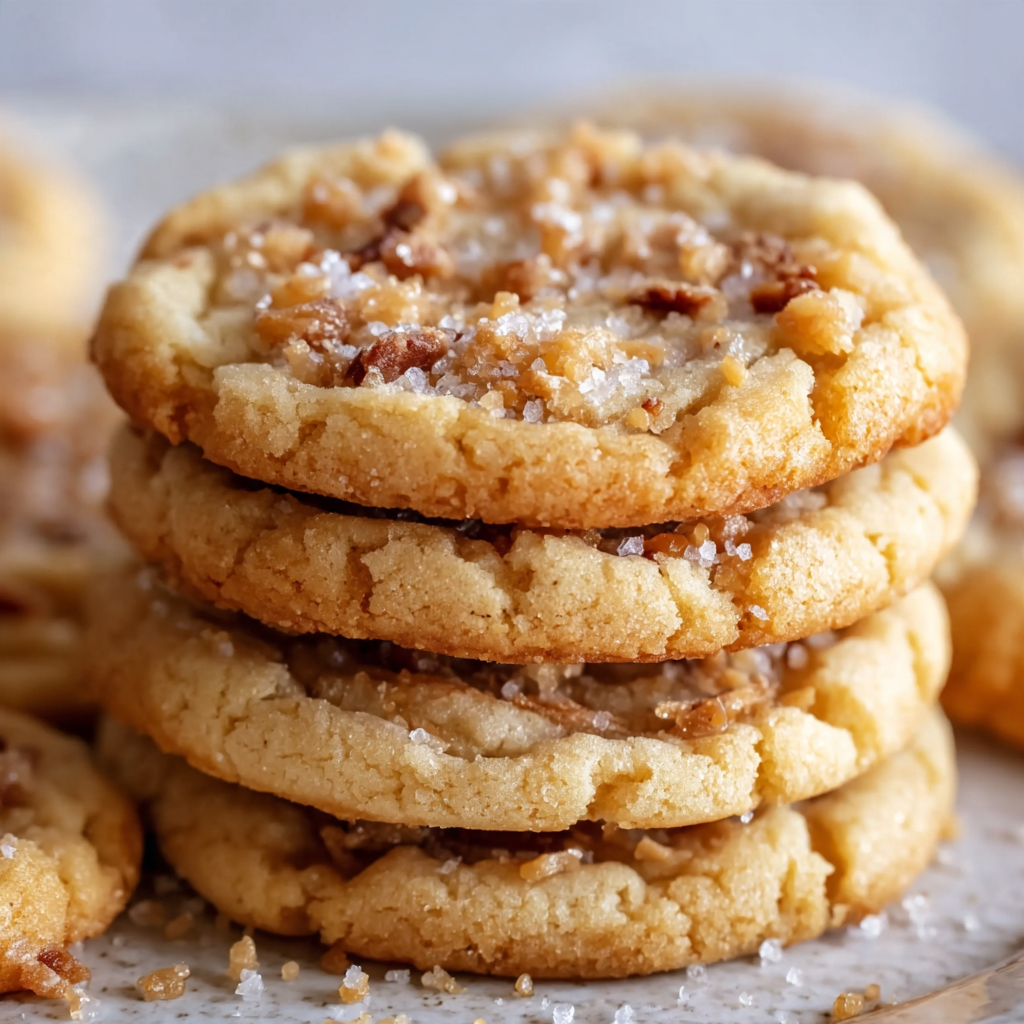
If you love cookies with crisp golden edges, a delicate crunch, rich buttery flavor, and sweet caramelized pieces in every bite, these Crispy Butter Toffee Sugar Cookies are sure to become a favorite in your kitchen. Combining the classic taste of homemade sugar cookies with the irresistible sweetness of buttery toffee, this recipe creates a delicious treat that is perfect for afternoon snacks, holiday cookie trays, family gatherings, bake sales, and everyday dessert cravings.
Unlike soft and chewy sugar cookies, these crispy butter toffee cookies are designed to develop a satisfying crunch as they bake and cool. The butter creates a rich, melt-in-your-mouth flavor, while granulated sugar encourages the cookies to spread and develop lightly caramelized edges. Toffee bits add a delightful combination of sweetness, buttery richness, and a subtle crunch that makes every cookie feel extra special.
One of the best things about this homemade crispy cookie recipe is that it uses familiar baking ingredients. You do not need complicated equipment or advanced baking skills to prepare a batch. With butter, sugar, flour, eggs, vanilla, and toffee pieces, you can create beautiful golden cookies that look impressive and taste even better.
These butter toffee sugar cookies are also wonderfully versatile. You can make them small and crisp for a snack, slightly larger for a bakery-style treat, or decorate them with a little melted chocolate for an extra-indulgent dessert. They are particularly delicious with coffee, tea, hot chocolate, or a cold glass of milk.
Another advantage of this recipe is its balance of flavors. Sugar cookies are naturally sweet and buttery, while toffee introduces deeper caramel notes. A small amount of salt enhances the flavor and prevents the sweetness from becoming overwhelming. The result is a cookie that tastes rich without requiring elaborate fillings, frosting, or decorations.
If you are searching for an easy butter toffee cookie recipe, a crispy sugar cookie variation, or a homemade dessert that combines buttery dough with crunchy caramelized bits, this recipe is an excellent choice. The detailed instructions below explain how to prepare the dough, achieve crisp edges, avoid common baking mistakes, and store your cookies so they stay delicious.
Whether you are baking for a holiday celebration or simply want something sweet to enjoy with your afternoon coffee, these Crispy Butter Toffee Sugar Cookies deliver a wonderful combination of buttery flavor, golden color, and irresistible crunch.
Ingredients for Crispy Butter Toffee Sugar Cookies
This recipe makes approximately 24–30 cookies, depending on the size of each portion. For the best results, measure the ingredients accurately and use room-temperature butter and egg.
Main ingredients
1. All-purpose flour – 2 cups (250 g)
All-purpose flour provides the structure that allows the cookies to hold their shape. Measuring the flour correctly is important because too much can make the cookies dense and dry instead of crisp and delicate.
For accuracy, weigh the flour if possible. If using measuring cups, spoon the flour into the cup and level the top rather than packing it down.
2. Unsalted butter – 3/4 cup (170 g)
Butter is the foundation of these crispy butter toffee sugar cookies. It contributes a rich flavor, tender texture, and the golden edges that make the cookies so appealing.
Use softened butter that yields slightly when pressed but is not melted or greasy. Butter that is too warm can cause excessive spreading, while butter that is too cold may not cream properly with the sugar.
Unsalted butter is recommended because it allows you to control the amount of salt in the recipe.
3. Granulated sugar – 3/4 cup (150 g)
Granulated sugar provides sweetness and helps the cookies develop a crisp texture. During baking, the sugar melts and contributes to the delicate crunch that forms as the cookies cool.
For cookies with noticeably crisp edges, granulated sugar is especially useful. Replacing all of it with brown sugar may create a softer, chewier result.
4. Light brown sugar – 1/4 cup (50 g)
A small amount of light brown sugar adds a gentle caramel flavor that complements the toffee pieces.
Brown sugar contains molasses, which contributes moisture and depth. Keeping the quantity relatively modest helps maintain the crisp texture while adding a richer flavor.
5. Large egg – 1
The egg binds the ingredients together and helps the cookies maintain their structure.
For the most consistent results, use an egg at room temperature. This allows it to blend more easily with the butter and sugar.
6. Vanilla extract – 2 teaspoons
Vanilla enhances the buttery flavor and adds warmth to the cookie dough.
Pure vanilla extract is an excellent choice, but a good-quality vanilla flavoring can also be used. Because the recipe has a simple flavor profile, vanilla makes a noticeable difference.
7. Baking soda – 1/2 teaspoon
Baking soda helps the cookies spread and encourages browning. It contributes to the golden edges and lightly crisp texture that make these cookies so enjoyable.
Measure carefully. Too much baking soda can affect the flavor and cause the cookies to spread excessively.
8. Baking powder – 1/4 teaspoon
A small amount of baking powder adds a little lift and helps create a balanced cookie texture.
The combination of baking soda and baking powder supports the desired structure without making the cookies excessively thick.
9. Salt – 1/2 teaspoon
Salt balances the sweetness and enhances the flavor of the butter and toffee.
If you use salted butter, reduce the added salt slightly according to your taste.
10. Toffee bits – 3/4 to 1 cup (approximately 130–170 g)
Toffee bits provide the signature flavor of these cookies. They add sweet, buttery, caramel-like pieces that become deliciously golden during baking.
You can use packaged baking toffee bits or finely chopped pieces of plain butter toffee. If the toffee is coated in chocolate, expect a slightly different flavor and texture.
Choose pieces that are small enough to distribute evenly throughout the dough. Very large pieces may melt, spread, or create uneven edges.
Optional ingredients
These additions are not necessary, but they can make the cookies even more delicious.
- 2 tablespoons coarse sugar: For rolling the dough or sprinkling over the tops.
- 1/2 cup chopped pecans: For a nutty, crunchy variation.
- 1/2 cup semisweet chocolate chips: For a chocolate and toffee combination.
- 1 teaspoon cornstarch: For a slightly more delicate bite, although the texture may become less crisp.
- A pinch of flaky sea salt: To balance the sweetness.
- Melted chocolate: For drizzling over cooled cookies.
For the crispiest classic version, keep the basic ingredient proportions unchanged and add only the toffee bits.
Preparation: How to Make Crispy Butter Toffee Sugar Cookies
Follow these steps carefully to make cookies with golden edges, a buttery center, and a satisfying crunch after cooling.
Step 1: Preheat the oven and prepare the baking sheets
Preheat your oven to 350°F (175°C).
Line two baking sheets with parchment paper or silicone baking mats. Parchment paper helps prevent sticking and makes it easier to remove the cookies without damaging their edges.
Arrange the oven rack in the center position so the cookies bake evenly. If your oven has a strong hot spot, rotate the baking sheet halfway through baking.
Preparing the baking sheets before mixing the dough is especially helpful because the cookies may spread quickly once they enter the oven.
Avoid greasing the baking sheets heavily. Extra grease can cause the cookies to spread more than expected and may make the bottoms overly oily.
Step 2: Combine the dry ingredients
In a medium mixing bowl, whisk together the all-purpose flour, baking soda, baking powder, and salt.
Whisking distributes the leavening agents evenly throughout the flour and helps prevent pockets of baking soda or salt from forming in the finished cookies.
If the flour contains lumps, sift it before measuring or whisking. This creates a more uniform dough and makes mixing easier.
Set the dry ingredients aside while you prepare the butter and sugar mixture.
Step 3: Cream the butter and sugars
Place the softened butter, granulated sugar, and light brown sugar in a large mixing bowl.
Using a hand mixer or stand mixer fitted with a paddle attachment, beat the ingredients for approximately 2–3 minutes, until the mixture looks smooth and creamy.
Scrape down the sides of the bowl as needed so that the butter and sugar are evenly combined.
For this crispy butter toffee cookie recipe, you do not need to whip the mixture excessively. Incorporating too much air can affect the final texture, particularly if you want thin, crisp cookies rather than thick, cake-like ones.
The mixture should look lighter and well blended, but it does not need to become extremely fluffy.
Step 4: Add the egg and vanilla extract
Add the egg to the butter and sugar mixture, followed by the vanilla extract.
Beat on medium-low speed until everything is evenly combined. Scrape the sides and bottom of the bowl if necessary.
The mixture may look slightly uneven for a moment, but it should come together as you continue mixing.
Avoid adding extra liquid. The balance between butter, sugar, egg, and flour is important for achieving cookies that spread properly and become crisp during baking.
Step 5: Add the dry ingredients
Gradually add the dry ingredient mixture to the wet ingredients.
Mix on low speed until the flour is almost completely incorporated. Stop mixing once no large pockets of dry flour remain.
Overmixing can develop too much gluten, potentially making the cookies tougher than intended.
The dough should be soft enough to scoop but firm enough to hold together. If it feels excessively sticky because the butter has become warm, cover the bowl and refrigerate the dough for 20–30 minutes.
A short chilling period is particularly helpful in a warm kitchen, although chilling is not always necessary if the butter was properly softened rather than melted.
Step 6: Fold in the toffee bits
Add the toffee bits to the cookie dough.
Use a sturdy spatula or wooden spoon to fold them in gently, distributing the pieces throughout the mixture.
Try to spread the toffee evenly so that every cookie contains a good amount. Reserve a small handful of toffee bits if you want to press a few pieces onto the tops before baking.
Avoid using extremely large chunks of toffee because they can melt into the baking sheet, create sticky edges, or cause the cookies to break when removed.
If the toffee bits are coated in chocolate, be aware that the chocolate may melt and create darker patches throughout the cookies.
Step 7: Portion the cookie dough
Use a tablespoon or small cookie scoop to portion the dough into balls of approximately 1–1 1/2 tablespoons each.
Place the portions on the prepared baking sheets, leaving approximately 2–3 inches between them to allow for spreading.
For a slightly more decorative appearance, gently roll the dough portions in coarse sugar before placing them on the tray.
You can also press a few reserved toffee bits onto the top of each cookie. This helps make the toffee visible and gives the finished cookies a more attractive, bakery-style appearance.
If you prefer very thin, extra-crispy cookies, gently flatten each dough ball with the bottom of a glass. Keep the thickness reasonably consistent so that the cookies bake evenly.
Step 8: Bake until the edges turn golden
Place the baking sheet in the preheated oven and bake for approximately 10–14 minutes.
The exact time depends on the size of the cookies, the baking sheet, your oven, and how crisp you want the finished result to be.
Look for golden-brown edges and centers that appear set. The cookies may still feel slightly soft in the middle when you remove them, but they will continue to firm up as they cool.
For a more pronounced crunch, allow the edges to become a little deeper golden, taking care not to burn the toffee pieces.
Check the cookies early during the first batch because the sugar and toffee can brown quickly.
If baking multiple trays, bake them one at a time when possible for more consistent results. If you bake two trays together, rotate them according to your oven’s performance.
Step 9: Let the cookies rest on the baking sheet
Remove the baking sheet from the oven and allow the cookies to rest for approximately 5 minutes.
This resting period is important because the hot cookies are delicate and may break if moved immediately.
As the cookies cool, the melted sugar and butter firm up, helping create the desired crispy texture.
After a few minutes, transfer the cookies carefully to a wire rack using a thin spatula.
If some cookies have spread into irregular shapes, you can gently guide their edges into a rounder shape immediately after baking, while they are still soft. Work carefully to avoid touching the hot toffee.
Step 10: Cool completely for maximum crispness
Allow the cookies to cool completely on the wire rack before tasting them for their final texture.
Freshly baked cookies often feel softer while warm. As they cool, moisture escapes and the structure becomes firmer.
Do not stack the cookies while they are still warm because trapped steam can soften their surfaces.
Once cooled, the cookies should have crisp edges, a delicate crunch, and sweet toffee pieces throughout.
If you prefer a more deeply crunchy cookie, you can experiment with slightly smaller portions and a minute or two of additional baking time. Make these adjustments gradually because the toffee can burn if the cookies remain in the oven too long.
Variations of Crispy Butter Toffee Sugar Cookies
One of the best things about homemade butter toffee cookies is how easy they are to customize. These variations introduce new flavors while keeping the buttery, sweet character of the original recipe.
1. Chocolate Chip Butter Toffee Cookies
Add 1/2 cup of semisweet chocolate chips to the dough along with the toffee bits.
Chocolate and toffee are a classic combination. The slightly bitter flavor of semisweet chocolate balances the sweetness of the cookie dough and caramelized toffee.
For an attractive appearance, press a few extra chocolate chips onto the tops before baking.
2. Brown Butter Toffee Sugar Cookies
For a deeper, nuttier flavor, brown the butter before mixing it with the sugar.
Place the butter in a saucepan over medium heat and stir until it melts, foams, and develops golden-brown specks with a nutty aroma. Remove it from the heat promptly to prevent burning.
Allow the browned butter to cool and solidify to a soft consistency before using it. Because browned butter loses some water during cooking, the dough may need slight adjustment, so test a small batch first.
Brown butter pairs beautifully with toffee and creates a more complex flavor.
3. Sea Salt Butter Toffee Cookies
Sprinkle a tiny amount of flaky sea salt over the cookies immediately after baking.
The salt highlights the butter and caramel notes and reduces the perception of excessive sweetness.
This variation is especially delicious when the cookies contain chocolate chips or chocolate-coated toffee bits.
4. Pecan Butter Toffee Sugar Cookies
Fold 1/2 cup of finely chopped pecans into the dough.
Pecans provide additional crunch and a rich, nutty flavor that complements the toffee.
For the best flavor, toast the pecans lightly before adding them. Let them cool completely so that they do not warm the dough.
5. Cinnamon Butter Toffee Cookies
Add 1/2 teaspoon of ground cinnamon to the dry ingredients.
Cinnamon gives the cookies a warm, aromatic flavor that works particularly well for autumn baking and holiday cookie trays.
You can also combine cinnamon with a little coarse sugar for a lightly spiced exterior.
6. Vanilla Bean Toffee Cookies
Replace some or all of the vanilla extract with vanilla bean paste according to the product instructions.
Vanilla bean paste creates an intense vanilla aroma and gives the cookies attractive dark specks.
This variation is ideal when you want the butter and vanilla flavors to stand out against the caramelized toffee.
7. Chocolate-Drizzled Toffee Cookies
Once the cookies have cooled completely, drizzle melted semisweet or dark chocolate across the tops.
Allow the chocolate to set before stacking or packaging the cookies.
The chocolate adds a decorative finish and a rich flavor without changing the cookie dough itself.
8. Extra-Crispy Thin Toffee Cookies
For thinner, crunchier cookies, use slightly smaller dough portions and flatten them gently before baking.
Bake until the edges are golden and the centers are set. Allow them to cool completely on a wire rack.
Because thinner cookies brown more quickly, check them frequently during the final minutes of baking.
9. Almond Butter Toffee Cookies
Add 1/2 teaspoon of almond extract along with the vanilla.
Almond extract has a strong flavor, so use it sparingly. It adds a bakery-style aroma that complements the caramel notes of the toffee.
You can also add a small quantity of sliced almonds if you want additional crunch, provided there are no nut-allergy concerns.
10. Holiday Butter Toffee Sugar Cookies
For a festive version, add a small amount of red or green sugar crystals before baking or drizzle the cooled cookies with white chocolate.
Arrange them in holiday tins or on decorative platters for Christmas parties and edible gifts.
Keep the decorations simple so that the buttery flavor and crunchy toffee remain the main attraction.
Cooking Notes
A few details can make the difference between ordinary cookies and perfectly crisp butter toffee sugar cookies.
Use softened, not melted, butter. Butter that is too warm can cause the cookies to spread excessively. The butter should yield when pressed but retain its shape.
Measure the flour accurately. Too much flour can create thick, dry cookies, while too little may cause excessive spreading.
Use granulated sugar for crispness. Granulated sugar helps create the crisp texture, while a modest amount of brown sugar adds caramel flavor.
Chill the dough when necessary. If the dough becomes greasy or unusually soft, refrigerate it briefly before portioning.
Choose the right toffee pieces. Small, evenly sized pieces distribute well throughout the dough and reduce the risk of large melted patches.
Avoid overmixing. Mix only until the flour is incorporated to help maintain a pleasant texture.
Watch the baking time carefully. Cookies can go from golden to overbaked quickly because both sugar and toffee brown during baking.
Allow the cookies to cool completely. Cooling is essential for achieving maximum crispness.
Use a wire rack. Air circulation around the cookies helps moisture escape rather than becoming trapped underneath.
Keep moisture away during storage. Humid air can soften crispy cookies, so store them in an airtight container only after they have cooled completely.
Serving Suggestions
Crispy Butter Toffee Sugar Cookies are delicious on their own, but the right accompaniment can make them even more enjoyable.
1. Serve with a glass of cold milk
Milk is a classic pairing for buttery cookies. Its creamy, mild flavor balances the sweetness of the toffee and sugar.
Arrange several cookies on a small plate for an easy afternoon snack or after-school treat.
2. Pair with coffee
The caramel notes of the toffee pair beautifully with freshly brewed coffee, espresso, cappuccino, or a latte.
The slight bitterness of coffee contrasts with the sweetness of the cookies, making this combination ideal for a coffee break or an after-dinner dessert.
3. Enjoy with tea
Black tea, chai, and lightly flavored herbal teas all work well with crispy butter toffee cookies.
For a cozy afternoon treat, serve the cookies with hot tea and fresh fruit.
4. Serve with vanilla ice cream
Place a scoop of vanilla ice cream between two cooled cookies to create a simple ice cream sandwich.
You can also crumble the cookies over a bowl of ice cream for an easy dessert with buttery crunch and caramel flavor.
5. Add them to a holiday cookie tray
These cookies fit beautifully alongside shortbread, chocolate chip cookies, gingerbread, brownies, and other homemade sweets.
Their golden color and visible toffee pieces add variety to a holiday dessert table.
6. Package them as homemade gifts
Arrange completely cooled cookies in a food-safe tin or decorative box. Use parchment paper between layers to help protect the cookies and preserve their appearance.
Include an ingredient label if you are giving them to friends, neighbors, coworkers, or family members.
7. Serve with hot chocolate
A cup of hot chocolate complements the buttery cookie flavor and creates a comforting winter treat.
For a less sweet pairing, choose dark hot chocolate or unsweetened cocoa.
Tips for the Best Crispy Butter Toffee Sugar Cookies
- Start with room-temperature ingredients. Properly softened butter and a room-temperature egg blend more evenly into the dough.
- Weigh ingredients when possible. A kitchen scale improves consistency and reduces the chance of adding too much flour.
- Use fresh baking soda and baking powder. Old leavening agents can affect spreading, browning, and texture.
- Do not skip the salt. A small amount of salt enhances the butter and caramel flavors.
- Distribute the toffee evenly. This ensures that each cookie has a balanced flavor and texture.
- Use parchment paper. It helps prevent sticking and makes cleanup easier.
- Leave enough space between cookies. The dough will spread as the butter and sugar heat up.
- Bake a test cookie if you are unsure. One test cookie can help you adjust dough temperature, portion size, and baking time before preparing the full batch.
- Do not stack warm cookies. Warm cookies release steam, and stacking traps moisture that can soften the surfaces.
- Use a wire rack for cooling. Proper air circulation helps maintain crispness.
- Avoid overbaking the toffee. Small pieces can become bitter if exposed to excessive heat.
- Choose the right storage container. An airtight container helps protect the cookies from humidity once they are completely cool.
- Adjust cookie size for your preferred crunch. Smaller, thinner cookies generally become crispier than large, thick cookies baked for the same amount of time.
- Keep decorations simple. Chocolate drizzle or a little coarse sugar adds visual appeal without overwhelming the buttery flavor.
- Make them ahead for gatherings. Bake the cookies a day before serving and store them properly to save time on the day of your event.
Prep Time, Cooking Time, and Total Time
The following times are estimates for approximately 24–30 cookies.
- Prep Time: 15 minutes
- Cooking Time: 10–14 minutes per batch
- Optional Chilling Time: 20–30 minutes
- Cooling Time: 20–30 minutes
- Total Time: Approximately 45–75 minutes, depending on chilling, batch size, and cooling time
If you bake multiple trays, allow additional time for each batch. Chilling is optional when the dough is already at the correct consistency.
Nutritional Information
The following values are approximate estimates for one cookie, assuming the recipe produces 30 cookies. Actual nutritional values depend on the brands of butter and toffee, the cookie size, and any optional additions.
- Calories: Approximately 140–170 per cookie
- Protein: Approximately 1–2 g per cookie
- Sodium: Approximately 70–120 mg per cookie
Calories
Most of the calories come from butter, sugar, flour, and toffee. Smaller cookies make it easier to enjoy the recipe in moderate portions.
Protein
The flour and egg contribute small amounts of protein, but these cookies are primarily a sweet snack rather than a significant protein source.
Sodium
The sodium content depends on the butter, added salt, and toffee brand. Using unsalted butter makes it easier to control the amount of sodium.
These numbers are estimates rather than laboratory-tested nutrition facts. For accurate values, calculate the recipe using your specific ingredients and the final number of cookies.
Frequently Asked Questions
1. What makes butter toffee sugar cookies crispy?
Crispness comes from the balance of butter, granulated sugar, flour, and moisture, along with the baking time and cooling process.
Granulated sugar helps the cookies develop crisp edges, while baking them until the edges turn golden encourages a more pronounced crunch. Allowing the cookies to cool completely is essential because their texture firms as they cool.
2. Can I make these cookies without brown sugar?
Yes. You can replace the brown sugar with additional granulated sugar, although the cookies will have a slightly less pronounced caramel flavor.
Brown sugar contributes moisture and molasses notes, so the finished texture and flavor may differ slightly.
3. Why did my cookies spread too much?
Excessive spreading can occur when the butter is too warm, the dough is too soft, the flour is undermeasured, or the baking sheet is still hot from a previous batch.
Chill the dough briefly if needed, measure the flour accurately, and place each batch on a cool baking sheet.
4. Why are my cookies soft instead of crispy?
The cookies may need additional baking time, may be too thick, or may not have cooled completely.
Bake until the edges are golden and the centers are set. Then transfer the cookies to a wire rack and allow them to cool fully.
Humidity can also soften cookies during storage.
5. Can I use homemade toffee instead of packaged toffee bits?
Yes. Finely chop homemade butter toffee into small, reasonably uniform pieces before folding it into the dough.
Allow the toffee to cool completely before chopping it. Very large pieces may melt unevenly or make the cookies difficult to shape.
6. Can I make the dough ahead of time?
Yes. Cover the dough tightly and refrigerate it for up to about 48 hours for best quality.
Cold dough may be firm, so allow it to sit briefly at room temperature until it can be portioned. You may need to adjust the baking time slightly.
7. Can I freeze the cookie dough?
Yes. Portion the dough into individual balls and arrange them on a tray. Freeze until firm, then transfer the portions to a freezer-safe bag or container.
For best quality, use the frozen dough within approximately 2–3 months. Bake from frozen or partially thawed, adding a little baking time as needed and checking for golden edges.
8. Can I freeze the baked cookies?
Yes. Let the cookies cool completely, then store them in an airtight freezer-safe container with parchment paper between layers.
Freeze for approximately 2–3 months for best quality. Thaw at room temperature in a single layer. If needed, a brief period in a low oven can help restore some crispness.
9. How do I keep the cookies crispy after baking?
Allow the cookies to cool completely before placing them in an airtight container. Keep the container in a cool, dry place away from humidity.
Avoid storing them with soft cookies or moist baked goods, as moisture can transfer and reduce their crunch.
10. Can I use salted butter?
Yes. If you use salted butter, reduce the added salt slightly to avoid making the cookies too salty.
Because salt levels vary by brand, taste preferences and the saltiness of your toffee can also influence the adjustment.
11. What type of toffee bits work best?
Plain butter toffee baking bits work particularly well because they complement the cookie dough without introducing too many additional flavors.
Chocolate-coated toffee bits are also delicious, but they produce a slightly different flavor and appearance.
12. Can I make these cookies without a mixer?
Yes. Use a sturdy wooden spoon or whisk to combine the softened butter and sugars, then mix in the egg and vanilla.
The process may require more effort, but a hand mixer is not essential.
13. Why did the bottoms of my cookies burn?
The baking sheet may be too dark, the oven temperature may be too high, or the cookies may have baked too long.
Use parchment paper, bake on the center rack, and check the cookies early. If the bottoms brown too quickly, try a lighter-colored baking sheet or reduce the oven temperature slightly.
14. Can I add nuts to the dough?
Yes. Chopped pecans or almonds can add extra crunch and complement the toffee flavor.
Add approximately 1/4–1/2 cup of chopped nuts, and avoid adding so many that the dough becomes difficult to portion. Consider nut allergies when serving the cookies to others.
15. Are crispy butter toffee sugar cookies good for Christmas?
Absolutely. Their golden color and caramel-like flavor make them a wonderful addition to Christmas cookie trays, holiday parties, and homemade gift boxes.
You can decorate them with melted chocolate or festive sugar crystals for a seasonal appearance.
16. Can I make the cookies less sweet?
You can use dark chocolate-coated toffee or add a tiny pinch of flaky sea salt to balance the sweetness.
However, avoid significantly reducing the sugar in the dough without testing the recipe, because sugar affects spreading, browning, moisture, and crispness.
17. How do I get evenly sized cookies?
Use a tablespoon or cookie scoop to portion the dough consistently. Place the portions at equal distances on the baking sheet.
Uniform sizing helps the cookies bake at the same rate, reducing the chance that smaller cookies burn while larger ones remain underbaked.
18. Why do my cookies become soft overnight?
Cookies can absorb moisture from the air, particularly in humid conditions. They may also soften if they are stored before cooling completely.
Cool them fully, use an airtight container, and keep them separate from moist baked goods. If they soften, try reheating them briefly in a low oven and allowing them to cool on a wire rack.
19. Can I use a different extract instead of vanilla?
Yes. A small amount of almond extract can provide a pleasant variation, while maple extract complements the caramel flavor of the toffee.
Use concentrated extracts sparingly because their flavors can quickly overpower the butter and sugar.
20. What is the best way to serve these cookies?
Serve them at room temperature once they have cooled completely. They pair beautifully with coffee, tea, milk, or hot chocolate.
For an extra-special dessert, use two cookies to make an ice cream sandwich or crumble them over vanilla ice cream.
Conclusion
These Crispy Butter Toffee Sugar Cookies combine the classic comfort of homemade sugar cookies with the irresistible flavor of buttery toffee. Their golden edges, delicate crunch, rich vanilla aroma, and sweet caramelized pieces make them a wonderful treat for everyday snacking, holiday celebrations, and homemade gifts.
The recipe is simple enough for beginner bakers while offering plenty of opportunities to customize the flavor. Add chocolate chips for extra richness, toasted pecans for nutty crunch, cinnamon for a warm seasonal twist, or a little flaky sea salt to balance the sweetness.
For the best results, measure the ingredients carefully, use softened butter, avoid overmixing the dough, and watch the cookies closely as they bake. Most importantly, allow them to cool completely before storing or serving, because that is when their signature crispy texture develops.
Whether you are preparing a fresh batch for your family, building a festive cookie platter, or looking for a new favorite to serve with coffee, these homemade butter toffee sugar cookies are an excellent choice.
Bake a batch, let the sweet buttery aroma fill your kitchen, and enjoy every crunchy, caramel-flavored bite of these delicious Crispy Butter Toffee Sugar Cookies.
Print
Crispy Butter Toffee Sugar Cookies – Easy, Buttery, Golden, and Delicious
- Total Time: 45–75 minutes
Description
If you love cookies with crisp golden edges, a delicate crunch, rich buttery flavor, and sweet caramelized pieces in every bite, these Crispy Butter Toffee Sugar Cookies are sure to become a favorite in your kitchen. Combining the classic taste of homemade sugar cookies with the irresistible sweetness of buttery toffee, this recipe creates a delicious treat that is perfect for afternoon snacks, holiday cookie trays, family gatherings, bake sales, and everyday dessert cravings.
Ingredients
Instructions
Preheat your oven to 350°F (175°C).
Line two baking sheets with parchment paper or silicone baking mats. Parchment paper helps prevent sticking and makes it easier to remove the cookies without damaging their edges.
Arrange the oven rack in the center position so the cookies bake evenly. If your oven has a strong hot spot, rotate the baking sheet halfway through baking.
Preparing the baking sheets before mixing the dough is especially helpful because the cookies may spread quickly once they enter the oven.
Avoid greasing the baking sheets heavily. Extra grease can cause the cookies to spread more than expected and may make the bottoms overly oily.
Step 2: Combine the dry ingredients
In a medium mixing bowl, whisk together the all-purpose flour, baking soda, baking powder, and salt.
Whisking distributes the leavening agents evenly throughout the flour and helps prevent pockets of baking soda or salt from forming in the finished cookies.
If the flour contains lumps, sift it before measuring or whisking. This creates a more uniform dough and makes mixing easier.
Set the dry ingredients aside while you prepare the butter and sugar mixture.
Step 3: Cream the butter and sugars
Place the softened butter, granulated sugar, and light brown sugar in a large mixing bowl.
Using a hand mixer or stand mixer fitted with a paddle attachment, beat the ingredients for approximately 2–3 minutes, until the mixture looks smooth and creamy.
Scrape down the sides of the bowl as needed so that the butter and sugar are evenly combined.
For this crispy butter toffee cookie recipe, you do not need to whip the mixture excessively. Incorporating too much air can affect the final texture, particularly if you want thin, crisp cookies rather than thick, cake-like ones.
The mixture should look lighter and well blended, but it does not need to become extremely fluffy.
Step 4: Add the egg and vanilla extract
Add the egg to the butter and sugar mixture, followed by the vanilla extract.
Beat on medium-low speed until everything is evenly combined. Scrape the sides and bottom of the bowl if necessary.
The mixture may look slightly uneven for a moment, but it should come together as you continue mixing.
Avoid adding extra liquid. The balance between butter, sugar, egg, and flour is important for achieving cookies that spread properly and become crisp during baking.
Step 5: Add the dry ingredients
Gradually add the dry ingredient mixture to the wet ingredients.
Mix on low speed until the flour is almost completely incorporated. Stop mixing once no large pockets of dry flour remain.
Overmixing can develop too much gluten, potentially making the cookies tougher than intended.
The dough should be soft enough to scoop but firm enough to hold together. If it feels excessively sticky because the butter has become warm, cover the bowl and refrigerate the dough for 20–30 minutes.
A short chilling period is particularly helpful in a warm kitchen, although chilling is not always necessary if the butter was properly softened rather than melted.
Step 6: Fold in the toffee bits
Add the toffee bits to the cookie dough.
Use a sturdy spatula or wooden spoon to fold them in gently, distributing the pieces throughout the mixture.
Try to spread the toffee evenly so that every cookie contains a good amount. Reserve a small handful of toffee bits if you want to press a few pieces onto the tops before baking.
Avoid using extremely large chunks of toffee because they can melt into the baking sheet, create sticky edges, or cause the cookies to break when removed.
If the toffee bits are coated in chocolate, be aware that the chocolate may melt and create darker patches throughout the cookies.
Step 7: Portion the cookie dough
Use a tablespoon or small cookie scoop to portion the dough into balls of approximately 1–1 1/2 tablespoons each.
Place the portions on the prepared baking sheets, leaving approximately 2–3 inches between them to allow for spreading.
For a slightly more decorative appearance, gently roll the dough portions in coarse sugar before placing them on the tray.
You can also press a few reserved toffee bits onto the top of each cookie. This helps make the toffee visible and gives the finished cookies a more attractive, bakery-style appearance.
If you prefer very thin, extra-crispy cookies, gently flatten each dough ball with the bottom of a glass. Keep the thickness reasonably consistent so that the cookies bake evenly.
Step 8: Bake until the edges turn golden
Place the baking sheet in the preheated oven and bake for approximately 10–14 minutes.
The exact time depends on the size of the cookies, the baking sheet, your oven, and how crisp you want the finished result to be.
Look for golden-brown edges and centers that appear set. The cookies may still feel slightly soft in the middle when you remove them, but they will continue to firm up as they cool.
For a more pronounced crunch, allow the edges to become a little deeper golden, taking care not to burn the toffee pieces.
Check the cookies early during the first batch because the sugar and toffee can brown quickly.
If baking multiple trays, bake them one at a time when possible for more consistent results. If you bake two trays together, rotate them according to your oven’s performance.
Step 9: Let the cookies rest on the baking sheet
Remove the baking sheet from the oven and allow the cookies to rest for approximately 5 minutes.
This resting period is important because the hot cookies are delicate and may break if moved immediately.
As the cookies cool, the melted sugar and butter firm up, helping create the desired crispy texture.
After a few minutes, transfer the cookies carefully to a wire rack using a thin spatula.
If some cookies have spread into irregular shapes, you can gently guide their edges into a rounder shape immediately after baking, while they are still soft. Work carefully to avoid touching the hot toffee.
Step 10: Cool completely for maximum crispness
Allow the cookies to cool completely on the wire rack before tasting them for their final texture.
Freshly baked cookies often feel softer while warm. As they cool, moisture escapes and the structure becomes firmer.
Do not stack the cookies while they are still warm because trapped steam can soften their surfaces.
Once cooled, the cookies should have crisp edges, a delicate crunch, and sweet toffee pieces throughout.
If you prefer a more deeply crunchy cookie, you can experiment with slightly smaller portions and a minute or two of additional baking time. Make these adjustments gradually because the toffee can burn if the cookies remain in the oven too long.
Notes
A few details can make the difference between ordinary cookies and perfectly crisp butter toffee sugar cookies.
Use softened, not melted, butter. Butter that is too warm can cause the cookies to spread excessively. The butter should yield when pressed but retain its shape.
Measure the flour accurately. Too much flour can create thick, dry cookies, while too little may cause excessive spreading.
Use granulated sugar for crispness. Granulated sugar helps create the crisp texture, while a modest amount of brown sugar adds caramel flavor.
Chill the dough when necessary. If the dough becomes greasy or unusually soft, refrigerate it briefly before portioning.
Choose the right toffee pieces. Small, evenly sized pieces distribute well throughout the dough and reduce the risk of large melted patches.
Avoid overmixing. Mix only until the flour is incorporated to help maintain a pleasant texture.
Watch the baking time carefully. Cookies can go from golden to overbaked quickly because both sugar and toffee brown during baking.
Allow the cookies to cool completely. Cooling is essential for achieving maximum crispness.
Use a wire rack. Air circulation around the cookies helps moisture escape rather than becoming trapped underneath.
Keep moisture away during storage. Humid air can soften crispy cookies, so store them in an airtight container only after they have cooled completely.
- Prep Time: 15 minutes
- Cooling Time: 20–30 minutes
- Cook Time: 10–14 minutes per batch
Nutrition
- Calories: 140–170 per cookie
- Sodium: 70–120 mg per cookie
- Protein: 1–2 g per cookie
