This Gingerbread Cake is a beautiful, cozy holiday dessert filled with the warm flavors of ginger, cinnamon, cloves, nutmeg, brown sugar, and molasses. The cake is soft and moist with a tender crumb, then covered with a rich, creamy frosting that melts slightly over the sides for an irresistible finish.
Decorated with adorable gingerbread cookies and snowy white details, this gingerbread cake recipe makes a stunning centerpiece for Christmas gatherings, Thanksgiving dessert tables, winter parties, family dinners, and holiday celebrations.
The deep brown color and rich flavor come primarily from molasses and brown sugar, while the combination of ginger and other warming spices gives the cake its traditional gingerbread character. The creamy frosting adds sweetness and richness that balances the slightly bold flavor of the molasses.
One of the best things about homemade Gingerbread Cake is that it tastes just as wonderful as it looks. It can be served as a simple everyday dessert with a cup of coffee or dressed up with gingerbread cookies, cinnamon, powdered sugar, and holiday decorations for a festive celebration.
This cake is also a wonderful make-ahead dessert. In fact, the gingerbread flavor can become even more delicious after the cake rests for several hours, allowing the spices and molasses to blend together.
If you’re looking for an easy Christmas cake, a moist old-fashioned gingerbread dessert, or a beautiful holiday cake that fills your kitchen with the aroma of warm spices, this recipe is an excellent choice.
Ingredients
For the Gingerbread Cake
- 2 ½ cups all-purpose flour
- 1 teaspoon baking soda
- ½ teaspoon baking powder
- ½ teaspoon salt
- 2 teaspoons ground ginger
- 1 ½ teaspoons ground cinnamon
- ¼ teaspoon ground cloves
- ¼ teaspoon ground nutmeg
- ½ cup unsalted butter, softened
- ¾ cup packed brown sugar
- 2 large eggs, room temperature
- ¾ cup unsulphured molasses
- 1 teaspoon vanilla extract
- 1 cup hot water
- ½ cup buttermilk
For the Creamy Frosting
- ½ cup unsalted butter, softened
- 8 ounces cream cheese, softened
- 3 cups powdered sugar
- 1 teaspoon vanilla extract
- 1–2 tablespoons heavy cream or milk, as needed
- ½ teaspoon ground cinnamon
- Pinch of salt
For Decoration
- Mini gingerbread cookies
- Crushed gingerbread cookies, optional
- Ground cinnamon
- Powdered sugar
- Small gingerbread decorations, optional
Preparation
Step 1: Prepare the Baking Pan
Preheat your oven to 350°F (175°C).
Grease a 9×13-inch baking pan and line it with parchment paper, leaving a little parchment hanging over the edges. This makes the finished cake easier to lift from the pan.
Lightly grease the parchment as well.
Step 2: Mix the Dry Ingredients
In a medium bowl, whisk together:
- All-purpose flour
- Baking soda
- Baking powder
- Salt
- Ground ginger
- Cinnamon
- Cloves
- Nutmeg
Whisk thoroughly so the spices and leavening agents are evenly distributed throughout the flour.
Set the bowl aside.
Step 3: Cream the Butter and Brown Sugar
In a large mixing bowl, beat the softened butter and brown sugar together until light and creamy.
This should take approximately 2–3 minutes.
Creaming the butter and brown sugar helps create a tender cake and distributes the brown sugar evenly throughout the batter.
Step 4: Add the Eggs
Add the eggs one at a time, beating well after each addition.
Add the vanilla extract and mix until combined.
Scrape down the sides of the bowl as necessary to make sure everything is evenly incorporated.
Step 5: Add the Molasses
Slowly add the molasses to the butter and sugar mixture.
Mix until the batter becomes smooth and evenly colored.
The molasses gives the cake its characteristic deep brown color and rich gingerbread flavor.
For the best result, use regular unsulphured molasses rather than blackstrap molasses, which can have a much stronger and more bitter taste.
Step 6: Combine the Batter
Add the dry ingredients gradually, alternating with the buttermilk.
Begin with approximately one-third of the flour mixture, followed by half of the buttermilk. Continue alternating and finish with the remaining flour mixture.
Mix only until combined.
Do not overmix the batter, as excessive mixing can make the finished cake dense.
Step 7: Add the Hot Water
Slowly pour in the hot water while mixing gently.
The batter will become thinner and smoother. This is normal and helps create the moist, tender texture characteristic of a good gingerbread cake.
Mix just until everything is combined.
Step 8: Transfer the Batter to the Pan
Pour the gingerbread batter into the prepared baking pan.
Use a spatula to spread the batter evenly into the corners.
Gently tap the pan against the counter once or twice to remove any large air bubbles.
Step 9: Bake the Cake
Place the pan in the preheated oven.
Bake for approximately 35–45 minutes, or until a toothpick inserted into the center comes out clean or with a few moist crumbs.
Do not overbake the cake. A slightly moist crumb is ideal for gingerbread.
Step 10: Cool Completely
Remove the cake from the oven and place the pan on a cooling rack.
Allow the cake to cool for approximately 15–20 minutes in the pan.
If you plan to frost the entire cake, allow it to cool completely before applying the frosting. A warm cake can cause the frosting to melt and slide.
Step 11: Prepare the Cream Cheese Frosting
While the cake cools, prepare the frosting.
Beat the softened butter and cream cheese together until smooth and creamy.
Gradually add the powdered sugar, mixing at low speed at first to prevent a cloud of powdered sugar.
Add vanilla extract, cinnamon, and a pinch of salt.
Beat until smooth and fluffy.
If the frosting is too thick, add a small amount of heavy cream or milk, one teaspoon at a time.
Step 12: Frost the Gingerbread Cake
Once the cake is completely cool, spread the cream cheese frosting evenly over the top.
For the beautiful rustic appearance shown in the picture, use the back of a spoon or an offset spatula to create soft waves and gentle swirls in the frosting.
Allow some frosting to naturally reach the edges and gently drip down the sides for a homemade bakery-style appearance.
Step 13: Decorate the Cake
Arrange small gingerbread cookies across the top of the frosted cake.
You can use traditional gingerbread people, snowflake-shaped cookies, stars, or a combination of holiday shapes.
Finish with a light dusting of cinnamon or powdered sugar for a snowy holiday effect.
For an extra festive presentation, sprinkle a few crushed gingerbread cookie crumbs around the edges.
Step 14: Chill Before Serving
For cleaner slices and firmer frosting, refrigerate the finished cake for approximately 30–60 minutes before serving.
Remove it from the refrigerator about 10–15 minutes before serving for the best texture.
Variation
Gingerbread Cake with Vanilla Buttercream
Instead of cream cheese frosting, use a classic vanilla buttercream. The sweet vanilla flavor pairs beautifully with the warm gingerbread spices.
Chocolate Gingerbread Cake
Add ¼ cup unsweetened cocoa powder to the dry ingredients and replace an equal amount of flour. Add chocolate chips for an extra-rich version.
Orange Gingerbread Cake
Add 1–2 teaspoons of fresh orange zest to the batter. Orange adds a bright citrus note that complements molasses and ginger.
Apple Gingerbread Cake
Fold finely diced peeled apples into the batter. Apples add moisture and natural sweetness and make the cake especially cozy for fall.
Pecan Gingerbread Cake
Add ½ cup of chopped toasted pecans to the batter. The buttery crunch of pecans works beautifully with molasses and brown sugar.
Gingerbread Bundt Cake
Bake the batter in a generously greased Bundt pan. Once cooled, drizzle with vanilla glaze and decorate with gingerbread cookies.
Gingerbread Loaf Cake
Pour the batter into loaf pans and bake until the centers are completely set. This version is perfect for holiday gifting.
Salted Caramel Gingerbread Cake
Drizzle caramel sauce over the frosting and finish with a very small amount of flaky sea salt.
COOKING Note
The key to a soft and moist Gingerbread Cake is avoiding overbaking.
Because ovens vary, begin checking the cake toward the lower end of the suggested baking time. Insert a toothpick into the center. If it comes out with a few moist crumbs but no wet batter, the cake is ready.
Use room-temperature butter, eggs, and cream cheese whenever possible. Room-temperature ingredients combine more easily and create a smoother batter and frosting.
When measuring flour, spoon it into the measuring cup and level it rather than scooping directly from the flour container. Too much flour can make gingerbread cake heavy and dry.
Molasses is naturally sticky. Lightly coating your measuring cup with a little nonstick spray or oil can help the molasses pour out more easily.
Allow the cake to cool completely before frosting. This is especially important with cream cheese frosting because heat can make it soft and difficult to spread.
For the most beautiful presentation, use a spatula to create gentle swirls in the frosting rather than trying to make the surface perfectly smooth.
Serving Suggestions
This Gingerbread Cake is delicious served in many different ways.
With Whipped Cream
Add a spoonful of lightly sweetened whipped cream to each slice for a simple and elegant dessert.
With Vanilla Ice Cream
Serve a slightly warm slice with a scoop of vanilla ice cream. The cold, creamy ice cream contrasts beautifully with the warm gingerbread spices.
With Caramel Sauce
Drizzle warm caramel sauce over each serving for an extra layer of buttery sweetness.
With Coffee
The warm spices and molasses flavor pair wonderfully with coffee, cappuccino, or a homemade latte.
Holiday Dessert Table
Decorate the entire cake with gingerbread cookies and place it in the center of a Christmas dessert table.
With Vanilla Sauce
A warm vanilla sauce poured over a slice creates a classic old-fashioned dessert that is especially comforting during cold weather.
Tips
- Use fresh spices for the strongest flavor.
- Choose regular unsulphured molasses for a balanced gingerbread flavor.
- Avoid blackstrap molasses unless you specifically prefer its stronger taste.
- Use room-temperature eggs and butter.
- Measure flour accurately.
- Do not overmix the batter after adding flour.
- Add the hot water gradually.
- Do not overbake the cake.
- Let the cake cool completely before frosting.
- Use softened cream cheese for smooth frosting.
- Add powdered sugar gradually to avoid lumps.
- Refrigerate the frosted cake briefly before slicing for cleaner pieces.
- Toast pecans before adding them for a deeper nutty flavor.
- Add orange zest for a festive citrus variation.
- Decorate with gingerbread cookies just before serving for the prettiest presentation.
- If using large gingerbread cookies as decoration, place them into the frosting gently so they remain upright.
- Store leftovers covered in the refrigerator if using cream cheese frosting.
Prep Time:
25 minutes
Cooking Time:
35–45 minutes
Cooling & Decorating Time:
45–60 minutes
Total Time:
Approximately 1 hour 45 minutes
Nutritional Information
Approximate nutritional values per serving and may vary depending on the exact ingredients, frosting quantity, and serving size.
Calories: Approximately 420
Protein: Approximately 5 g
Sodium: Approximately 300 mg
Adding extra frosting, caramel sauce, ice cream, or additional decorations will increase the nutritional values.
FAQs
What makes Gingerbread Cake different from regular cake?
Gingerbread cake is characterized by its use of molasses and warm spices such as ginger, cinnamon, cloves, and nutmeg. These ingredients give it a deeper color and richer, more aromatic flavor than a typical vanilla or butter cake.
Can I make Gingerbread Cake ahead of time?
Yes. This cake is an excellent make-ahead dessert. Bake the cake a day before serving, allow it to cool completely, cover it tightly, and frost it the next day.
Does Gingerbread Cake need to be refrigerated?
The unfrosted cake can generally be stored covered at room temperature for short-term storage. However, because this version uses cream cheese frosting, the finished cake should be refrigerated.
How long does Gingerbread Cake last?
Properly covered and refrigerated, the frosted cake is best enjoyed within approximately 4–5 days.
Can I freeze Gingerbread Cake?
Yes. The unfrosted cake freezes particularly well. Wrap it tightly in plastic wrap and place it in a freezer-safe container or bag. Freeze for up to approximately 2–3 months for best quality.
Thaw completely before frosting.
Can I freeze the cake with cream cheese frosting?
Yes, although the texture of cream cheese frosting may change slightly after freezing and thawing. For the best presentation, freeze the cake unfrosted and prepare fresh frosting after thawing.
What type of molasses is best for gingerbread cake?
Regular unsulphured molasses is generally the best choice. It provides the classic deep sweetness without the particularly strong bitterness associated with blackstrap molasses.
Can I use fresh ginger?
Yes. Freshly grated ginger can be added for a more pronounced ginger flavor. However, ground ginger provides the classic flavor and is convenient for everyday baking.
Why is my Gingerbread Cake dry?
Overbaking and using too much flour are two common causes. Measure flour carefully and begin testing the cake before the maximum baking time.
Why is my gingerbread cake dense?
Overmixing the batter can result in a dense texture. Once the flour is added, mix only until the ingredients are incorporated.
Can I make this cake without cream cheese frosting?
Absolutely. You can dust it with powdered sugar, drizzle it with vanilla glaze, or serve it with whipped cream or vanilla ice cream.
What frosting goes best with Gingerbread Cake?
Cream cheese frosting is an excellent choice because its tangy flavor balances the sweetness and richness of molasses. Vanilla buttercream and caramel frosting are also delicious options.
Can I add nuts to Gingerbread Cake?
Yes. Pecans and walnuts are particularly good choices. Add approximately ½ cup of chopped nuts to the batter.
Can I add chocolate?
Yes. Chocolate chips or a chocolate frosting can turn the traditional gingerbread cake into a richer dessert.
Why does my cream cheese frosting become runny?
Cream cheese frosting can become too soft if the butter or cream cheese is overly warm or if too much liquid is added. Chill the frosting for a short time to firm it up before spreading.
How do I get the frosting to look like the cake in the picture?
Spread the frosting generously over the top and use an offset spatula or spoon to create rustic waves and swirls. Let a little frosting naturally extend toward the edges instead of smoothing it completely flat. Add small gingerbread cookies on top for the finished holiday look.
Can I decorate this cake with homemade gingerbread cookies?
Absolutely. Homemade gingerbread people, stars, snowflakes, and other holiday cookie shapes make beautiful decorations.
Can I make this recipe as cupcakes?
Yes. Divide the batter among lined muffin cups and reduce the baking time considerably. Begin checking the cupcakes early with a toothpick.
Conclusion
This Gingerbread Cake is a wonderful combination of everything we love about holiday baking: rich molasses, fragrant ginger, cinnamon, cloves, brown sugar, creamy frosting, and adorable gingerbread decorations.
The cake itself is soft, moist, and tender, while the cream cheese frosting adds a smooth and slightly tangy contrast to the warm spices. Decorating the top with gingerbread cookies turns this simple homemade cake into an eye-catching Christmas dessert that is perfect for sharing.
Whether you’re making it for Christmas dinner, a holiday party, Thanksgiving, a family gathering, or simply a cozy weekend baking project, this moist gingerbread cake recipe is full of classic seasonal flavor.
For the best results, measure the flour carefully, avoid overmixing, use quality molasses and spices, and watch the baking time closely. Let the cake cool completely before frosting, then decorate it with gingerbread cookies, a sprinkle of cinnamon, or powdered sugar for a beautiful winter-inspired presentation.
Serve each slice with coffee, whipped cream, vanilla ice cream, caramel sauce, or warm vanilla sauce for an extra-special treat.
This old-fashioned Gingerbread Cake is more than just a holiday dessert—it is the kind of homemade cake that fills the kitchen with the comforting aroma of Christmas spices and makes every gathering feel a little more special.
Print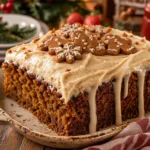
🎄🤎 GINGERBREAD CAKE 🤎🎄
- Total Time: 1 hour 45 minutes
Description
This Gingerbread Cake is a beautiful, cozy holiday dessert filled with the warm flavors of ginger, cinnamon, cloves, nutmeg, brown sugar, and molasses. The cake is soft and moist with a tender crumb, then covered with a rich, creamy frosting that melts slightly over the sides for an irresistible finish.
Ingredients
For the Gingerbread Cake
- 2 ½ cups all-purpose flour
- 1 teaspoon baking soda
- ½ teaspoon baking powder
- ½ teaspoon salt
- 2 teaspoons ground ginger
- 1 ½ teaspoons ground cinnamon
- ¼ teaspoon ground cloves
- ¼ teaspoon ground nutmeg
- ½ cup unsalted butter, softened
- ¾ cup packed brown sugar
- 2 large eggs, room temperature
- ¾ cup unsulphured molasses
- 1 teaspoon vanilla extract
- 1 cup hot water
- ½ cup buttermilk
For the Creamy Frosting
- ½ cup unsalted butter, softened
- 8 ounces cream cheese, softened
- 3 cups powdered sugar
- 1 teaspoon vanilla extract
- 1–2 tablespoons heavy cream or milk, as needed
- ½ teaspoon ground cinnamon
- Pinch of salt
For Decoration
- Mini gingerbread cookies
- Crushed gingerbread cookies, optional
- Ground cinnamon
- Powdered sugar
- Small gingerbread decorations, optional
Instructions
Step 1: Prepare the Baking Pan
Preheat your oven to 350°F (175°C).
Grease a 9×13-inch baking pan and line it with parchment paper, leaving a little parchment hanging over the edges. This makes the finished cake easier to lift from the pan.
Lightly grease the parchment as well.
Step 2: Mix the Dry Ingredients
In a medium bowl, whisk together:
- All-purpose flour
- Baking soda
- Baking powder
- Salt
- Ground ginger
- Cinnamon
- Cloves
- Nutmeg
Whisk thoroughly so the spices and leavening agents are evenly distributed throughout the flour.
Set the bowl aside.
Step 3: Cream the Butter and Brown Sugar
In a large mixing bowl, beat the softened butter and brown sugar together until light and creamy.
This should take approximately 2–3 minutes.
Creaming the butter and brown sugar helps create a tender cake and distributes the brown sugar evenly throughout the batter.
Step 4: Add the Eggs
Add the eggs one at a time, beating well after each addition.
Add the vanilla extract and mix until combined.
Scrape down the sides of the bowl as necessary to make sure everything is evenly incorporated.
Step 5: Add the Molasses
Slowly add the molasses to the butter and sugar mixture.
Mix until the batter becomes smooth and evenly colored.
The molasses gives the cake its characteristic deep brown color and rich gingerbread flavor.
For the best result, use regular unsulphured molasses rather than blackstrap molasses, which can have a much stronger and more bitter taste.
Step 6: Combine the Batter
Add the dry ingredients gradually, alternating with the buttermilk.
Begin with approximately one-third of the flour mixture, followed by half of the buttermilk. Continue alternating and finish with the remaining flour mixture.
Mix only until combined.
Do not overmix the batter, as excessive mixing can make the finished cake dense.
Step 7: Add the Hot Water
Slowly pour in the hot water while mixing gently.
The batter will become thinner and smoother. This is normal and helps create the moist, tender texture characteristic of a good gingerbread cake.
Mix just until everything is combined.
Step 8: Transfer the Batter to the Pan
Pour the gingerbread batter into the prepared baking pan.
Use a spatula to spread the batter evenly into the corners.
Gently tap the pan against the counter once or twice to remove any large air bubbles.
Step 9: Bake the Cake
Place the pan in the preheated oven.
Bake for approximately 35–45 minutes, or until a toothpick inserted into the center comes out clean or with a few moist crumbs.
Do not overbake the cake. A slightly moist crumb is ideal for gingerbread.
Step 10: Cool Completely
Remove the cake from the oven and place the pan on a cooling rack.
Allow the cake to cool for approximately 15–20 minutes in the pan.
If you plan to frost the entire cake, allow it to cool completely before applying the frosting. A warm cake can cause the frosting to melt and slide.
Step 11: Prepare the Cream Cheese Frosting
While the cake cools, prepare the frosting.
Beat the softened butter and cream cheese together until smooth and creamy.
Gradually add the powdered sugar, mixing at low speed at first to prevent a cloud of powdered sugar.
Add vanilla extract, cinnamon, and a pinch of salt.
Beat until smooth and fluffy.
If the frosting is too thick, add a small amount of heavy cream or milk, one teaspoon at a time.
Step 12: Frost the Gingerbread Cake
Once the cake is completely cool, spread the cream cheese frosting evenly over the top.
For the beautiful rustic appearance shown in the picture, use the back of a spoon or an offset spatula to create soft waves and gentle swirls in the frosting.
Allow some frosting to naturally reach the edges and gently drip down the sides for a homemade bakery-style appearance.
Step 13: Decorate the Cake
Arrange small gingerbread cookies across the top of the frosted cake.
You can use traditional gingerbread people, snowflake-shaped cookies, stars, or a combination of holiday shapes.
Finish with a light dusting of cinnamon or powdered sugar for a snowy holiday effect.
For an extra festive presentation, sprinkle a few crushed gingerbread cookie crumbs around the edges.
Step 14: Chill Before Serving
For cleaner slices and firmer frosting, refrigerate the finished cake for approximately 30–60 minutes before serving.
Remove it from the refrigerator about 10–15 minutes before serving for the best texture.
Notes
The key to a soft and moist Gingerbread Cake is avoiding overbaking.
Because ovens vary, begin checking the cake toward the lower end of the suggested baking time. Insert a toothpick into the center. If it comes out with a few moist crumbs but no wet batter, the cake is ready.
Use room-temperature butter, eggs, and cream cheese whenever possible. Room-temperature ingredients combine more easily and create a smoother batter and frosting.
When measuring flour, spoon it into the measuring cup and level it rather than scooping directly from the flour container. Too much flour can make gingerbread cake heavy and dry.
Molasses is naturally sticky. Lightly coating your measuring cup with a little nonstick spray or oil can help the molasses pour out more easily.
Allow the cake to cool completely before frosting. This is especially important with cream cheese frosting because heat can make it soft and difficult to spread.
For the most beautiful presentation, use a spatula to create gentle swirls in the frosting rather than trying to make the surface perfectly smooth.
- Prep Time: 25 minutes
- Cooling & Decorating Time: 45–60 minutes
- Cook Time: 35–45 minutes
Nutrition
- Calories: 420
- Sodium: 300 mg
- Protein: 5 g