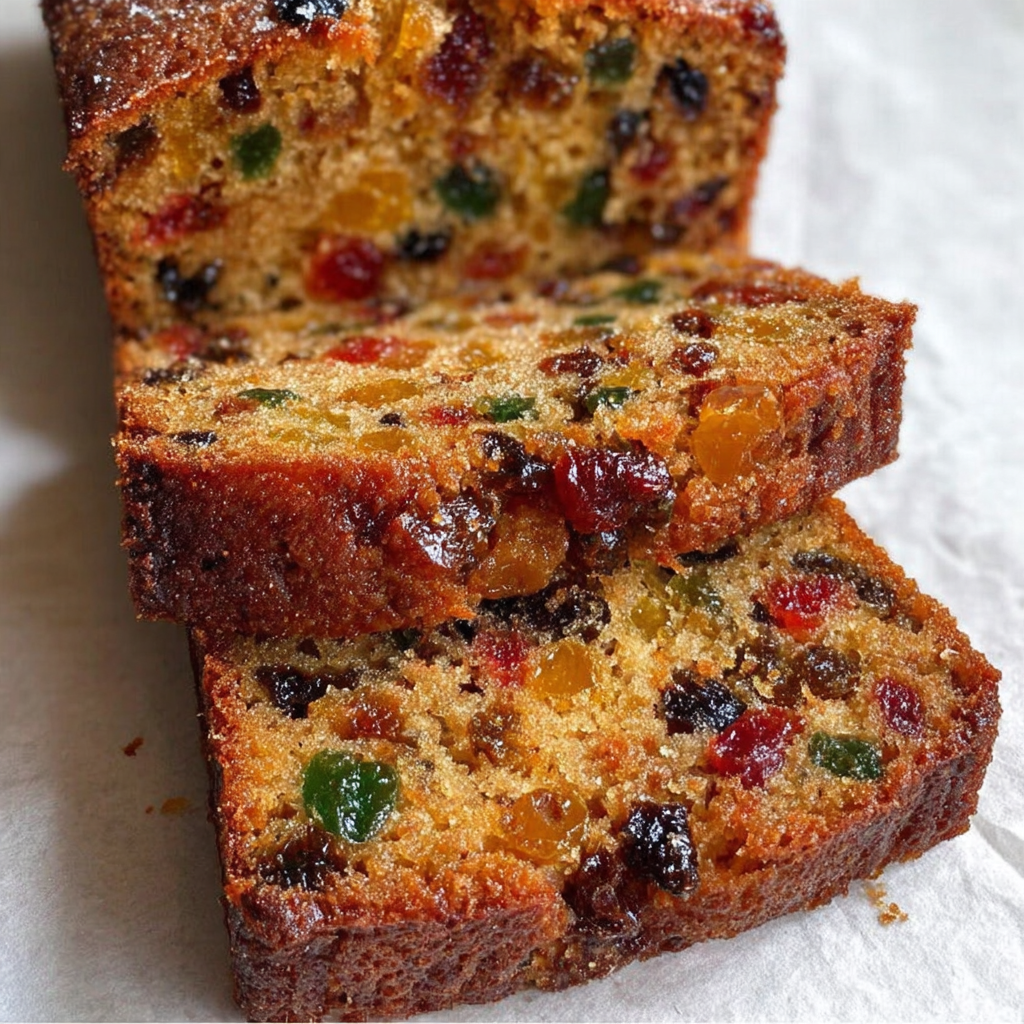
Christmas Fruitcake is one of the most traditional and nostalgic holiday desserts, especially for families who enjoy classic Christmas baking. This rich and flavorful fruitcake is packed with colorful candied fruit, raisins, dried fruit, crunchy nuts, warm spices, and a tender buttery cake.
A good homemade Christmas fruitcake should be moist, fragrant, rich, and full of texture. Unlike dry fruitcakes that sometimes get a bad reputation, this homemade version is soft and flavorful, with plenty of fruit and nuts in every slice. The combination of cinnamon, nutmeg, and vanilla gives the cake that unmistakable holiday aroma that fills the kitchen while it bakes.
This traditional Christmas Fruitcake is wonderful for Christmas dinner, holiday parties, cookie exchanges, dessert tables, afternoon coffee, or homemade edible gifts. It can also be prepared ahead of time, making it a convenient Christmas dessert when you have a busy holiday schedule.
The fruit can be soaked before baking to make the cake especially moist and flavorful. You can also customize the recipe with your favorite dried fruits and nuts. Serve it plain, dusted with powdered sugar, or topped with a simple glaze for an extra festive finish.
Ingredients
For the Fruit Mixture:
- 2 cups mixed candied fruit
- 1 cup raisins
- 1 cup golden raisins
- 1 cup chopped dried cranberries
- ½ cup chopped dried cherries
- ½ cup chopped dates
- ½ cup orange juice or apple juice
- 1 teaspoon vanilla extract
For the Cake:
- 2 ½ cups all-purpose flour
- 1 teaspoon baking powder
- ½ teaspoon baking soda
- ½ teaspoon salt
- 1 teaspoon ground cinnamon
- ½ teaspoon ground nutmeg
- ¼ teaspoon ground cloves
- 1 cup unsalted butter, softened
- 1 cup granulated sugar
- ½ cup light brown sugar, packed
- 4 large eggs, room temperature
- 1 teaspoon vanilla extract
- 1 tablespoon orange zest
- ½ cup sour cream
- ½ cup chopped pecans
- ½ cup chopped walnuts
Optional Holiday Glaze:
- 1 cup powdered sugar
- 2–3 tablespoons orange juice or milk
- ½ teaspoon vanilla extract
Preparation
Step 1: Prepare the Dried Fruit
Place the candied fruit, raisins, golden raisins, dried cranberries, dried cherries, and chopped dates in a large bowl.
Pour the orange juice or apple juice over the fruit and stir well. Cover the bowl and allow the fruit to soak for at least 30 minutes. For even better flavor and texture, you can soak the fruit for several hours or overnight in the refrigerator.
Before adding the fruit to the batter, drain any excess liquid if necessary.
Step 2: Prepare the Baking Pan
Preheat your oven to 325°F (165°C).
Grease a 9-inch loaf pan or a 10-inch tube or bundt-style pan thoroughly with butter or nonstick baking spray.
For easier removal, line the bottom of the pan with parchment paper.
Because fruitcake is a dense cake, make sure the pan is prepared well so the cake does not stick.
Step 3: Combine the Dry Ingredients
In a medium bowl, whisk together the all-purpose flour, baking powder, baking soda, salt, cinnamon, nutmeg, and cloves.
Mixing the dry ingredients separately helps distribute the spices and leavening agents evenly throughout the cake.
Set the dry mixture aside.
Step 4: Cream the Butter and Sugars
In a large mixing bowl, beat the softened butter, granulated sugar, and brown sugar until light and creamy.
This usually takes about 3–4 minutes with an electric mixer.
Properly creaming the butter and sugar helps create a lighter texture in the finished fruitcake.
Step 5: Add the Eggs
Add the eggs one at a time, beating well after each addition.
Scrape down the sides of the bowl as needed.
Add the vanilla extract and orange zest and mix until combined.
The mixture may look slightly curdled after adding the eggs, but this is normal.
Step 6: Add the Sour Cream
Add the sour cream and mix gently until incorporated.
The sour cream adds moisture and richness to the Christmas Fruitcake while helping prevent the cake from becoming dry.
Step 7: Add the Dry Ingredients
Gradually add the dry ingredients to the wet mixture.
Mix on low speed just until the flour disappears.
Do not overmix the batter. Overmixing can make the fruitcake heavier and tougher than necessary.
Step 8: Fold in the Fruit and Nuts
Add the soaked dried fruit, pecans, and walnuts to the batter.
Use a large spatula or wooden spoon to gently fold everything together.
Make sure the fruit and nuts are evenly distributed throughout the batter.
Step 9: Transfer the Batter to the Pan
Spoon the batter into the prepared pan.
Spread the top evenly with a spatula.
Because fruitcake batter is thick, gently tap the pan against the counter a few times to remove any large air pockets.
Step 10: Bake the Christmas Fruitcake
Place the pan in the preheated oven and bake for approximately 70–90 minutes, depending on the size and depth of your pan.
The cake is ready when a toothpick inserted into the center comes out with a few moist crumbs but no wet batter.
If the top begins browning too quickly, loosely cover it with aluminum foil during the final portion of baking.
Step 11: Cool the Cake
Remove the fruitcake from the oven and allow it to cool in the pan for about 15–20 minutes.
Carefully run a knife around the edges if necessary, then transfer the cake to a wire rack.
Allow it to cool completely before glazing or slicing.
Step 12: Prepare the Optional Glaze
To make the glaze, whisk together the powdered sugar, orange juice or milk, and vanilla extract.
Add a little more liquid if you prefer a thinner glaze, or more powdered sugar if you want it thicker.
Step 13: Glaze the Fruitcake
Once the cake has completely cooled, drizzle the glaze over the top.
Allow the glaze to set for several minutes before slicing.
For a more traditional presentation, you can simply dust the cooled fruitcake with powdered sugar instead.
Step 14: Slice and Serve
Use a sharp serrated knife to cut the Christmas Fruitcake into slices.
For the cleanest slices, allow the cake to cool completely before cutting.
Serve with coffee, tea, hot chocolate, or your favorite Christmas beverage.
Variation
Traditional Raisin Fruitcake
For a more classic version, replace some of the dried cranberries and cherries with additional raisins, golden raisins, or currants.
Orange Christmas Fruitcake
Add extra orange zest and use orange juice for soaking the fruit. A little orange extract can also intensify the citrus flavor.
Cherry Nut Fruitcake
Increase the amount of candied cherries and add extra pecans or walnuts for a colorful cherry-and-nut Christmas fruitcake.
Tropical Fruitcake
Add chopped dried pineapple, mango, coconut, and dried papaya for a tropical holiday variation.
Chocolate Fruitcake
Add ½ cup of mini chocolate chips to the batter for a modern chocolate Christmas fruitcake.
Alcohol-Soaked Fruitcake
For a traditional adult version, dried fruit can be soaked in rum, brandy, or another suitable spirit instead of juice. Allow the fruit to absorb the liquid before incorporating it into the batter.
COOKING Note :
Christmas Fruitcake is a dense cake, so it should be baked at a moderate temperature rather than a very high temperature. This allows the center to cook properly without causing the outside to become overly dark.
Do not rely only on the baking time. Oven temperatures and pan sizes vary, so always check the center with a toothpick or cake tester.
For the best texture, avoid slicing the cake while it is still warm. Allowing it to cool completely helps the fruitcake firm up and makes it much easier to slice.
If you want an even richer and more developed flavor, prepare the fruitcake one or two days before serving. The flavors have more time to blend as the cake rests.
Serving Suggestions :
- Serve slices of Christmas Fruitcake with coffee or tea.
- Add a small spoonful of whipped cream.
- Serve with vanilla ice cream for a warm-and-cold dessert combination.
- Dust the top with powdered sugar before serving.
- Drizzle each slice with orange glaze.
- Serve with warm vanilla sauce.
- Add a little cream cheese frosting for a sweeter dessert.
- Arrange thin slices on a Christmas dessert platter.
- Wrap individual slices as homemade holiday gifts.
- Serve as part of a Christmas brunch or afternoon tea.
Tips :
Use Room-Temperature Ingredients
Room-temperature butter and eggs blend more easily and help create a smoother cake batter.
Do Not Overmix
Once the flour is added, mix only until the ingredients are combined. Overmixing can result in a dense or tough cake.
Soak the Fruit
Soaking the dried fruit helps soften it and gives the fruitcake additional moisture and flavor.
Coat the Fruit Lightly With Flour
If your fruit tends to sink, toss it with a small amount of the measured flour before adding it to the batter. This can help distribute the fruit more evenly.
Use Fresh Spices
Cinnamon, nutmeg, and cloves provide much of the classic Christmas aroma. Fresh spices will give the cake a stronger and warmer flavor.
Do Not Overbake
Overbaking is one of the easiest ways to make fruitcake dry. Begin checking the cake toward the end of the suggested baking time.
Let It Cool Completely
A completely cooled fruitcake is easier to slice and has a better texture.
Make It Ahead
Christmas Fruitcake is an excellent make-ahead dessert. The flavor often becomes even better after resting for a day or two.
Store Properly
Keep the cooled fruitcake tightly wrapped or stored in an airtight container. It can be kept at room temperature for several days or refrigerated for longer storage.
Freeze for Later
Wrap the completely cooled cake tightly in plastic wrap and then aluminum foil. Store it in the freezer for up to several months. Thaw it overnight in the refrigerator before serving.
Prep Time:
30 minutes
Cooking Time:
70–90 minutes
Total Time:
Approximately 2 hours
Nutritional Information :
Approximate per serving and will vary depending on slice size, fruit, nuts, and glaze.
- Calories: Approximately 410 kcal
- Protein: Approximately 5 g
- Sodium: Approximately 220 mg
FAQs
What makes a good Christmas Fruitcake?
A good Christmas Fruitcake should be moist, rich, flavorful, and packed with dried or candied fruit and nuts. The cake should have a tender crumb without being overly dry or crumbly.
Can I make Christmas Fruitcake ahead of time?
Yes. Christmas Fruitcake is an excellent make-ahead dessert. Making it a day or two before serving allows the flavors to develop and blend.
Can I use different dried fruits?
Absolutely. You can customize the recipe with raisins, currants, dried cranberries, dried cherries, dates, figs, apricots, pineapple, or other dried fruits.
Can I make this fruitcake without nuts?
Yes. Simply leave out the pecans and walnuts. You can replace them with additional dried fruit or use seeds if desired.
Can I use orange juice instead of alcohol?
Yes. Orange juice, apple juice, or pineapple juice are excellent non-alcoholic choices for soaking the fruit.
Why is my fruitcake dry?
Fruitcake can become dry if it is overbaked, if too much flour is added, or if the cake is stored uncovered. Measure the flour carefully and avoid baking longer than necessary.
Why did my fruit sink to the bottom?
Heavy fruit can sink when the batter is too thin or when the fruit is excessively wet. Drain soaked fruit well and lightly coat it with flour before folding it into the batter.
Can I use store-bought candied fruit?
Yes. Mixed candied fruit is convenient and works very well in homemade Christmas Fruitcake.
How should I store Christmas Fruitcake?
Store the completely cooled fruitcake tightly wrapped or in an airtight container. Keep it at room temperature for short-term storage or refrigerate it for longer storage.
Can I freeze Christmas Fruitcake?
Yes. Wrap the cake tightly in plastic wrap and aluminum foil before freezing. Thaw it gradually before serving.
Can I add alcohol to this fruitcake?
Yes. Traditional fruitcakes are sometimes made with rum or brandy. Alcohol can be used to soak the dried fruit or added in small amounts after baking.
How do I keep fruitcake moist?
Use enough fruit, avoid overbaking, store the cake tightly wrapped, and allow it to rest after baking. Soaking the fruit before baking also helps maintain moisture.
Can I make this recipe in a loaf pan?
Yes. A large loaf pan works well, although the baking time may change depending on the depth and size of the pan.
Can I make mini Christmas fruitcakes?
Yes. Divide the batter among smaller loaf pans or muffin-style molds and reduce the baking time. Check them early because smaller cakes bake much faster.
What nuts are best for Christmas Fruitcake?
Pecans and walnuts are classic choices. Almonds, hazelnuts, or a combination of several nuts can also be used.
Why does my fruitcake taste better the next day?
Resting allows the spices, dried fruit, citrus, and buttery cake to blend together. This is one reason Christmas Fruitcake is such a popular make-ahead holiday dessert.
Conclusion
This Christmas Fruitcake is a rich, moist, festive dessert filled with colorful candied fruit, raisins, dried cranberries, pecans, walnuts, warm spices, and bright citrus flavor. It is a classic holiday recipe that makes a beautiful addition to a Christmas dessert table and can easily be prepared ahead of time.
Whether you enjoy traditional fruitcake, want a homemade Christmas dessert for your family, or are looking for a festive cake to give as a holiday gift, this recipe is easy to customize with your favorite fruits, nuts, spices, and glaze.
Serve it with a cup of coffee or tea, dust it with powdered sugar, or drizzle it with orange glaze for a beautiful Christmas presentation. With its rich texture and classic holiday flavor, homemade Christmas Fruitcake is a timeless recipe worth bringing back to the holiday table year after year.
Print
Christmas Fruitcake Recipe
- Total Time: 2 hours
Description
Christmas Fruitcake is one of the most traditional and nostalgic holiday desserts, especially for families who enjoy classic Christmas baking. This rich and flavorful fruitcake is packed with colorful candied fruit, raisins, dried fruit, crunchy nuts, warm spices, and a tender buttery cake.
Ingredients
For the Fruit Mixture:
- 2 cups mixed candied fruit
- 1 cup raisins
- 1 cup golden raisins
- 1 cup chopped dried cranberries
- ½ cup chopped dried cherries
- ½ cup chopped dates
- ½ cup orange juice or apple juice
- 1 teaspoon vanilla extract
For the Cake:
- 2 ½ cups all-purpose flour
- 1 teaspoon baking powder
- ½ teaspoon baking soda
- ½ teaspoon salt
- 1 teaspoon ground cinnamon
- ½ teaspoon ground nutmeg
- ¼ teaspoon ground cloves
- 1 cup unsalted butter, softened
- 1 cup granulated sugar
- ½ cup light brown sugar, packed
- 4 large eggs, room temperature
- 1 teaspoon vanilla extract
- 1 tablespoon orange zest
- ½ cup sour cream
- ½ cup chopped pecans
- ½ cup chopped walnuts
Optional Holiday Glaze:
- 1 cup powdered sugar
- 2–3 tablespoons orange juice or milk
- ½ teaspoon vanilla extract
Instructions
Place the candied fruit, raisins, golden raisins, dried cranberries, dried cherries, and chopped dates in a large bowl.
Pour the orange juice or apple juice over the fruit and stir well. Cover the bowl and allow the fruit to soak for at least 30 minutes. For even better flavor and texture, you can soak the fruit for several hours or overnight in the refrigerator.
Before adding the fruit to the batter, drain any excess liquid if necessary.
Preheat your oven to 325°F (165°C).
Grease a 9-inch loaf pan or a 10-inch tube or bundt-style pan thoroughly with butter or nonstick baking spray.
For easier removal, line the bottom of the pan with parchment paper.
Because fruitcake is a dense cake, make sure the pan is prepared well so the cake does not stick.
In a medium bowl, whisk together the all-purpose flour, baking powder, baking soda, salt, cinnamon, nutmeg, and cloves.
Mixing the dry ingredients separately helps distribute the spices and leavening agents evenly throughout the cake.
Set the dry mixture aside.
In a large mixing bowl, beat the softened butter, granulated sugar, and brown sugar until light and creamy.
This usually takes about 3–4 minutes with an electric mixer.
Properly creaming the butter and sugar helps create a lighter texture in the finished fruitcake.
Add the eggs one at a time, beating well after each addition.
Scrape down the sides of the bowl as needed.
Add the vanilla extract and orange zest and mix until combined.
The mixture may look slightly curdled after adding the eggs, but this is normal.
Add the sour cream and mix gently until incorporated.
The sour cream adds moisture and richness to the Christmas Fruitcake while helping prevent the cake from becoming dry.
Gradually add the dry ingredients to the wet mixture.
Mix on low speed just until the flour disappears.
Do not overmix the batter. Overmixing can make the fruitcake heavier and tougher than necessary.
Add the soaked dried fruit, pecans, and walnuts to the batter.
Use a large spatula or wooden spoon to gently fold everything together.
Make sure the fruit and nuts are evenly distributed throughout the batter.
Spoon the batter into the prepared pan.
Spread the top evenly with a spatula.
Because fruitcake batter is thick, gently tap the pan against the counter a few times to remove any large air pockets.
Place the pan in the preheated oven and bake for approximately 70–90 minutes, depending on the size and depth of your pan.
The cake is ready when a toothpick inserted into the center comes out with a few moist crumbs but no wet batter.
If the top begins browning too quickly, loosely cover it with aluminum foil during the final portion of baking.
Remove the fruitcake from the oven and allow it to cool in the pan for about 15–20 minutes.
Carefully run a knife around the edges if necessary, then transfer the cake to a wire rack.
Allow it to cool completely before glazing or slicing.
To make the glaze, whisk together the powdered sugar, orange juice or milk, and vanilla extract.
Add a little more liquid if you prefer a thinner glaze, or more powdered sugar if you want it thicker.
Once the cake has completely cooled, drizzle the glaze over the top.
Allow the glaze to set for several minutes before slicing.
For a more traditional presentation, you can simply dust the cooled fruitcake with powdered sugar instead.
Use a sharp serrated knife to cut the Christmas Fruitcake into slices.
For the cleanest slices, allow the cake to cool completely before cutting.
Serve with coffee, tea, hot chocolate, or your favorite Christmas beverage.
Notes
Christmas Fruitcake is a dense cake, so it should be baked at a moderate temperature rather than a very high temperature. This allows the center to cook properly without causing the outside to become overly dark.
Do not rely only on the baking time. Oven temperatures and pan sizes vary, so always check the center with a toothpick or cake tester.
For the best texture, avoid slicing the cake while it is still warm. Allowing it to cool completely helps the fruitcake firm up and makes it much easier to slice.
If you want an even richer and more developed flavor, prepare the fruitcake one or two days before serving. The flavors have more time to blend as the cake rests.
- Prep Time: 30 minutes
- Cook Time: 70–90 minutes
Nutrition
- Calories: 410 kcal
- Sodium: 220 mg
- Protein: 5 g