Ingredients
For the Candy Grapes
- 2 cups seedless grapes: Green grapes provide a naturally tart flavor, while red or purple grapes are usually sweeter. Choose firm, fresh grapes.
- 2 tablespoons fruit-flavored drink powder: Use different flavors and colors to create a variety of candy-coated grapes.
- 2 tablespoons granulated sugar: Adds sweetness and helps balance the sour flavor.
- 1 to 2 teaspoons citric acid: Creates the characteristic mouth-puckering sour taste. Start with a smaller amount and adjust to your preference.
- 1 tablespoon water, as needed: Helps the flavored coating adhere to the grapes if necessary.
Instructions
Remove the grapes from their stems and place them in a colander.
Rinse thoroughly under cool running water, gently rubbing away any dirt or residue. Discard any grapes that are damaged or overly soft.
Drain the grapes well, then spread them on a clean kitchen towel or several layers of paper towels.
Pat each grape dry and allow them to air-dry for approximately 20 to 30 minutes. Make sure there is no visible water remaining on the surface.
Step 2: Prepare the Sour Candy Coating
In a small mixing bowl, combine the fruit-flavored drink powder, granulated sugar, and 1 teaspoon of citric acid.
Stir until the ingredients are evenly mixed and there are no large clumps.
Taste a tiny pinch of the dry mixture and adjust the sweetness or sourness as desired. Add more citric acid gradually if you prefer a stronger sour flavor.
Step 3: Prepare the Grapes for Coating
Place the completely dry grapes in a clean mixing bowl.
If the coating does not stick well, lightly mist the grapes with a very small amount of water or use slightly damp hands to create a thin layer of moisture on their surfaces.
The grapes should be barely damp, not wet. Excess water can dissolve the sugar coating and make it sticky.
Step 4: Coat the Grapes
Sprinkle the prepared sour candy mixture over the grapes.
Gently toss them with a spoon or shake the bowl carefully until the grapes are evenly coated.
If you prefer a thicker coating, add a little more of the dry mixture and toss again.
Work in small batches if necessary so each grape receives an even layer of flavor.
Step 5: Create Different Candy Flavors
For a colorful assortment, divide the grapes into separate bowls before coating.
Prepare a different flavored sugar mixture for each bowl. For example, use blue raspberry for one batch, strawberry for another, and watermelon for a third.
Toss each group separately to keep the colors and flavors distinct.
This creates a beautiful rainbow-style candy grape platter.
Step 6: Chill the Candy Grapes
Arrange the coated grapes in a single layer on a parchment-lined tray.
Place the tray in the refrigerator for approximately 20 to 30 minutes to chill the grapes and allow the coating to settle.
For a firmer, extra-refreshing texture, you can freeze them briefly for approximately 30 to 45 minutes. Avoid freezing them for too long unless you want a frozen grape texture.
Step 7: Serve and Enjoy
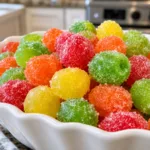
Transfer the finished Sour Patch Candy Grapes to small serving cups or arrange them on a colorful platter.
Serve them chilled for the best refreshing texture and sweet-and-sour flavor.
For the most enjoyable coating, serve shortly after preparing because moisture from the grapes can gradually dissolve the sugar mixture.
Notes
- Choose firm grapes: Soft grapes can become mushy and are harder to coat evenly.
- Dry thoroughly: Excess water is the main reason the candy coating becomes sticky.
- Use food-grade citric acid: Never use cleaning-grade or industrial citric acid.
- Add sourness gradually: Citric acid is concentrated, so a little goes a long way.
- Use sweetened drink powder: Unsweetened drink mixes may require additional sugar.
- Coat in small batches: This helps distribute the flavor evenly.
- Avoid excess water: A lightly damp surface is enough to help the coating stick.
- Serve fresh: The coating tastes best shortly after preparation.