Description
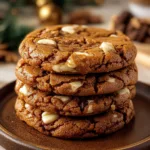
these Gingerbread White Chocolate Cookies are the perfect homemade treat for your holiday baking collection. Soft in the center, lightly crisp around the edges, and filled with sweet white chocolate chips, these cookies combine everything wonderful about classic gingerbread with a delicious modern twist.
Ingredients
For the gingerbread cookie dough
- 2 1/4 cups (280 g) all-purpose flour: Provides structure while helping the cookies stay tender.
- 1 teaspoon baking soda: Helps the cookies rise and spread properly.
- 1/2 teaspoon baking powder: Adds a little extra lift for a soft texture.
- 2 teaspoons ground ginger: Provides the signature gingerbread flavor and gentle warmth.
- 1 1/2 teaspoons ground cinnamon: Adds a sweet, aromatic spice that complements ginger and molasses.
- 1/4 teaspoon ground nutmeg: Gives the cookies a warm, slightly nutty flavor.
- 1/8 teaspoon ground cloves: Adds a distinctive holiday aroma. Use a little more if you prefer a stronger spice flavor.
- 1/2 teaspoon salt: Balances the sweetness and enhances the other ingredients.
- 3/4 cup (170 g) unsalted butter, softened: Creates richness and contributes to a tender, chewy cookie.
- 3/4 cup (150 g) packed brown sugar: Adds moisture, caramel-like flavor, and a soft texture.
- 1/4 cup (50 g) granulated sugar: Helps balance the brown sugar and contributes to the cookie’s edges.
- 1 large egg, room temperature: Binds the ingredients and provides structure.
- 1/3 cup (approximately 110 g) unsulphured molasses: Gives the cookies their classic gingerbread flavor, deep color, and moisture. Use regular baking molasses rather than blackstrap molasses, which can taste much more bitter.
- 1 teaspoon vanilla extract: Enhances the flavors of the spices, butter, and white chocolate.
For the white chocolate
- 1 cup (170 g) white chocolate chips: Adds creamy sweetness and creates pockets of white chocolate throughout the cookies.
- Additional 1/4 cup white chocolate chips, optional: Reserve these for pressing onto the cookie dough balls before baking to create an attractive finish.
Choose good-quality white chocolate chips or chopped white chocolate made with cocoa butter for the best flavor. Some white baking chips contain different vegetable fats, so the taste and melting characteristics may vary.
Optional topping
- 2 tablespoons granulated sugar for rolling the dough balls
- Extra white chocolate chips for decoration
- 2–3 tablespoons melted white chocolate for drizzling
- A small pinch of ground cinnamon for a finishing touch
Instructions
Preheat your oven to 350°F (175°C). Line two large baking sheets with parchment paper or silicone baking mats.
Using parchment paper helps prevent sticking and encourages more even browning. It also makes it easier to transfer the cookies after baking.
Make sure the baking sheets are cool before placing the dough on them. If you are baking multiple batches, allow the pans to cool between batches to prevent the dough from spreading too quickly.
Gather all your ingredients and measure them before beginning. This is especially helpful when working with spices and molasses because the ingredients need to be combined smoothly and evenly.
Step 2: Mix the dry ingredients
In a medium mixing bowl, combine the all-purpose flour, baking soda, baking powder, ground ginger, cinnamon, nutmeg, cloves, and salt.
Whisk everything together for approximately 20–30 seconds, making sure the spices are evenly distributed throughout the flour.
If your spices have been stored for a long time, check that they still have a strong aroma. Fresh, fragrant spices make a noticeable difference in gingerbread cookies.
If the flour or spices contain lumps, sift the mixture before using it.
Set the bowl aside while you prepare the butter and sugar mixture.
Step 3: Cream the butter and sugars
In a large mixing bowl, beat the softened butter, brown sugar, and granulated sugar together using a hand mixer or stand mixer fitted with a paddle attachment.
Mix for approximately 2–3 minutes, scraping down the sides of the bowl as needed. The mixture should look creamy and evenly combined.
Creaming the butter and sugar helps incorporate air into the dough, contributing to a lighter texture. However, avoid beating excessively because too much incorporated air can affect how the cookies spread and bake.
The butter should be softened enough to press gently with a finger but should not be melted or greasy.
If the butter is too cold, it may not blend smoothly. If it is melted, the cookies may spread more than expected.
Step 4: Add the egg, molasses, and vanilla
Add the egg to the butter and sugar mixture. Beat until fully incorporated.
Pour in the molasses and vanilla extract. Mix again until the mixture looks smooth and evenly colored.
The molasses will give the dough a rich brown color and a distinctive gingerbread aroma. It also contributes to the soft, chewy texture of the finished cookies.
Scrape down the sides and bottom of the bowl to make sure no unmixed butter or sugar remains.
If the mixture looks slightly separated, continue mixing briefly. It should become reasonably uniform before you add the dry ingredients.
Step 5: Combine the wet and dry ingredients
Add the dry ingredient mixture to the wet ingredients in two or three additions.
Mix on low speed or stir with a spatula until the flour is almost completely incorporated. Stop mixing as soon as no large patches of dry flour remain.
Overmixing can develop too much gluten, which may make the cookies tougher rather than soft and tender.
The dough should be thick, soft, and slightly sticky. This is normal because molasses adds moisture.
Fold in the white chocolate chips using a spatula. Distribute them evenly throughout the dough so that each cookie contains a generous amount of creamy white chocolate.
If you want the cookies to look especially attractive, reserve a few white chocolate chips to press onto the dough balls before baking.
Step 6: Chill the cookie dough
Cover the mixing bowl and refrigerate the dough for approximately 30–60 minutes.
Chilling helps the butter firm up and gives the flour time to absorb moisture. This improves the texture and makes the dough easier to scoop.
It also helps control spreading, allowing the cookies to bake into thicker, chewier rounds instead of becoming excessively flat.
If you have time, you can chill the dough for up to 24 hours in a covered container. Longer chilling can deepen the flavor as the spices and molasses blend together.
If the dough becomes very firm after refrigeration, let it sit at room temperature for a few minutes before scooping.
Step 7: Shape the cookies
Scoop the dough into portions of approximately 1 1/2 tablespoons each. Roll them gently between your palms to form balls.
For a more rustic appearance, you can leave the portions slightly irregular rather than rolling them perfectly smooth.
If you want a lightly sparkling exterior, place the optional granulated sugar in a small bowl and roll each dough ball in the sugar until lightly coated.
Arrange the dough balls on the prepared baking sheets, leaving approximately 2 inches between them to allow for spreading.
Press a few reserved white chocolate chips onto the top of each dough ball. This gives the baked cookies a more attractive appearance because some of the chocolate will remain visible on the surface.
If the dough becomes warm and sticky while shaping, return it to the refrigerator for another 10–15 minutes.
Step 8: Bake the gingerbread white chocolate cookies
Place the baking sheets in the preheated oven and bake for approximately 9–12 minutes.
The cookies are ready when the edges appear set and lightly golden while the centers still look slightly soft. The tops may develop small cracks, and the white chocolate chips may look glossy or partially melted.
Avoid waiting until the centers look completely firm. The cookies will continue cooking from the residual heat of the baking sheet after they are removed from the oven.
For smaller cookies, begin checking at around 8–9 minutes. Larger portions may need a little longer.
If your oven has uneven heat, rotate the baking sheets near the end of baking, provided the cookies have begun to set.
Do not place the dough on a hot baking sheet between batches, as the extra heat may cause the cookies to spread prematurely.
Step 9: Let the cookies cool
Remove the cookies from the oven and allow them to rest on the baking sheet for approximately 5 minutes.
At this stage, the centers may still feel soft, but they will gradually firm up as they cool.
Carefully transfer the cookies to a wire rack and allow them to cool completely.
For an extra-decorative finish, drizzle the cooled cookies with melted white chocolate. Use a spoon or piping bag to create thin lines across the surface.
Allow the drizzle to set before stacking or storing the cookies.
The finished cookies should have slightly crisp edges, soft centers, visible white chocolate chips, and a rich gingerbread aroma.
Step 10: Serve and enjoy
Arrange the cooled Gingerbread White Chocolate Cookies on a serving plate or festive dessert tray.
Serve them with coffee, tea, hot chocolate, or milk. For holiday gatherings, combine them with sugar cookies, chocolate crinkle cookies, and classic gingerbread cookies to create a beautiful assortment.
If you are preparing them as gifts, allow the cookies and any white chocolate drizzle to set completely before placing them in a food-safe container.
These cookies are delicious on the day they are baked, but their flavor often becomes even more pronounced after the spices have had time to blend.
Notes
The key to excellent Gingerbread White Chocolate Cookies is controlling moisture, temperature, and baking time.
Use regular baking molasses. Unsulphured molasses is ideal for this recipe. Blackstrap molasses is much darker, more bitter, and more intense, so it may overpower the white chocolate and spices.
Do not skip chilling. Molasses makes the dough sticky, and chilling helps the butter firm up. This produces thicker cookies with a better chewy texture.
Measure flour carefully. Too much flour can make the cookies dry and cakey. Spoon flour into a measuring cup and level it off, or weigh it for greater accuracy.
Avoid overbaking. Gingerbread cookies can look soft in the middle when they are ready to come out of the oven. They will continue to set as they cool.
Choose quality white chocolate. White chocolate made with cocoa butter generally has a richer flavor and smoother melting characteristics than some imitation baking chips.
Keep the spices balanced. Ginger should provide the main flavor, while cinnamon, nutmeg, and cloves add warmth and complexity.
Let the cookies cool before decorating. Melted white chocolate drizzled over hot cookies may run off the surface rather than forming attractive lines.
Use cool baking sheets. A warm pan can melt the butter in the dough before the cookies reach the oven, leading to excessive spreading.
- Prep Time: 20 minutes
- Chilling Time: 30–60 minutes
- Cook Time: 9–12 minutes per batch
Nutrition
- Calories: 170–210
- Sodium: 100–180 mg
- Protein: 2–3 g