Description
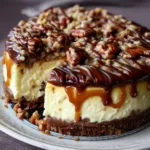
If you love rich chocolate desserts, creamy cheesecake, buttery caramel, and crunchy pecans, this Decadent Turtle Fudge Cheesecake is the perfect dessert to add to your baking collection. This irresistible cheesecake combines the smooth, tangy richness of classic cheesecake with layers of chocolate fudge, sweet caramel, and toasted pecans. Every slice delivers a luxurious combination of textures and flavors that makes this dessert feel like something straight from a professional bakery.
Ingredients
This recipe makes one 9-inch cheesecake, serving approximately 12–14 people depending on slice size.
For the chocolate cookie crust
- 2 cups (about 200 g) chocolate cookie crumbs
- 5 tablespoons (70 g) unsalted butter, melted
- 2 tablespoons granulated sugar, optional
- 1 tablespoon unsweetened cocoa powder, optional
Chocolate sandwich cookies with the filling removed or plain chocolate wafer cookies both work well. If you use sandwich cookies with the filling included, you may need slightly less butter because the filling adds fat and moisture.
The chocolate crust provides a rich, slightly crunchy base that complements the creamy cheesecake filling.
For the creamy cheesecake filling
- 24 ounces (680 g) full-fat cream cheese, softened to room temperature
- 1 cup (200 g) granulated sugar
- 3 large eggs, at room temperature
- 1 cup (240 g) sour cream, at room temperature
- 1 teaspoon vanilla extract
- 8 ounces (225 g) semisweet chocolate, melted and slightly cooled
- 2 tablespoons unsweetened cocoa powder
- 2 tablespoons all-purpose flour
- 1/4 teaspoon salt
Cream cheese: Full-fat block cream cheese provides the richest flavor and the most reliable texture. Avoid whipped cream cheese or spreadable cream cheese intended for bagels, as its moisture content can differ.
Sugar: Granulated sugar sweetens the filling and balances the tanginess of the cream cheese.
Eggs: Eggs help the cheesecake set and provide a smooth, rich consistency.
Sour cream: Sour cream adds a slight tang and helps create a creamy texture.
Semisweet chocolate: This ingredient gives the filling its deep chocolate flavor without making it excessively sweet.
Cocoa powder: A small amount intensifies the chocolate taste.
Flour: A little flour helps stabilize the filling and makes it easier to slice.
For the caramel pecan layer
- 1 cup (approximately 300 g) soft caramel candies, unwrapped
- 3 tablespoons heavy cream or milk
- 1 cup (110 g) chopped pecans
- 1 tablespoon unsalted butter
- A small pinch of salt, optional
Soft caramel candies are convenient because they melt into a thick, flavorful sauce. Heavy cream produces a richer texture, while milk creates a slightly lighter caramel.
Choose fresh pecans for the best flavor. If possible, lightly toast them before adding them to the cheesecake. Toasting enhances their nutty aroma and creates a delicious contrast with the chocolate and caramel.
You can substitute a thick caramel sauce for the candies if you prefer a quicker preparation method.
For the chocolate fudge topping
- 1 cup (170 g) semisweet chocolate chips or chopped semisweet chocolate
- 1/2 cup (120 ml) heavy whipping cream
- 1 tablespoon unsalted butter, optional
- 1/2 teaspoon vanilla extract, optional
The combination of chocolate and cream creates a smooth ganache-style fudge topping. The butter adds extra shine and richness.
For a sweeter topping, use milk chocolate. For a deeper, less sweet flavor, use dark chocolate containing approximately 60–70% cocoa.
For the final decoration
- 1/3 cup caramel sauce
- 1/4 cup melted chocolate, optional
- 1/2 cup chopped toasted pecans
- A few pecan halves for decoration
- A small pinch of flaky sea salt, optional
Instructions
Preheat your oven to 325°F (163°C).
Lightly grease the sides and bottom of a 9-inch springform pan. Line the bottom with a round piece of parchment paper if desired. A springform pan is particularly useful because it allows you to remove the cheesecake without turning it upside down.
Wrap the outside of the pan with heavy-duty aluminum foil if you plan to use a traditional water bath. The foil should cover the bottom and sides securely to help prevent water from entering the pan.
Place the cream cheese, eggs, and sour cream on the counter ahead of time so they can approach room temperature. This helps the ingredients blend smoothly and reduces the risk of lumps.
Measure all the ingredients before beginning. Since cheesecake benefits from gentle mixing and careful temperature control, having everything ready makes the process easier.
Step 2: Make the chocolate cookie crust
Place the chocolate cookies in a food processor and pulse until they form fine, even crumbs. If you do not have a food processor, place the cookies in a sturdy sealed bag and crush them with a rolling pin.
Transfer the crumbs to a bowl. Add the melted butter, optional sugar, and cocoa powder. Stir until the mixture resembles damp sand and holds together when pressed between your fingers.
Pour the mixture into the prepared springform pan. Use the bottom of a measuring cup or a flat glass to press the crumbs firmly across the bottom. Create an even layer and press a little of the mixture up the sides if you prefer a crust that surrounds the filling.
Bake the crust for approximately 8–10 minutes. Remove it from the oven and let it cool while you prepare the cheesecake filling.
Prebaking helps the crust hold its shape and creates a firmer foundation for the creamy filling. Allowing it to cool slightly also prevents the filling from being exposed to unnecessary heat.
Step 3: Melt the chocolate for the filling
Place the semisweet chocolate in a heatproof bowl. Melt it in the microwave in 15–20-second intervals, stirring after each interval until smooth.
Alternatively, place the bowl over a saucepan of gently simmering water. Make sure the bottom of the bowl does not touch the water, and stir until the chocolate melts.
Allow the melted chocolate to cool slightly before adding it to the cream cheese mixture. It should remain fluid but should not be extremely hot.
Chocolate that is too hot can affect the consistency of the filling, while chocolate that has cooled too much may begin to harden into small pieces when mixed with the cream cheese.
Step 4: Prepare the creamy cheesecake filling
Place the softened cream cheese in a large mixing bowl. Beat it on medium-low speed until smooth and creamy, scraping down the sides of the bowl as needed.
Add the granulated sugar and continue mixing until well combined. Avoid beating excessively because incorporating too much air can cause the cheesecake to puff up during baking and sink as it cools.
Add the eggs one at a time, mixing on low speed after each addition. Stop mixing as soon as each egg is incorporated.
Add the sour cream and vanilla extract. Mix gently until the filling looks smooth.
Pour in the melted, slightly cooled chocolate and add the cocoa powder, flour, and salt. Mix on low speed until the filling has an even chocolate color and no large lumps remain.
Scrape the bottom and sides of the bowl with a spatula to ensure everything is incorporated. Avoid prolonged mixing.
The finished cheesecake batter should be thick, creamy, and glossy. If small bubbles appear on the surface, gently tap the bowl against the counter to release some of the trapped air.
Step 5: Assemble the cheesecake layers
Pour approximately half of the chocolate cheesecake filling over the prepared cookie crust. Spread it evenly with a spatula.
In a small saucepan, combine the caramel candies, heavy cream, and butter. Heat over low heat, stirring frequently until the caramel melts and becomes smooth.
Remove the saucepan from the heat and stir in most of the chopped pecans. Allow the caramel mixture to cool briefly so it is warm and pourable rather than extremely hot.
Spoon a thin layer of caramel pecan mixture over the cheesecake filling. Keep the caramel slightly away from the edges to reduce the risk of it leaking into the crust.
Add the remaining cheesecake filling and smooth the top. If you want a marbled appearance, reserve a small amount of caramel and gently swirl it across the surface using a toothpick or thin knife.
Avoid adding too much caramel directly to the center of the filling. Excessive liquid caramel can interfere with the cheesecake’s structure and create uneven areas after baking.
Step 6: Prepare a water bath, if desired
A water bath helps the cheesecake bake more gently and can reduce cracking.
Place the foil-wrapped springform pan inside a larger roasting pan. Carefully pour hot water into the roasting pan until it reaches approximately halfway up the sides of the springform pan.
Make sure the foil is secure and that water cannot enter the cheesecake.
If you prefer not to use a water bath, you can bake the cheesecake on the center rack without it. Keep the oven temperature steady and avoid opening the oven door frequently.
A water bath is helpful for achieving an evenly baked, creamy cheesecake, but it is not essential if you prefer a simpler preparation method.
Step 7: Bake the chocolate cheesecake
Place the cheesecake in the preheated oven and bake for approximately 55–75 minutes, depending on the oven, pan, and filling depth.
Begin checking near the lower end of the estimated baking time. The edges should look set, while the center should retain a gentle wobble when the pan is moved carefully.
The cheesecake should not look completely liquid in the middle. Avoid waiting until the entire surface is firm, because residual heat will continue cooking the center as the cake cools.
If the surface begins browning too quickly, check the oven temperature and loosely cover the top with foil if needed.
When the cheesecake is ready, turn off the oven and leave the door slightly open. Let the cheesecake rest inside for approximately 30 minutes.
This gradual cooling process helps reduce sudden temperature changes that can cause cracks. Remove the cheesecake carefully from the oven and water bath, if used.
Step 8: Cool and chill the cheesecake
Place the cheesecake on a wire rack and allow it to cool at room temperature until it is no longer warm, generally about 1–2 hours depending on the room temperature.
Do not leave the cheesecake unrefrigerated for more than two hours. Once it has cooled sufficiently, cover it and refrigerate for at least 6 hours, preferably overnight.
Chilling allows the filling to firm up, the flavors to develop, and the cheesecake to become easier to slice.
Do not add the final fudge topping while the cheesecake is still hot. The heat can cause the topping to run off the sides and make the caramel layer excessively soft.
Step 9: Make the chocolate fudge topping
Place the chocolate chips or chopped chocolate in a heatproof bowl.
Heat the heavy cream in a small saucepan until it is steaming and hot but not boiling vigorously. Pour the hot cream over the chocolate and let it stand for approximately two minutes.
Stir slowly from the center outward until the chocolate melts and the mixture becomes smooth and glossy.
Add the optional butter and vanilla extract, stirring until incorporated.
Allow the ganache to cool for several minutes until it thickens slightly but remains easy to pour. If it is too hot, it may run off the cheesecake. If it becomes too cool, it may be difficult to spread.
Step 10: Add the caramel and pecan topping
Remove the chilled cheesecake from the refrigerator. Carefully release the sides of the springform pan.
Spread the chocolate fudge topping over the surface, allowing a small amount to drip naturally over the edges if desired.
Warm the remaining caramel sauce gently until it is pourable. Drizzle it over the chocolate topping in thin lines.
Sprinkle the remaining chopped pecans over the top. Arrange several pecan halves around the edge for a more decorative finish.
For a sweet-and-salty variation, add a very small pinch of flaky sea salt.
Return the cheesecake to the refrigerator for approximately 20–30 minutes to allow the topping to set before slicing.
Step 11: Slice and serve
Use a long, sharp knife to cut the cheesecake into slices. For especially clean cuts, dip the knife in warm water, wipe it dry, and clean it between slices.
Serve each portion chilled or allow it to stand briefly at room temperature for a slightly softer texture.
The finished cheesecake should have a firm chocolate crust, a creamy chocolate center, a rich fudge topping, buttery caramel, and crunchy pecans.
For an extra-special presentation, serve each slice with a small drizzle of caramel sauce and a spoonful of whipped cream.
Notes
Use room-temperature ingredients. Softened cream cheese, room-temperature eggs, and sour cream blend more easily, reducing lumps in the filling.
Do not overbeat the eggs. Excessive mixing incorporates too much air, which can cause the cheesecake to rise dramatically and then sink or crack.
Cool melted chocolate before adding it. Very hot chocolate can affect the filling’s texture, while overly cool chocolate may harden into small pieces.
Avoid overbaking. A cheesecake is ready when the edges are set and the center still has a slight wobble. It will continue to firm up as it cools and chills.
Cool gradually. Sudden temperature changes can encourage cracks. Let the cheesecake rest in the switched-off oven before moving it to a cooling rack.
Chill thoroughly. At least six hours of refrigeration is recommended, but overnight chilling generally produces the best texture.
Use a thick caramel sauce. Very thin caramel can make the layers slippery and difficult to slice. Add it in controlled amounts rather than pouring all of it into the filling.
Add the fudge topping after chilling. This keeps the ganache on the surface and helps it set into a smooth, attractive layer.
Store safely. Cheesecake contains perishable dairy and eggs, so refrigerate it promptly and do not leave it at room temperature for extended periods.
- Prep Time: 35 minutes
- Cooling Time: 2 hours
- Cook Time: 65 minutes
Nutrition
- Calories: 550–700 per serving
- Sodium: 300–500 mg
- Protein: 7–10 g